
Sleep
€€
Hotel Rubi
Viseu

From Coimbra to Nazaré, from Bairrada suckling pig to the Templar convents of Tomar, Central Portugal packs more history, food, and landscape than most tourists expect. It's the region everyone drives through and few explore properly.
Central Portugal is the region most tourists drive through on their way between Lisbon and Porto without realizing what they're missing. This is where you'll find the country's oldest university, Europe's tallest waves, one of the world's most visited Catholic sanctuaries, and a convent pastry tradition that rivals anywhere else in Portugal. All of it packed between the Atlantic coast and the Spanish border.
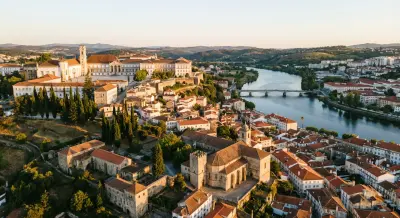
Coimbra is the gravitational center. The University, with its 18th-century Biblioteca Joanina, defines the city as much as the black-caped students who still walk down Rua da Sofia on serenade nights. But Coimbra isn't just the university, the Monastery of Santa Clara-a-Velha, partially submerged for centuries, is one of the most fascinating archaeological sites in the country.
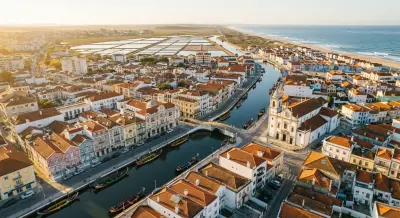
Aveiro operates on a completely different register. The canals and moliceiro boats make it look like a postcard, but what matters is what you eat: ovos moles, a convent sweet made with communion wafer dough and egg yolk filling, are the star product. The Ria de Aveiro to the south offers landscapes of salt flats and brightly painted wooden houses in Costa Nova.
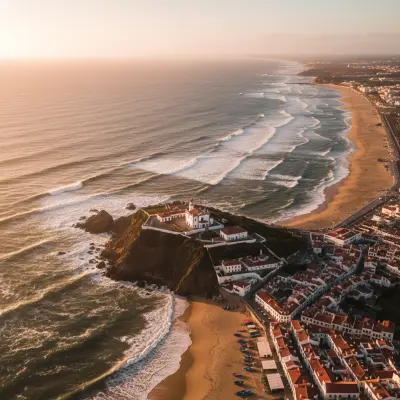
Then there's Nazaré, which in recent years became a global reference for big wave surfing. The underwater canyon at Praia do Norte generates waves exceeding 20 meters. Outside big wave season (October through March), Nazaré is a fishing village where older women still wear the traditional seven skirts and fish dries on wooden racks by the beach.
Leitão da Bairrada, suckling pig roasted in a wood-fired oven until the skin is impossibly crispy, is probably the region's most iconic dish. Mealhada is the suckling pig capital, with restaurants dedicated exclusively to it. In Viseu, rancho à moda de Viseu is a thick soup of pasta, beans, and meat. Around Leiria and Batalha, morcela de arroz (rice blood sausage) is a staple.
The convent pastry tradition here is extraordinary. Beyond Aveiro's ovos moles, there are pastéis de Tentúgal, impossibly thin pastry with egg cream, and queijadas de Pereira in Coimbra. In Caldas da Rainha, cavacas are the local sweet.
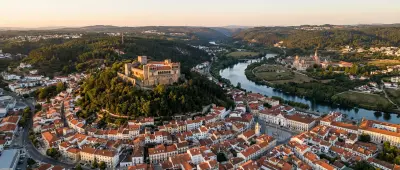
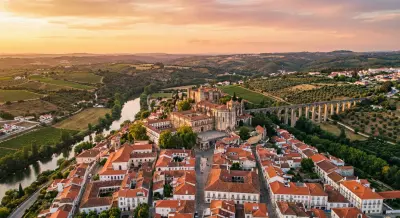
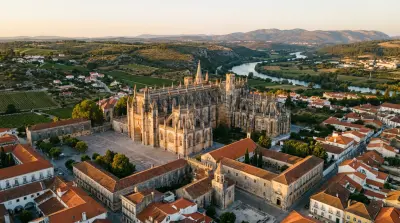
Most people treat Central Portugal as a mandatory stop at Fátima and little else. Anyone who does this misses Tomar, where the Convent of Christ, the Knights Templar headquarters in Portugal, is one of the country's most impressive monuments, featuring the famous Chapter Window in Manueline style. They also miss Batalha, whose Monastery is a masterpiece of late Gothic architecture, with the unfinished Capelas Imperfeitas open to the sky.
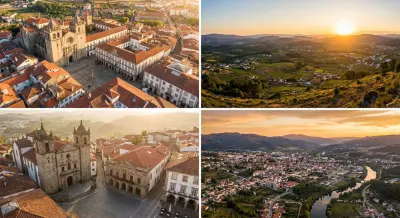
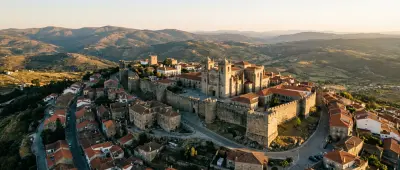
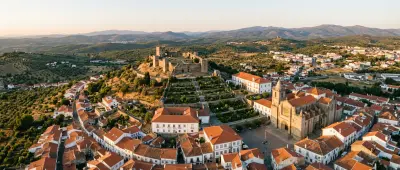
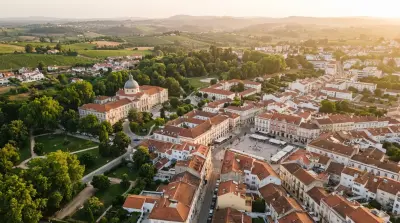
Viseu, inland, functions as the de facto capital of the Beira Alta region, with a well-preserved historic center around the Cathedral and the Grão Vasco Museum. Guarda, the highest city in mainland Portugal, has a more austere, granite character, and the historic villages surrounding it (Sortelha, Monsanto, Linhares da Beira) are among the best-preserved in the country.
Spring (April to June) is ideal for inland Centro, Coimbra, Tomar, Viseu. Summer heat in the interior can be fierce, but the coast (Nazaré, Figueira da Foz) works well in July and August. For big wave season in Nazaré, October through February. Coimbra's Queima das Fitas in May is the country's biggest academic festival. In Tomar, the Festa dos Tabuleiros happens every four years, the next one is expected in 2027.
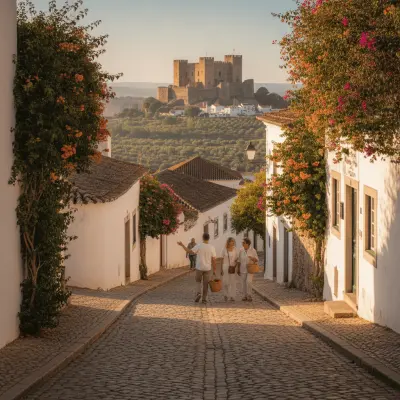
The sea still sits at 23 degrees, the beaches empty out, and prices drop by up to 40%. For anyone driving, a stop in Castelo Branco, between silk embroidery and a good night's sleep, makes the road to the Algarve as interesting as the destination itself.
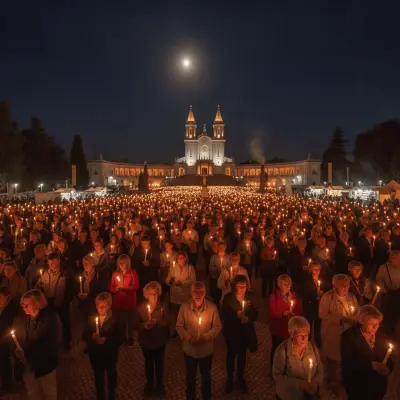
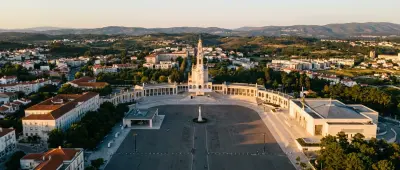
You searched 'Fátima nightlife' and ended up here. The truth: there are no bars or clubs, but there is a candlelight procession every single night that fills the Sanctuary esplanade better than any party ever could.
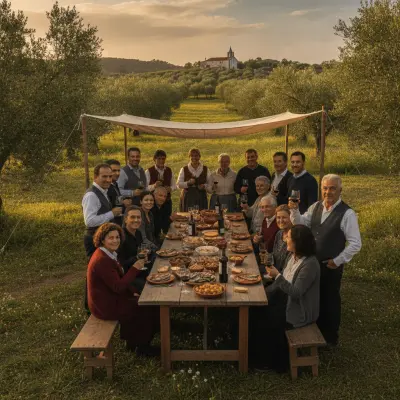
Fátima has no street lined with wine taverns, but it has farmhouses where dinner follows the rhythm of the house. A late-afternoon route through century-old olive groves, an almost empty calvary, and tables where the wine is local.
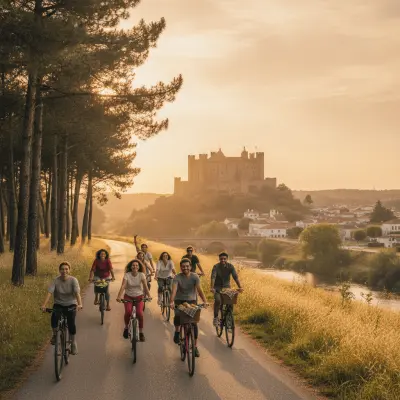
Leiria isn't known for cycling, but it has a centuries-old flat, shaded pine forest for beginners and real hills toward Fátima for stronger riders. Two paces, one municipality.