
Go Out
€€
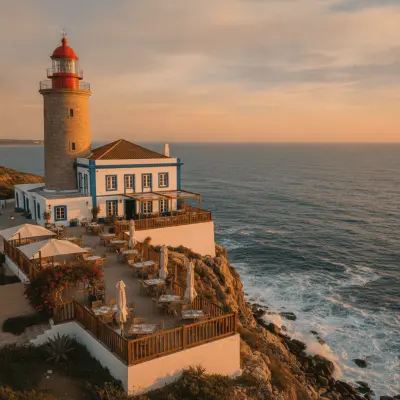
Sunset Café
Zambujeira do Mar

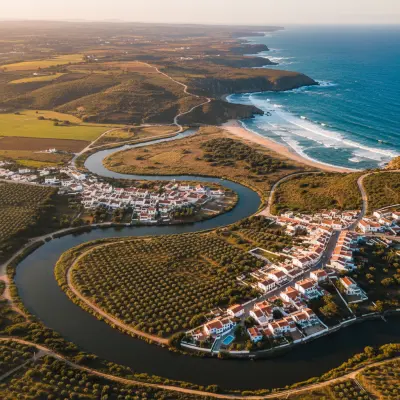
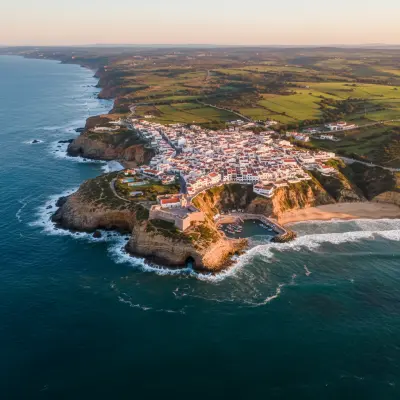
The Costa Vicentina is southern Europe's last wild coastline, schist cliffs, hand-harvested goose barnacles, and the Rota Vicentina trails between Odemira and Porto Covo. A coast where the Atlantic still sets the rules.
The Costa Vicentina is the last stretch of wild coastline in southern Europe. While the Algarve to the south filled up with resorts and golf courses, this strip of coast between the Alentejo and Portugal's southwestern tip held out. The Southwest Alentejo and Vicentine Coast Natural Park, established in 1995, ensured that the schist cliffs, undeveloped beaches, and dirt paths through low scrubland remained largely untouched.
The Costa Vicentina is not a beach destination in the conventional sense. There are remarkable beaches, Praia do Malhão, Praia dos Alteirinhos, Praia da Amália, but the sea here is the open Atlantic, with strong swell and cold water even in August. What draws people is something else: cliffs dropping sheer into the ocean, the Rota Vicentina with its two routes (the Fishermen's Trail along the coast and the Historical Way through the interior), and a sense of space that barely exists anywhere else on the European seaboard.
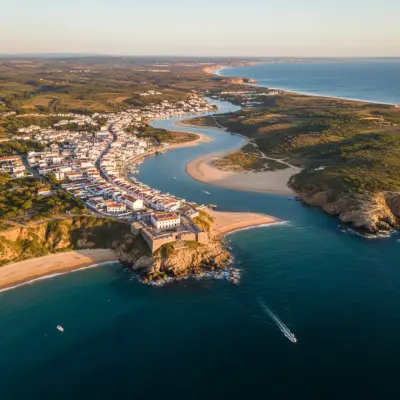
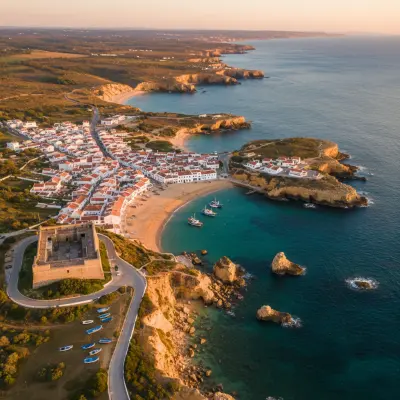
Each settlement along the coast has its own character. Vila Nova de Milfontes, at the mouth of the river Mira, is the most developed, with restaurants, a sixteenth-century fortress, and accessible beaches on both sides of the river. Porto Covo is a small village with a whitewashed centre and Pessegueiro Island just offshore. Zambujeira do Mar oscillates between quiet months and the eruption of Festival Sudoeste in August. Odemira, inland, is the municipal seat and serves as a logistics base, but the Mira river valley running through it is worth visiting on its own.
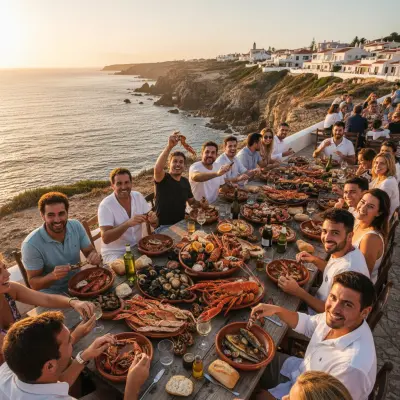
The food here mixes the Alentejo with the sea. Percebes (goose barnacles), harvested from rocks by local shellfish gatherers, are among the best in Portugal, and served in practically every coastal restaurant between April and September. Grilled octopus shows up everywhere, but it's the fish stew (caldeirada) and the Mira river eel stew (ensopado de enguias) that are truly local. Inland, black Alentejo pork dominates: carne de porco à alentejana with clams, migas with spare ribs, and cured meats you can buy at Odemira's markets.
At the simpler restaurants in Zambujeira and Porto Covo, the grilled catch of the day, sea bass, sea bream, white bream, remains the best bet. Always ask what came in that morning.
Most visitors concentrate in July and August, when temperatures hover around 28-30°C and the water climbs to a still-brisk 18-19°C. But the best months for walking the Rota Vicentina are March to May and September to October: mild temperatures, uncrowded trails, and cliffs covered in wildflowers in spring.
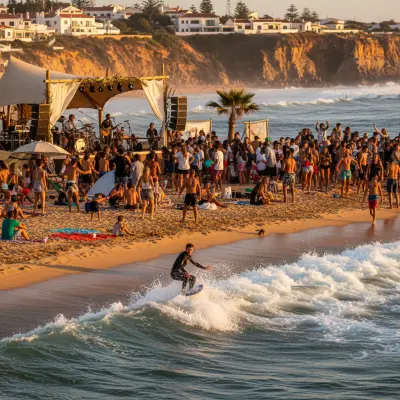
In August, Zambujeira do Mar transforms with Festival Sudoeste, which brings tens of thousands of people. If you want peace, avoid that week. If you want a music festival on a cliff above the Atlantic, there's nothing else like it.
The most common mistake is treating the Costa Vicentina as an extension of the Algarve. It isn't. There's no heavy tourist infrastructure, access to many beaches is by dirt roads, and nightlife options are scarce outside Vila Nova de Milfontes. That's precisely the point. Those expecting convenience will be frustrated. Those expecting a coastline that still runs on the rhythm of tides and seasons will find exactly that.
One more thing: the wind. The nortada blows hard, especially in the afternoon. Always bring a windbreaker to the beach, even in the height of summer.
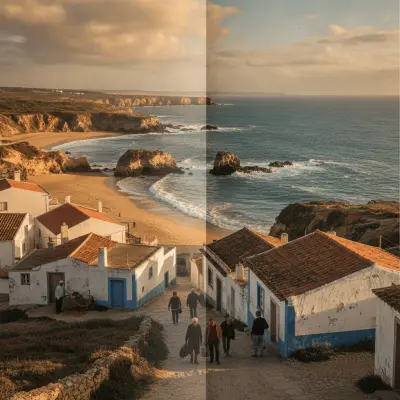
The short answer is Porto Covo has no museums. The long answer involves Roman salting tanks being eaten by the sea, a fort that was never finished, and why that beats any air-conditioned room.
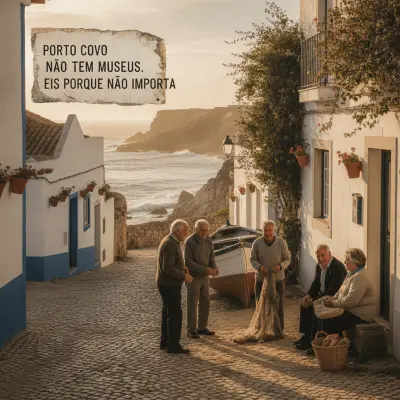
Porto Covo has no museum, no visitor center, no gift shop. What it has is a 17th-century fort with no plaques, Roman ruins sitting underwater off Ilha do Pessegueiro, and a whitewashed village that tells the story better than any panel could.
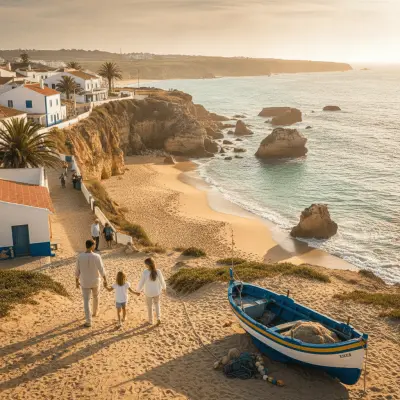
Porto Covo has no water parks or organized kids' clubs, and that's exactly why it works so well with children: a wide, sheltered beach, a short trail kids can actually finish, and a boat ride to Ilha do Pessegueiro that steals the day from everything else.
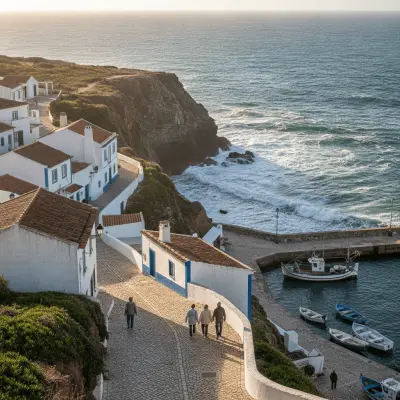
Porto Covo fits entirely into one day of walking: from Largo Marquês de Pombal to Praia Grande, from the fishing harbor to the start of the Fisherman's Trail overlooking Ilha do Pessegueiro. An unhurried, car-free, GPS-free route.