Visit
€
Praia Grande de Porto Covo
Porto Covo

Porto Covo is a thousand-person village on the Alentejo coast, the starting point of the Fishermen's Trail and gateway to Ilha do Pessegueiro. Outside August, it's the kind of place where two days slip by unnoticed, between sheltered beaches, grilled fish on the square, and cliffs that don't quit.
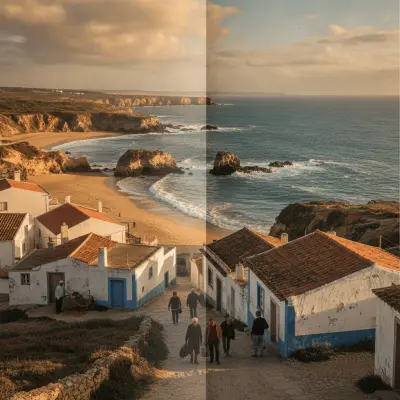
The short answer is Porto Covo has no museums. The long answer involves Roman salting tanks being eaten by the sea, a fort that was never finished, and why that beats any air-conditioned room.
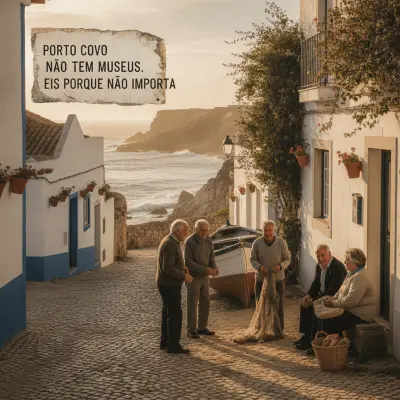
Porto Covo has no museum, no visitor center, no gift shop. What it has is a 17th-century fort with no plaques, Roman ruins sitting underwater off Ilha do Pessegueiro, and a whitewashed village that tells the story better than any panel could.
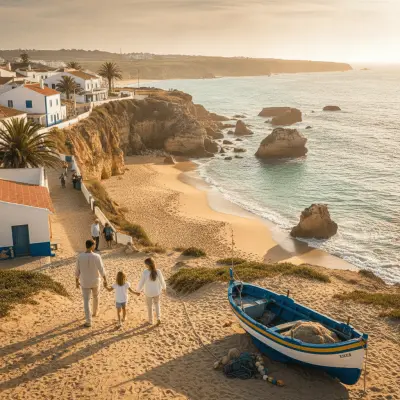
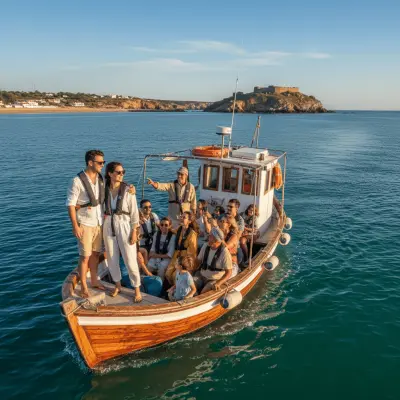
Porto Covo has no water parks or organized kids' clubs, and that's exactly why it works so well with children: a wide, sheltered beach, a short trail kids can actually finish, and a boat ride to Ilha do Pessegueiro that steals the day from everything else.
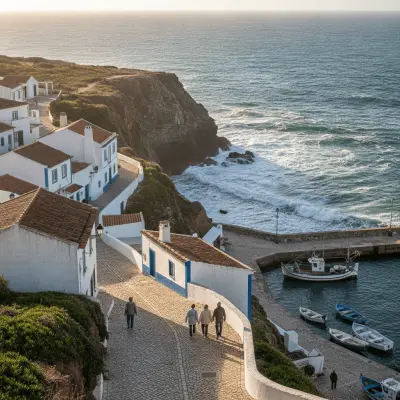
Porto Covo fits entirely into one day of walking: from Largo Marquês de Pombal to Praia Grande, from the fishing harbor to the start of the Fisherman's Trail overlooking Ilha do Pessegueiro. An unhurried, car-free, GPS-free route.
Porto Covo is a village of just over a thousand people that, outside August, runs on its own clock. The Largo Marquês de Pombal, an 18th-century square built on Pombaline geometry, lined with white houses trimmed in blue and punctuated by red doors, is the center of everything. Around it, a handful of parallel streets, a small church, and the restaurants where the fish still comes from local waters.
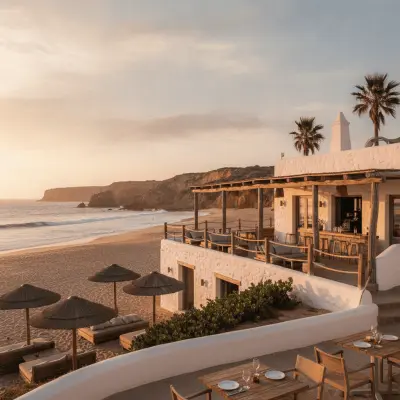
Praia Grande is the most accessible: wide, Blue Flag certified, with lifeguards in summer. For calmer water, Praia dos Buizinhos sits below the viewpoint, tucked between cliffs, you descend a staircase and the wind barely reaches you. Further south, Praia da Ilha do Pessegueiro stretches out in front of the island, with a 17th-century fort perched on the headland above. The island itself, home to Roman ruins and a second, unfinished fort, is visible from every point along the cliff, but access is only by boat or kayak.
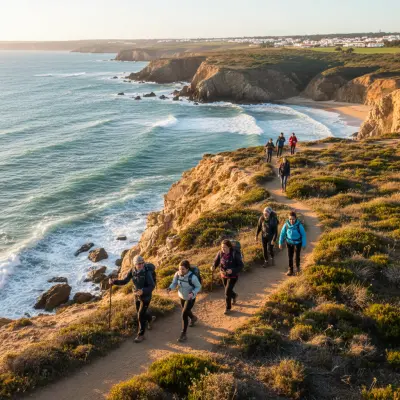
Porto Covo is the starting point of the Fishermen's Trail on the Rota Vicentina, one of Europe's most acclaimed coastal trails. The first stage follows the cliff edge to Vila Nova de Milfontes, hugging the coastline and passing right by Ilha do Pessegueiro. Even if you don't want to commit to the full stage, walking the first hour is worth it, the cliffs and the view over the island make it worthwhile. The trail is well-marked and best walked between September and June, before the brutal Alentejo summer heat sets in.
Cervejaria Marquês, right on the Largo, is a reliable choice for grilled fish and shellfish, book ahead in July and August. Restaurante Ti Joaquim is another local staple. As for timing, June and September are the sweet spot: long days, swimmable sea, and the village still free from August pressure. Two to three days is enough to cover the beaches, walk a stretch of the Rota Vicentina, and have dinner without rushing. Staying just one night misses the point: Porto Covo works best when you settle into the slow rhythm, when you realize the plan here is to have no plan at all.