Torre de Moncorvo in June: Forget the Algarve
You searched Algarve beaches in June and ended up in Torre de Moncorvo, deep in the Upper Douro. No accident: 25 minutes from town there are nearly empty river beaches, five-euro wine, and the largest matrix church built in Portugal between the 16th and 17th centuries. Skip Albufeira for three days.
You searched "best Algarve beaches to visit in June" and somehow landed here, in Torre de Moncorvo, 600 kilometres from Lagos. That wasn't a Google glitch. That was luck. In June, while half the planet boils in Albufeira at 35 degrees with an overpriced Aperol in hand, the Upper Douro has more civilised temperatures, river beaches that are nearly empty, and a region where you can still eat well for sixteen euros. This article is about what to do here instead of heading south.
Why June is Torre de Moncorvo's best month
There's a short window, between late May and the second week of July, when the Upper Douro is at its peak. The almond blossom is gone (that's March), but the olive trees are green, the terraces glow with the copper tone that precedes the harvest, and afternoons close with that low, slanted light that makes the Serra do Reboredo look like someone painted it. Temperatures hover between 28 and 32 degrees, which around here counts as cool. In August, this place goes up to 42. In June, you can still walk at noon without wanting to call an ambulance.
It's also the month when Santos Populares are celebrated across the Douro, and Torre de Moncorvo, without the staged folklore of Lisbon, marks them with real grilled sardines, modest basil pots, and village dances where the average age is 60 but the energy beats any rooftop bar.
Where to start: the town and what to see first
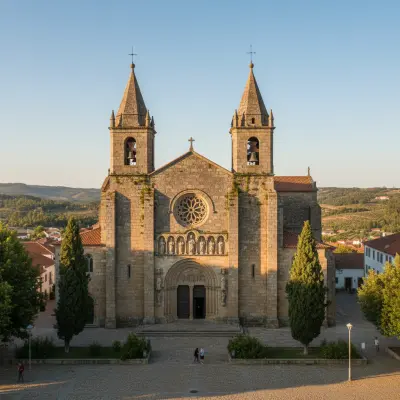
Begin in the historic centre. Park at Praça Francisco Meireles and walk up. Your first stop is the Basílica Menor de Nossa Senhora da Assunção, the largest matrix church built in Portugal between the 16th and 17th centuries, and one that almost nobody outside this region knows exists. It's massive, in the best sense. Three naves, granite vaults (real granite, not as a metaphor), and a gilded woodwork altarpiece worth ten minutes of stiff neck. Free to enter. End of debate.
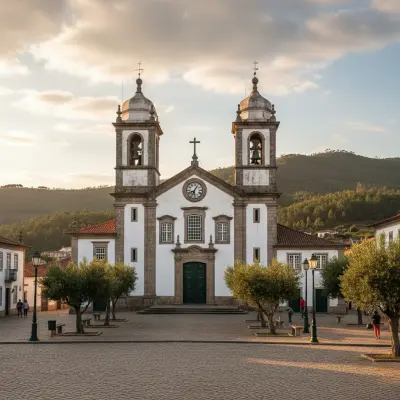
Two hundred metres away you'll find the Igreja da Misericórdia de Moncorvo, smaller, more intimate, with an 18th-century blue tile collection most people walk past too fast. Don't walk past it too fast. The Annunciation panel, to the left of the main chapel, justifies the detour.
After the religious load, cross town to the Museu do Ferro e da Região de Moncorvo. The standard reaction on arrival is: "a museum about iron ore?" Yes. And it's fascinating. Torre de Moncorvo sat on top of one of the largest iron deposits in the Iberian Peninsula, and the industrial history of the 1950s and 60s, with freight wagons crossing the mountain, is told with an honesty you rarely find in regional museums. Check opening hours locally, but plan for a solid hour.
Where to eat (and what to order)
Torre de Moncorvo doesn't do haute cuisine. It does something better: grandmother cooking with a Trás-os-Montes accent. Order posta à transmontana, because we're closer here to Bragança than to Porto and the local mirandesa beef roams the region. Try butelo com cascas if it's on the menu, though it's really a winter dish. Alheiras from Mirandela appear on almost every menu and almost always live up to the hype.
For dessert, demand sugar-coated almonds. It's a local product, centuries of tradition, and what's sold in the shops on the main square (Sociedade dos Amendoeiros, for instance, though check if it's still open) is better than any souvenir box from the Algarve. Prices run between 10 and 18 euros per kilo depending on quality. Take two. You'll want them.
Wine: the open secret
We're in the Upper Douro, the less touristy sub-region, with more robust wines and prices more honest than around Pinhão or São João da Pesqueira. Order a small-producer red and you'll pay three to five euros a glass at a local restaurant. As for regional reds, this is the place to try Touriga Franca and Tinta Roriz blends that cost 9 to 14 euros a bottle and run 30 in Lisbon.
The beach angle: what to do about Algarve inertia
Back to the original question: beaches. In June the Algarve is overcrowded, the Costa Vicentina still gets a north wind that cuts through everything, and any beach hut in Albufeira charges Saint-Tropez prices. Solution: river beaches. The Upper Douro has several.
Praia Fluvial do Sardão, in the neighbouring municipality of Alfândega da Fé, is one of the better-kept secrets in the region, and Torre de Moncorvo is 25 minutes by car. Another option is Foz do Sabor, where the Sabor river meets the Douro in a deep valley, with cliffs and calm waters. Don't expect white sand: this is pebble and schist. But in June the water is still cold enough to be refreshing and warm enough to swim in for an hour without your teeth chattering.
Bring serious sun protection. The schist reflection off the cliffs doubles UV exposure. In June, between 11am and 4pm it really burns, more than in Lagos. Trust me.
Experiences worth planning around
If you arrive on a specific weekend (dates to confirm locally, usually June or early July depending on the municipal calendar), you'll catch the Torre de Moncorvo Medieval Fair. Three days of historical reenactment that, unlike almost every other Portuguese medieval fair, doesn't smell of churro smoke with a synth playing Ave Maria in the background. There are falconry ceremonies, straw-roofed taverns, Moorish food, and the atmosphere is genuine because the town actually has a medieval past. The walls and the tower that gave the place its name have been here since the 12th century.
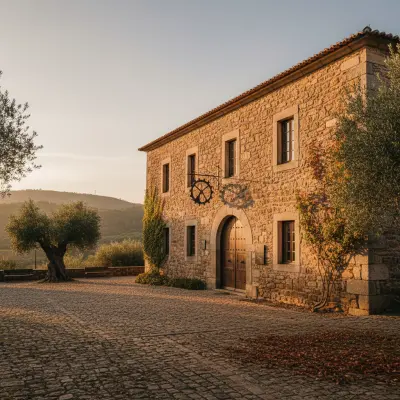
For a slower day, the Torre de Moncorvo manor houses route introduces you to the noble architecture of the 17th and 18th centuries. These are houses where the rural gentry built their bases in town, complete with coats of arms, wrought iron balconies, private gardens that occasionally open to the public. It's history off the standard circuits. Check ahead which ones will be visitable the week you're coming.
Walks and gardens
June still allows for early morning walks. The climb up to the Santuário da Senhora da Assunção, on top of Serra do Reboredo, gives a view over the Douro valley that no Instagram square captures correctly. Leave at 7am, bring two litres of water per person, closed shoes. It takes about two hours with stops. For something more relaxed, see our guide to Torre de Moncorvo's gardens and parks, still relevant in June with some late species still in bloom.
Where to sleep
Supply is small, which is good for prices and bad for planning. Book three to four weeks ahead. Rural rooms and traditional guesthouses run between 60 and 95 euros a night including breakfast in June. There are one or two character-driven inns in town, but for something more authentic, consider a country estate within the municipality. If you have flexibility, widen the search to Sabrosa and check our guide to the Douro estates in Sabrosa, an hour by car and a good base for exploring the entire Upper Douro.
How to get there (and why it takes a while)
From Lisbon, expect 4h30 by car via the A1 to Porto and then A4/IP4 to Vila Real, followed by the N222 to Torre de Moncorvo. From Porto, allow 2h30. There's a train (the Douro line), but Pocinho station is twenty minutes from the town and onward public transport is limited. A rental car is the sensible call. Budget 35 to 50 euros a day for a small car, and 90 to 110 euros to fill the tank once.
The honest summary
Torre de Moncorvo in June is not the Algarve. It's better for anyone looking for silence instead of looped pop, dry heat instead of humid, five-euro wine instead of fifteen-euro gin, and people who still look you in the eye when they speak. There are river beaches 25 minutes away. There's the Basílica, the Igreja da Misericórdia, the Iron Museum. There are fairs, manor houses, gardens. There's everything the Algarve in June doesn't have: room to breathe.
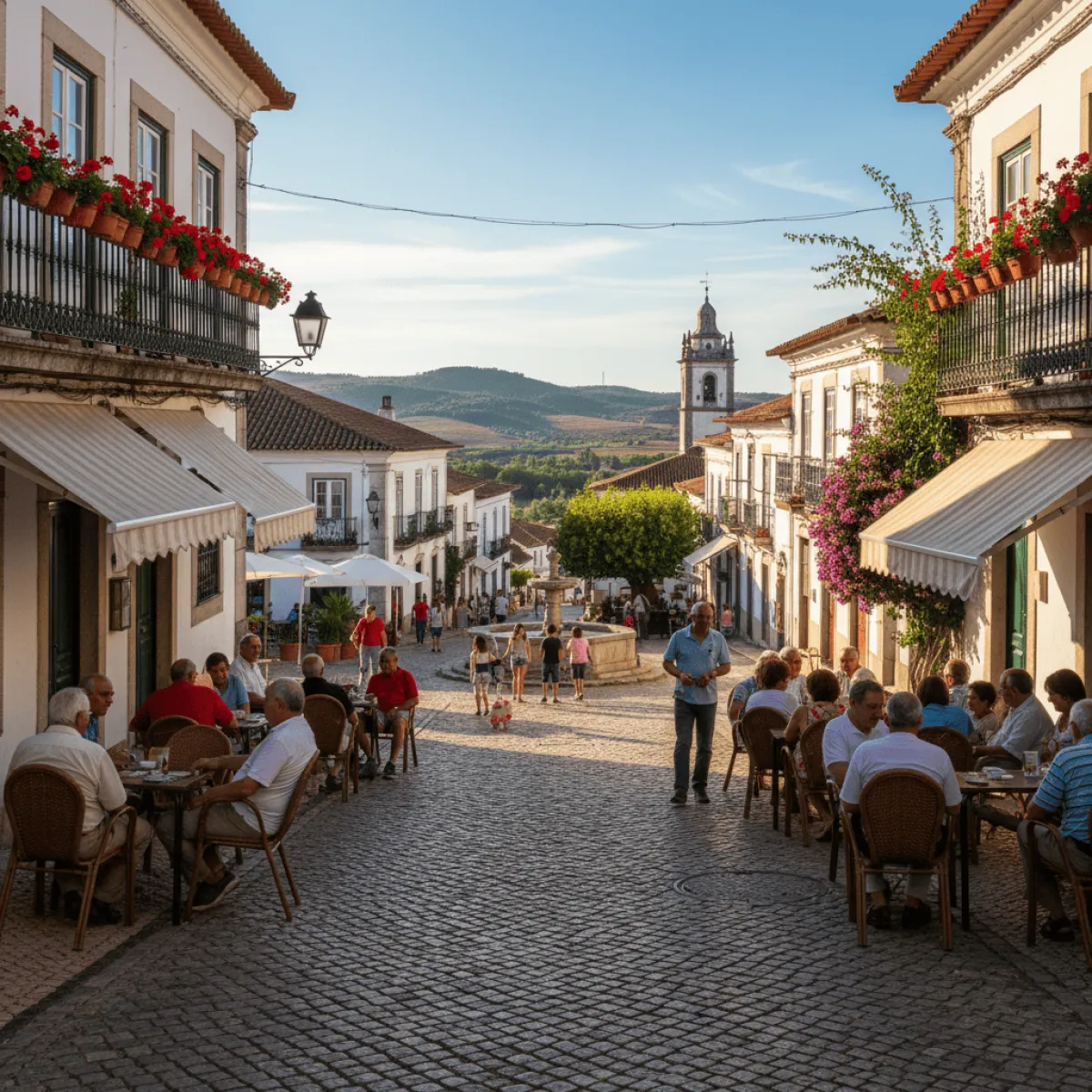
Plan three days. At least. Two and you'll rush, and the trip from the coast doesn't pay off. In three, you'll get the town, do a manor route, eat slowly, swim in the Sabor, and still have time to sit in a café off the main square watching life pass at a speed that only exists here and in maybe four or five other inland places. Five days, and you'll never want to go back to Albufeira.