Torre de Moncorvo Medieval Fair: Three Days in the Past
The 13th Torre de Moncorvo Medieval Fair runs April 17-19, 2026, with free admission and 13 thematic areas across the historic centre. This year's theme centres on Transmontane gastronomy during King Dinis's reign, with medieval taverns, craft workshops, and historical reenactments.
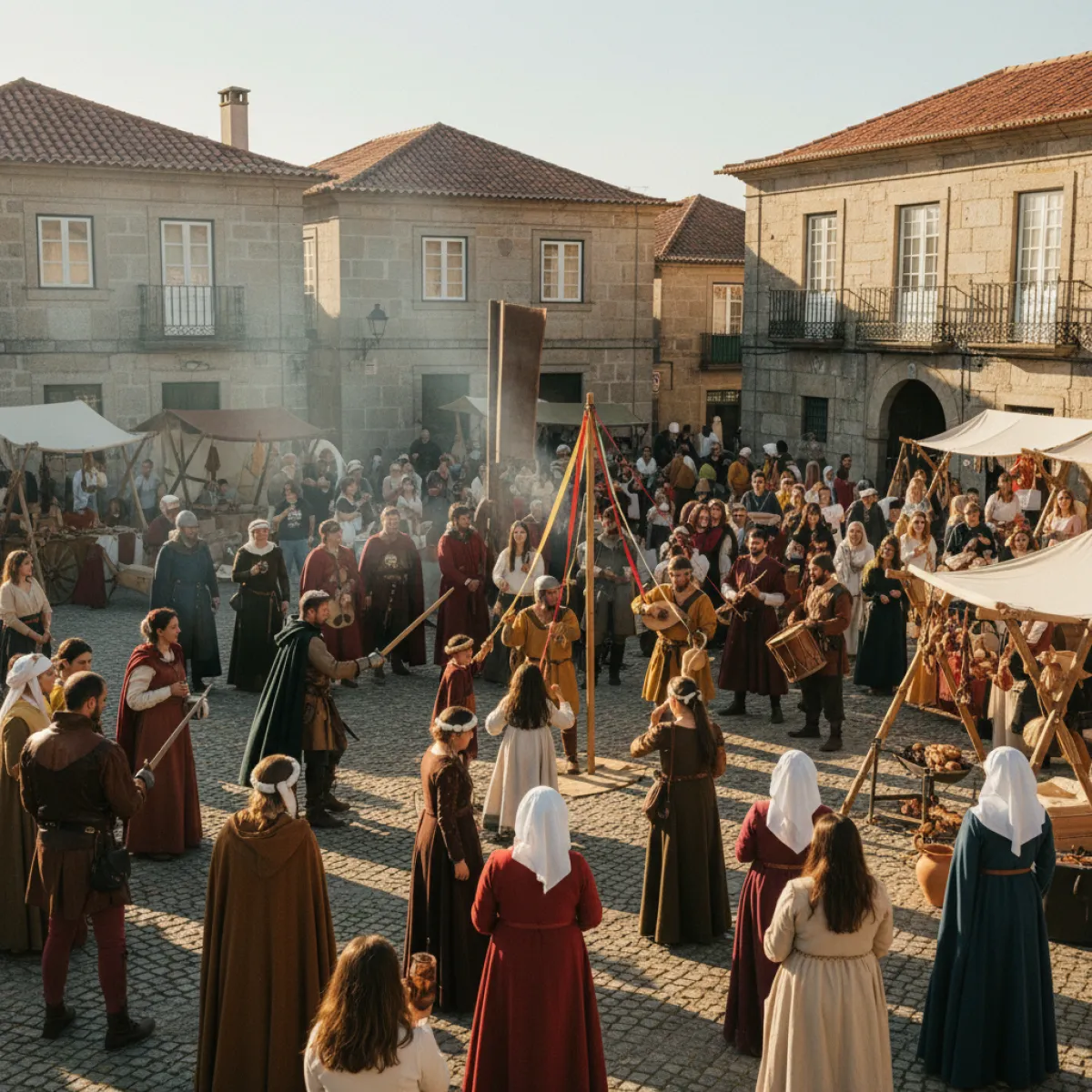
Portugal has medieval fairs everywhere. Most are interchangeable, same generic setup, different town square. The Torre de Moncorvo Medieval Fair is something else entirely. The historic centre where it takes place isn't a backdrop, it's the actual thing. Narrow stone streets, centuries-old walls, squares where trade happened seven hundred years ago. The fair doesn't recreate the Middle Ages, the town already looks the part.
What This Fair Actually Is
The 13th edition runs from April 17-19, 2026, themed around «Aromas and Flavors in the Tower of Mem Corvo during the reign of King Dinis». This isn't arbitrary: King Dinis granted this town a royal fair charter between 1284 and 1285, authorizing an annual fair that lasted an entire month. The 2026 edition focuses on local gastronomy and the trade that once defined this corner of Trás-os-Montes.
Admission is free. Gates open at 10:00 on the first day, closing at 19:00 on the last. On Friday and Saturday, the taverns stay open until 03:00, which completely changes the experience after dark.
What You'll Find: Area by Area
The fair spreads across 13 thematic areas in the old town. Don't try to see everything on day one, you'll miss the best parts.
The Market and Craft Workshops
In Praça Francisco Meireles and Largo General Claudino, artisans set up live workshops of traditional trades. Blacksmiths working iron at the forge, potters, weavers, basket makers. This isn't passive demonstration, you can talk to the craftspeople, handle the tools, understand the process. The blacksmith forges are particularly striking: the heat, the ring of hammer on metal, the smell of coal. It's sensory in a way you can't get anywhere else.
Merchants and mystics occupy another section with regional products, herbs, spices, and artifacts. You'll find handmade pieces here that won't appear in any souvenir shop, local craft made by people who still maintain techniques passed down through generations.
The Medieval Taverns
Set up in Largo do Sagrado Coração de Jesus, the taverns are the heart of the fair. This is where you eat as they ate: game meats, spit-roasted pork sandwiches, convent-style sweets, sangria made with regional wines and seasonal fruit. The bread is baked on-site, the cured meats are local. If you're visiting Torre de Moncorvo in spring, almonds show up in several dishes and desserts.
My recommendation: have dinner at the taverns on Friday evening. That's when the atmosphere shifts. Torches light up, musicians circulate between tables, conversations overlap. By Saturday night it's too crowded and the intimacy is gone.
Performances and Reenactments
The Royal Procession through Transmontane lands is the highlight. A full parade with costumed figures, horses, banners, it winds through the entire historic centre. There are also cavalry training demonstrations, jousting tournaments, live falconry displays with birds of prey, and a military camp where you can handle medieval combat equipment.
For families, the Children's Medieval Camp is thoughtfully done: adapted archery, traditional games, painting and building workshops. It's not a bouncy castle with a medieval theme, there's genuine effort to engage kids in the historical experience.
If you like curiosities, look for the medieval football tournament, yes, it exists, and it's exactly as chaotic as it sounds. And the medieval wedding ceremony, which reconstructs period nuptial rituals with costumes, vows, and a banquet.
Practical Tips
What to Wear
Comfortable shoes are essential, the old town streets are uneven cobblestone and you'll walk a lot. April mornings in Trás-os-Montes are still cold (8-10°C), but afternoons can reach 20°C. Layer up. If you want to get into the spirit, many visitors come in costume, it's not required, but it adds to the fun and stalls sell affordable medieval accessories.
Getting There
Torre de Moncorvo is about 2.5 hours from Porto via the A4, then EN102/IP2. There's no direct train, a car is essential. Free parking around the historic centre, but arrive early on Saturday because it fills up. The organization sets up signposted overflow parking areas.
Where to Stay
Hotel options in Moncorvo are limited. Book well in advance, the few available places sell out fast during the fair. Consider accommodation in Freixo de Espada à Cinta (30 minutes) or Vila Nova de Foz Côa (25 minutes), which also lets you combine the fair with a visit to the prehistoric rock engravings. For those planning a longer stay, this guide to the Douro Superior region gives wider context on what else to explore.
Best Day to Go
Friday is the quietest day and best for photographing the thematic areas without crowds. Saturday has the most programming and energy, but also the biggest crowds. Sunday morning works well for families, there are dedicated children's activities and the pace is calmer.
Why This One Is Worth It
What sets this fair apart is its human scale. It's not a mega-event with thousands of people and massive stages. It's a small Transmontane town that, for three days, reconstructs its own history with its own people. Many of the performers are locals, teachers, shopkeepers, students from the town's schools. There's genuine pride in what they do, and it shows.
The 2026 edition's gastronomic focus, almonds, olive oil, Douro Superior wines, cured meats, makes it especially interesting if you want to understand what defines Transmontane cuisine. This isn't generic medieval food: it's the specific products of this specific place, presented in a historical context that gives them meaning.
And then there's the setting. Moncorvo's stone alleyways, the granite houses, the quiet that exists between performances, all of this creates something that's hard to replicate elsewhere. This isn't a fair that could happen in any town. It's a fair that only makes sense here.