March in Torre de Moncorvo: The Alchemy of Almond Blossoms and the Rigor of the Douro Superior
Discover the austere beauty of Torre de Moncorvo in March, where almond blossoms meet iron heritage. A sophisticated guide to weather, packing, and the culinary landscape of the Douro Superior.
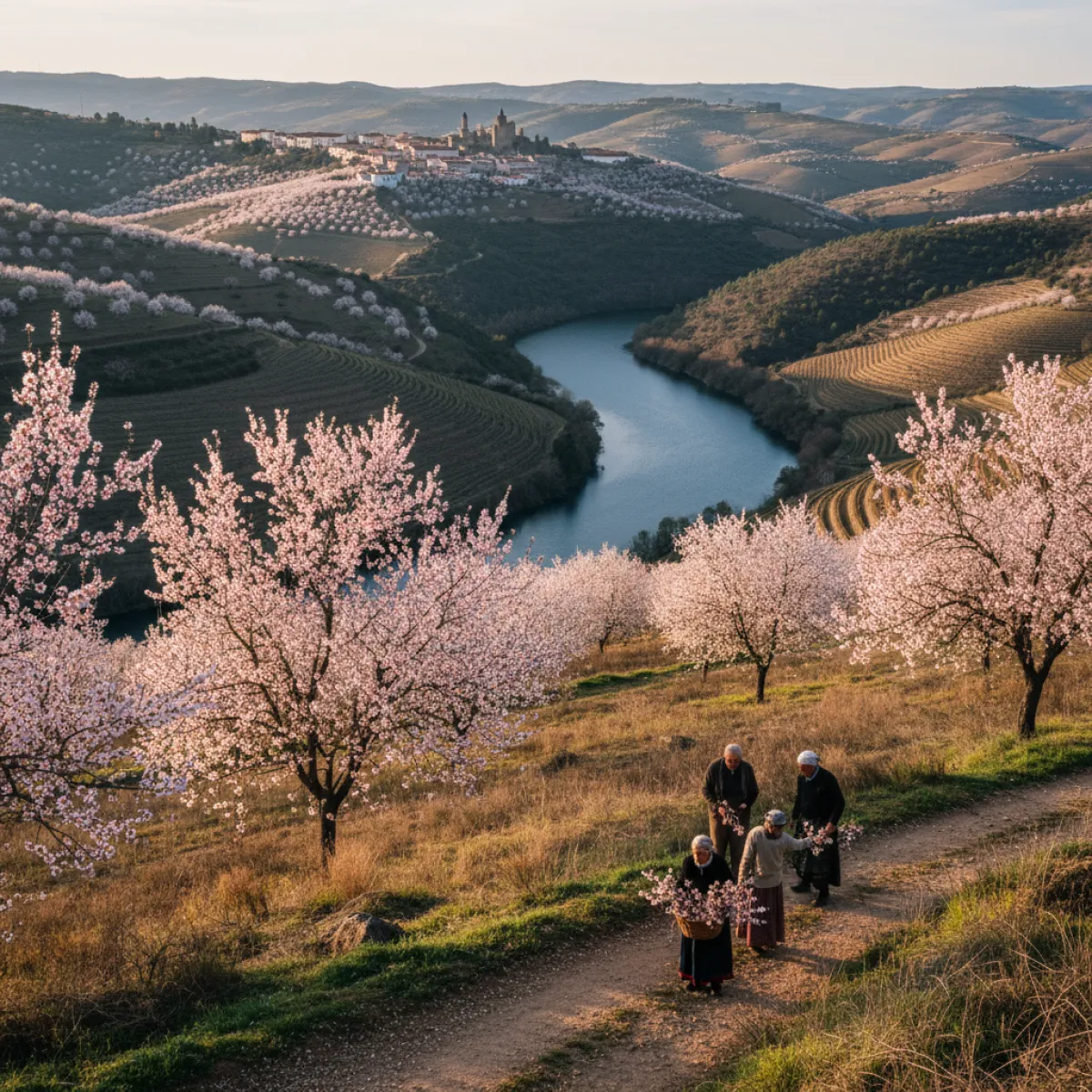
The Ephemeral Bloom of the Douro Superior
March in Torre de Moncorvo is not merely a change on the calendar; it is a chromatic mutation. In the Douro Superior, winter retreats with a reluctance that gives the landscape a particular tension. The almond blossoms, which claim center stage here, are not the obvious bucolic setting that tourist brochures often paint. There is an almost monastic rigor to this flowering. Against the dark schist and the stern granite of the village, the white and pink petals emerge as a delicate insurgency, a promise of renewal that precedes the scorching heat that will define the Transmontano summer.
The experience of visiting Moncorvo at this time of year requires a predisposition for silence and slow observation. The wind blowing from the Reboredo mountains still carries the biting chill of February, but the sun, now higher, begins to warm the stone of the churches. It is the ideal moment to understand the duality of this region: the brute force of iron mining and the fragility of dryland farming. Walking through the narrow streets of the historic center, where the Mother Church of Nossa Senhora da Assunção rises with a scale that seems to defy local demographics, is to confront the legacy of a nobility that once saw these lands as a center of economic and spiritual power.
Weather and the Seasonal Transition
In March, the meteorology in the northeastern Trás-os-Montes is capricious. Mornings often begin shrouded in a dense fog rising from the Douro valley, with temperatures hovering around 6°C or 8°C. By mid-afternoon, under a sky of an almost unreal cobalt blue, the thermometer can rise to 18°C. This thermal amplitude defines the rhythm of the day. One should not expect the predictability of the coast. The rain, when it appears, is swift and purifying, leaving behind an aroma of damp earth and rockrose that is the olfactory signature of this sub-region. It is a transition that evokes what we explored in Lamego in Winter: The Geometry of Comfort and the Silence of Granite, where architecture and climate merge into an experience of retreat and introspection.
What to Pack: The Aesthetic of Functionality
Forget generic leisure wear. Moncorvo in March calls for technical layers with a touch of classic sophistication. Our recommendation focuses on durability and adaptability. A structured wool overcoat or a waxed cotton field jacket is essential for cold mornings. Underneath, merino is your best ally: it regulates temperature without the excessive bulk of chunky knits. Footwear must be robust; the schist pavements and the paths leading to the viewpoints of Fraga do Puio or Senhora do Castelo demand soles with grip. A pair of Chelsea boots in treated suede or high-quality leather hiking boots allow for a seamless transition between rural exploration and a more formal dinner in the village center.
- Merino wool base layers (150-200g).
- A lightweight cashmere scarf for wind variations.
- High-quality sunglasses (the March light in the Douro is particularly intense).
- Chinos or heavy Japanese denim.
Gastronomy: The Cycle of Almonds and Iron
Eating in Torre de Moncorvo is an exercise in respect for the product. The almond is not just an ornament; it is the basis of an economy and a culinary identity. The 'Amêndoas Cobertas de Moncorvo', sugar-coated almonds prepared in copper basins for hours, are a delicacy that requires technique and patience. But the March palate demands more than sweets. It is the ideal season to taste roasted lamb in a wood-fired oven, paired with Douro Superior wines which, in this area, present a deeper minerality and more pronounced tannic structure than their Cima Corgo counterparts. Look for wines from local producers using varieties like Touriga Nacional and Rabigato, the latter bringing a refreshing acidity to high-altitude whites.
For those seeking a deeper connection with the region's fluidity, the proximity to the river invites reflection on The Inland Coast: River Escapes and the Luxury of Stillness in Lamego, where the concept of luxury is redefined by the stillness and silence of the riverbanks. In Moncorvo, this luxury manifests in cold-extracted olive oil, with a spicy and herbaceous flavor, which should be tasted simply with local rye bread before any meal.
A March Itinerary: Between Viewpoints and Heritage
Dedicate a morning to the Mother Church. Its Renaissance interior is of a sobriety that commands respect. Afterwards, head to the Iron & Regional Museum of Moncorvo. The history of mining helps to understand the resilience of the local people. If the day is clear, the climb to Serra do Reboredo is mandatory. From there, the view over the Vilariça Valley reveals the monumental scale of the Douro Superior. The landscape is a composition of agricultural geometry and raw geology. This deep connection between the land and the cultural expression of the region finds a parallel in The Resonance of Granite: Fado and the Sonic Identity of Lamego, where we explore how the physical environment shapes the sonic and emotional identity of the Douro.
Budget and Planning: March is considered mid-season. A daily budget of €150 to €250 per person allows for a stay in high-quality manor houses, gastronomic meals, and private wine tastings. Bookings should be made in advance, especially during the weekends of the Almond Blossom Festival, when the village gains a new energy while maintaining its aristocratic decorum.
