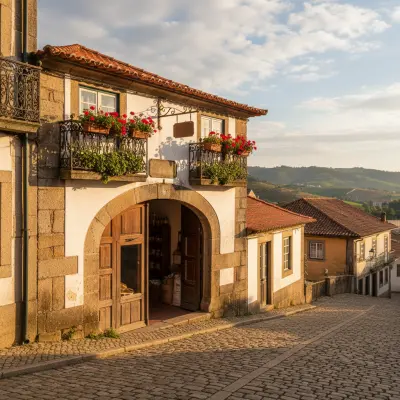
Lamego in Winter: The Geometry of Comfort and the Silence of Granite
Discover the most intimate and sophisticated side of Lamego during the winter months. Between monumental stairways, the comfort of granite at Casa do Pó, and the robust flavors of the Douro, explore a guide to stillness and refinement.
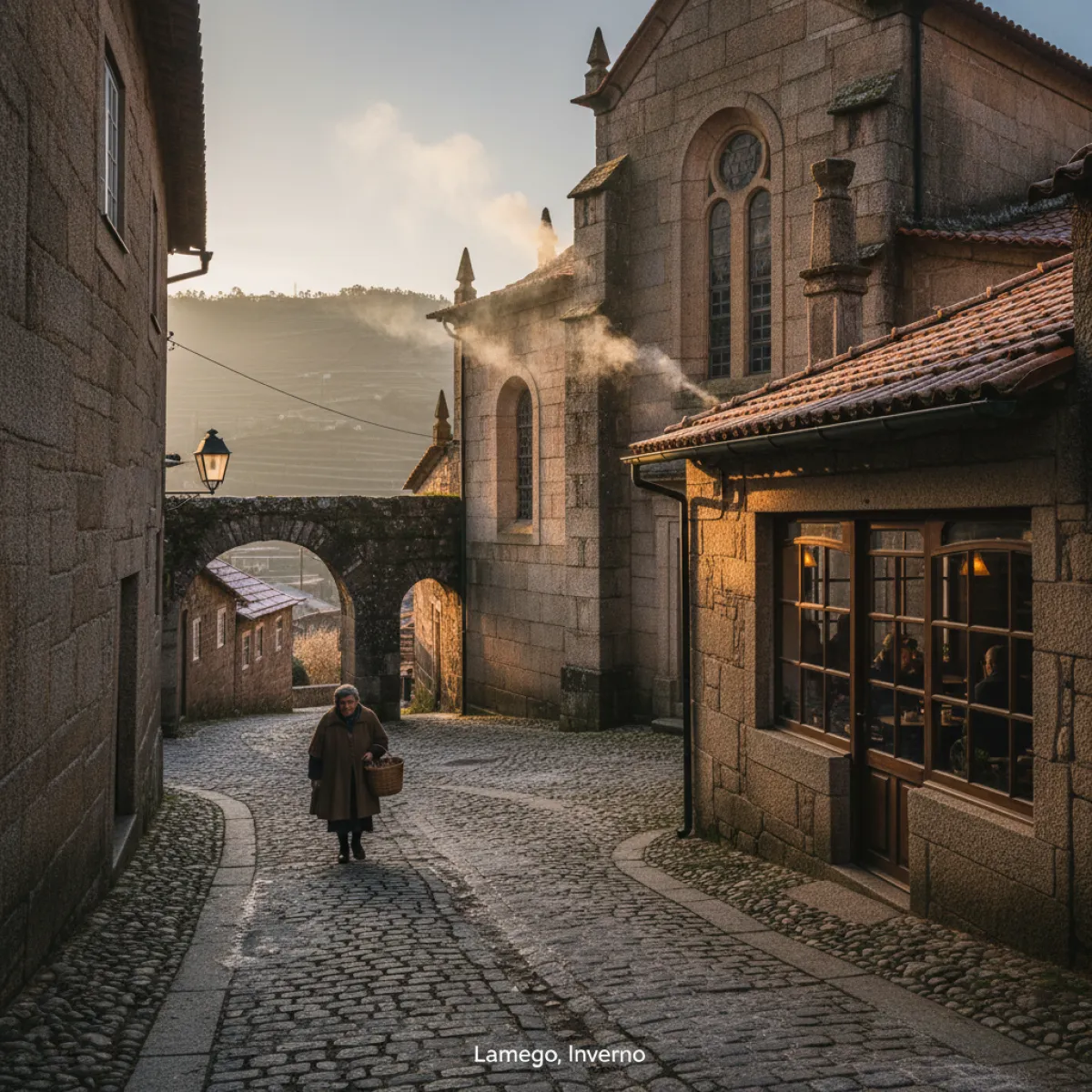
The Melancholy of the Douro and the Gravity of Lamego
There is a particular honesty to a Transmontano winter that the summer, with its blinding light and tourist throngs, rarely permits one to see. When the fog rolls down from the Marão and Meadas mountains, settling over the Douro Valley, Lamego sheds its concessions to light leisure and reveals its true skeletal structure. This is a city of granite, of historical weight, and of a silence that invites not loneliness, but introspection. For the traveler seeking the aesthetic rigor of Monocle or the narrative depth of Condé Nast Traveler, Lamego between December and March is an exercise in stasis and discreet refinement.
In this season, the city does not attempt to seduce with vibrant colors. Instead, it offers a palette of grays, mosses, and the amber of aged wines. It is the moment when fireplaces begin to smoke in the Baroque manors and the scent of burning wood mingles with the cold morning dampness. One does not come to Lamego in winter merely to 'see'; one comes to feel the texture of cold stone and the warmth of a well-chosen refuge.
A Vertical Pilgrimage of Faith and Architecture
No visit to this city is complete without tackling its monumental axis. However, doing so in winter transforms the act into an almost meditative experience. The 686 Steps of Lamego: A Baroque Stairway to Heaven are the city’s backbone, a succession of landings decorated with azulejos (tiles), fountains, and statues that challenge both gravity and breath. With the mercury hovering around five degrees Celsius, the climb to the Sanctuary of Nossa Senhora dos Remédios ceases to be a grueling effort and becomes a necessary warming of the body.
The damp granite glints under the light filtered through the clouds, and the silence is broken only by the sound of water rushing through Baroque spouts. At the summit, the view over the historic center reveals the perfect axial layout that has defined the city since the 18th century. It is a lesson in classical urbanism, where church and state dialogue across a wide, imposing avenue. Set aside at least two hours for this ascent; not because of the difficulty, but for the need to observe the sculptural details and the patina that time has deposited upon the stone.
The Urban Sanctuary: Casa do Pó
The choice of lodging in Lamego dictates the pace of the stay. For those who value proximity to the Sé Cathedral and the authentic life of the narrow streets, Casa do Pó presents itself as an enclave of taste and comfort. This vacation rental is a prime example of how urban rehabilitation can respect architectural heritage without sacrificing functional modernity. Exposed stone walls provide natural thermal insulation, while the curation of the interiors prioritizes tactile materials and warm lighting, essential for the long nights of January.
Waking up here is to feel the slow pulse of the city. The tolling of the Cathedral bell marks the hours with liturgical precision, and the short walk to local bakeries allows you to start the day with a Bôla de Lamego straight from the oven. It is a refuge that does not impose but welcomes with the sobriety that winter demands. The budget for a stay here reflects the quality of design and the exclusivity of the location, sitting at a level of accessible luxury that values experience over excess.
River Stasis and the Luxury of Time
Lamego is often seen merely as a gateway to the Douro wine region, but there is a philosophy of permanence here that deserves exploration. The concept explored in The Inland Coast: River Escapes and the Luxury of Stillness in Lamego aptly defines this duality. Even if the river is a few kilometers away, the valley’s influence is omnipresent. In winter, the banks of the Douro lose the frenzy of cruise ships, giving way to a nearly spectral serenity.
A drive through the secondary roads descending toward Régua is highly recommended, observing the terraced vineyards, now stripped of foliage, revealing the Herculean engineering that has shaped these slopes over centuries. It is the ideal time to visit the sparkling wine caves, such as those of Raposeira, where the constant temperature of the galleries carved into the rock offers a welcome shelter. Ask to taste the more aged 'Bruto' varieties; the acidity and structure of these wines harmonize sublimely with the region's austere climate.
Gastronomy of Substance: Bôla and Roasted Lamb
In Lamego, the table is a place of resistance against the cold. The Bôla de Lamego is the central pillar of this gastronomy. Forget industrial versions; seek out traditional bakeries where the dough is thin, almost translucent, and the filling of cured ham, marinated pork (vinha-d'alhos), or sardines is generous. At A Presuntaria in the city center, the slicing of ham is elevated to an art form. It is the perfect snack to accompany a glass of Douro red wine, robust and laden with tannins.
For dinner, lamb roasted in a wood-fired oven is the dish that defines winter Sundays. The meat, which falls off the bone at the slightest pressure from a fork, is served with roasted potatoes and giblet rice. This is a cuisine of product, without artifice, requiring time and appetite. A full dinner at one of the city's reference restaurants, such as Manjar do Douro, will cost between 35 and 50 euros per person, including a reserve wine that does justice to the meal.
Practical Guide for the Traveler
When to Go
February is a particularly fascinating month. The cold is sharp, but this is when the almond trees begin to blossom in the lower parts of the valley, creating an extraordinary visual contrast between the gray granite and the pinkish-white flowers. If you prefer the mystique of total fog, January is the ideal month.
Getting Around
From Porto, the A4 motorway brings you to Lamego in just over an hour. However, if time is not a constraint, the National Road 222, frequently cited as one of the most beautiful in the world, offers a slow and cinematic approach along the river. Within Lamego, a car is unnecessary if you stay in the historic center, but essential for exploring the surrounding quintas (estates) and viewpoints.
Budgeting
Lamego offers excellent value for money compared to the Portuguese coast. A long weekend for a couple, featuring premium accommodation, high-level dining, and a few cultural experiences, can be planned with a budget of 400 to 600 euros. It is an investment in mental health and sensory pleasure.
In summary, Lamego in winter is for those who are not in a hurry. It is for those who appreciate the aesthetics of the cold, the rigor of Baroque architecture, and the depth of a territory that prides itself on being simultaneously rustic and erudite. It is the luxury of stillness in a world that rarely falls silent.