Torre de Moncorvo in July: The Anti-Algarve Up North
You searched for the 15 best Algarve beaches in July and the algorithm sent you to Torre de Moncorvo, 600 kilometres from the sea. It wasn't a mistake: rivers to swim in, cold Douro Superior whites, and medieval streets without a tuk-tuk in sight.
You typed "the 15 best Algarve beaches to visit in July" into Google, and the algorithm, in its questionable wisdom, sent you here. To Torre de Moncorvo. Six hundred kilometres from Praia da Marinha. A lifetime from the queue to park in Albufeira at noon. There's a reason. It wasn't a mistake.
Why You're Not Reading About the Algarve
The Algarve in July is a logistical operation involving blood, sweat, and two litres of fuel an hour idling on the EN125. Rentals booked in May at prices that should be illegal. Eight euros for a single scoop of ice cream in Carvoeiro. By eleven in the morning at Praia da Marinha, there isn't a square centimetre of sand that hasn't been claimed by a towel. Locals? They go in October. They know.
The alternative is six hundred kilometres north, at the edge of the Douro Superior, where Trás-os-Montes stops pretending to belong to the rest of Portugal. It's called Torre de Moncorvo. In July it hits 40 degrees. But it's 40 degrees without crowds, without traffic, without tourist inflation, and with rivers. Yes, rivers. The Algarve has the sea and the problem with the sea. Here you have the Sabor and the Douro, and most of the people using them in July are locals with cooler boxes and cheap flip-flops.
Where to Swim When the Thermometer Says 41
Praia Fluvial da Foz do Sabor is the name to remember. It sits where the Sabor meets the Douro, a few kilometres south of town, down a road that winds between almond trees and sun-fried olive groves. There's a small patch of sand, water that comes cool off the reservoir upstream, and a little dock where recreational boats pass in August. In July, with luck, you still get the silence. Bring a sun umbrella. Shade here is a rare commodity.
There are other spots. The Sabor reservoir has bathing zones marked by the municipality, with signboards indicating water quality. Check locally before you go, because conditions shift with the season and the river level. What you won't find is a red and white parasol at twelve euros a day. You'll find pine groves, a fountain here and there, and a cold beer in some café back in town when you're done.
The Town at Sunset
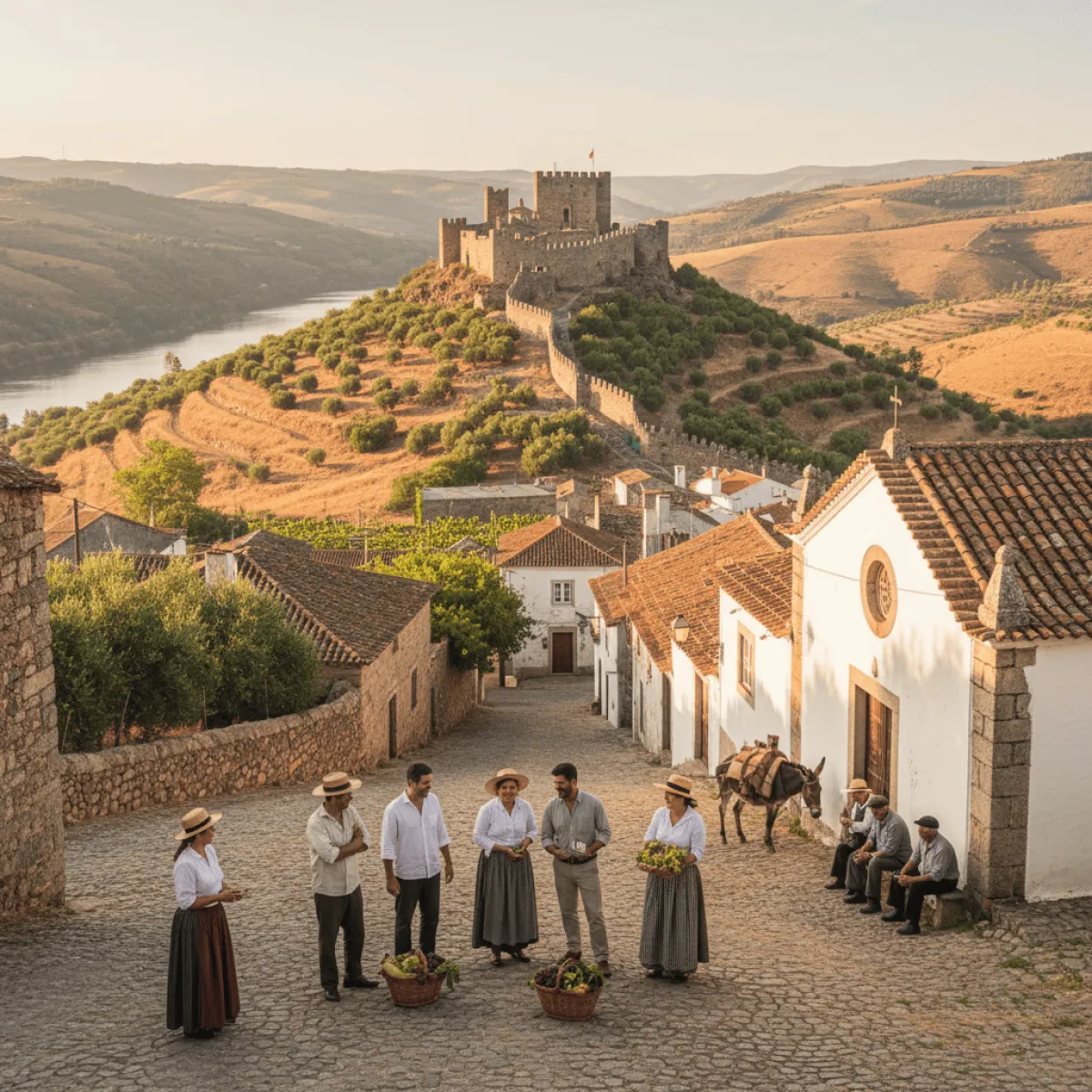
Torre de Moncorvo is a fortified town that has survived time better than it had any right to. In July, you walk early or late. Between two and five in the afternoon, the town closes. Not metaphorically. The shutters come down, the streets empty, and anyone still on a café terrace is doing penance. Learn the rule or pay the price in heatstroke.
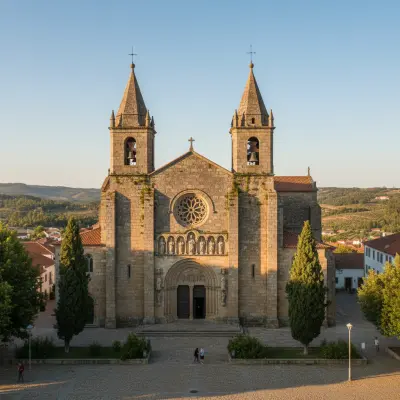
Start at the Basílica Menor de Nossa Senhora da Assunção, the parish church and the most imposing piece of architecture in the centre. Built in the sixteenth century, it holds the rank of minor basilica, the kind of distinction that means little to non-Catholics but everything to the historical record. Cool inside. Hot granite outside. Go at opening time and bring water.
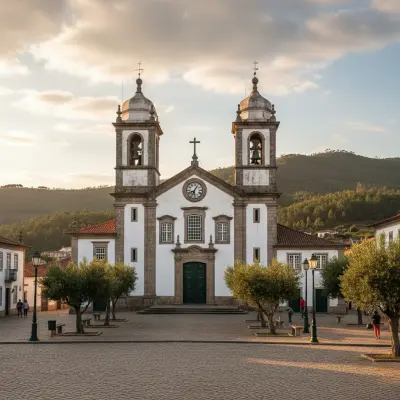
A short walk away, the Igreja da Misericórdia de Moncorvo offers what many Portuguese churches do and few tourists notice: gilded woodwork, painted panels, and a quiet you cannot buy at any hotel. Token entry fee. Confirm opening hours locally because they shift with the season and the available priest.
Iron: The Real Protagonist Here
To understand Torre de Moncorvo, you have to understand the Reboredo mountain range and what sits underneath it. For centuries, the town lived off iron ore. The Romans dug it. The British came back in the nineteenth century to attempt industrial-scale extraction. Serious mining ran well into the twentieth century, ending in the 1980s, and even now there are arguments about whether to reopen the seams. The Museu do Ferro e da Região de Moncorvo tells this story without sentimentality. Small, honest, done in a little over an hour. Go in the heat of the morning or late afternoon, when walking from the museum back to the centre doesn't require a hydration strategy.
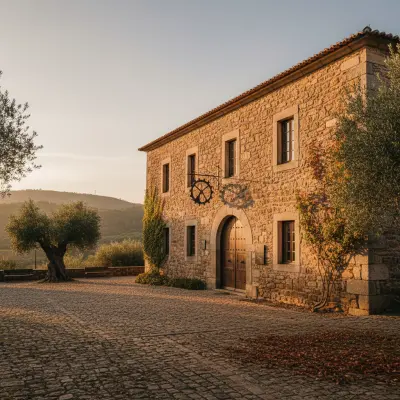
If you're wondering why a town at the end of the world has manor houses with family crests on the facades, the answer involves iron, almonds, and families who got rich back when most of Portugal didn't know this corner of the country existed. The manor houses heritage route is the best way to put the pieces together. You'll see crests, facades, doors worth more than most Lisbon apartments, and you'll understand that social hierarchy up here always played by its own rules.
What to Eat When It's Genuinely Hot
Trás-os-Montes cuisine is, at its core, a winter cuisine. Posta, bean stews, alheira sausages, butelo. Things that warm a body at five degrees but get served at forty out of habit and identity. The uncomfortable truth is that in July, in Torre de Moncorvo, the smart move at lunch is a salad of regional olives, local goat's cheese and good bread. For dinner, wait for the sun to drop, order a bottle of cold Douro Superior white, and then attack a roast goat if the restaurant means business.
Amêndoa coberta is the town's sweet specialty: local almonds coated in sugar, with a protected regional identity. You buy them in any bakery in the centre. Don't buy the industrial packs in supermarkets, they're a different thing and you'll only disappoint yourself.
If You Come Earlier (or Later): Other Faces of the Town
If you haven't booked yet and you're only daydreaming, consider other seasons. May and June are a different animal: kind temperatures, almond blossom long gone but vines and olive groves at full force, and patron-saint festivals everywhere. To get a sense of what the town looks like outside the extreme summer, read the guide to spring gardens and parks. For something that mixes heritage, festival and controlled theatre, the Medieval Fair is the event of the year. In June, if you want to feel the Santos Populares without the smoke of grilled sardines on Lisbon's Avenida da Liberdade, read this piece on Sabrosa. And if you read wine, the Sabrosa estates tell another version of the Douro story.
Logistics: Cost, Routes, Where to Sleep
From Lisbon, it's five and a half hours by car with stops. From Porto, three. The A4 takes you to Vila Real, then the IP2 to the turn-off. By train, the nearest useful station is Pocinho, end of the Douro Line, and from there you need a car or taxi. Pocinho is about twenty minutes from town. Check timetables before you travel, because the Douro Line is romantic but it isn't frequent.
Accommodation: there are hotels in the centre and rural lodgings around. July prices here are almost insulting compared to the Algarve. We're talking nights that cost what you'd pay for a hotel breakfast in Vilamoura. Country house rooms start around 50 to 70 euros, hotel suites with a pool run 100 to 150. Confirm locally because it shifts with demand and operator.
Car rental: if you fly into Porto, rent one. This region doesn't function without a car. Public transport here is designed to move schoolchildren, not distribute tourists across villages and river beaches. It costs what it costs in July, but it still works out cheaper than renting in Faro for the same week.
Back to the Algarve
If you still want the Algarve in July, go. Plenty of people enjoy it and some have to be there. But consider this: if your search was for "beaches to visit", maybe what you actually wanted wasn't a beach but the idea of putting your life on pause for a week somewhere nobody knows you, where the phone can stay on the bedside table, and dinner is a ritual rather than a checklist item. Torre de Moncorvo, in July, offers that. At 40 degrees, sure. But it offers it. The Algarve, with the twelve-euro parasol, may no longer be able to.