Sabrosa: The Douro Estates Nobody Talks About
Sabrosa has no photogenic train station or infinity pools over the river. It has producers who still tread grapes in granite lagares and sell at the door. For anyone who wants the Douro before it became a tourism product, this is the place.
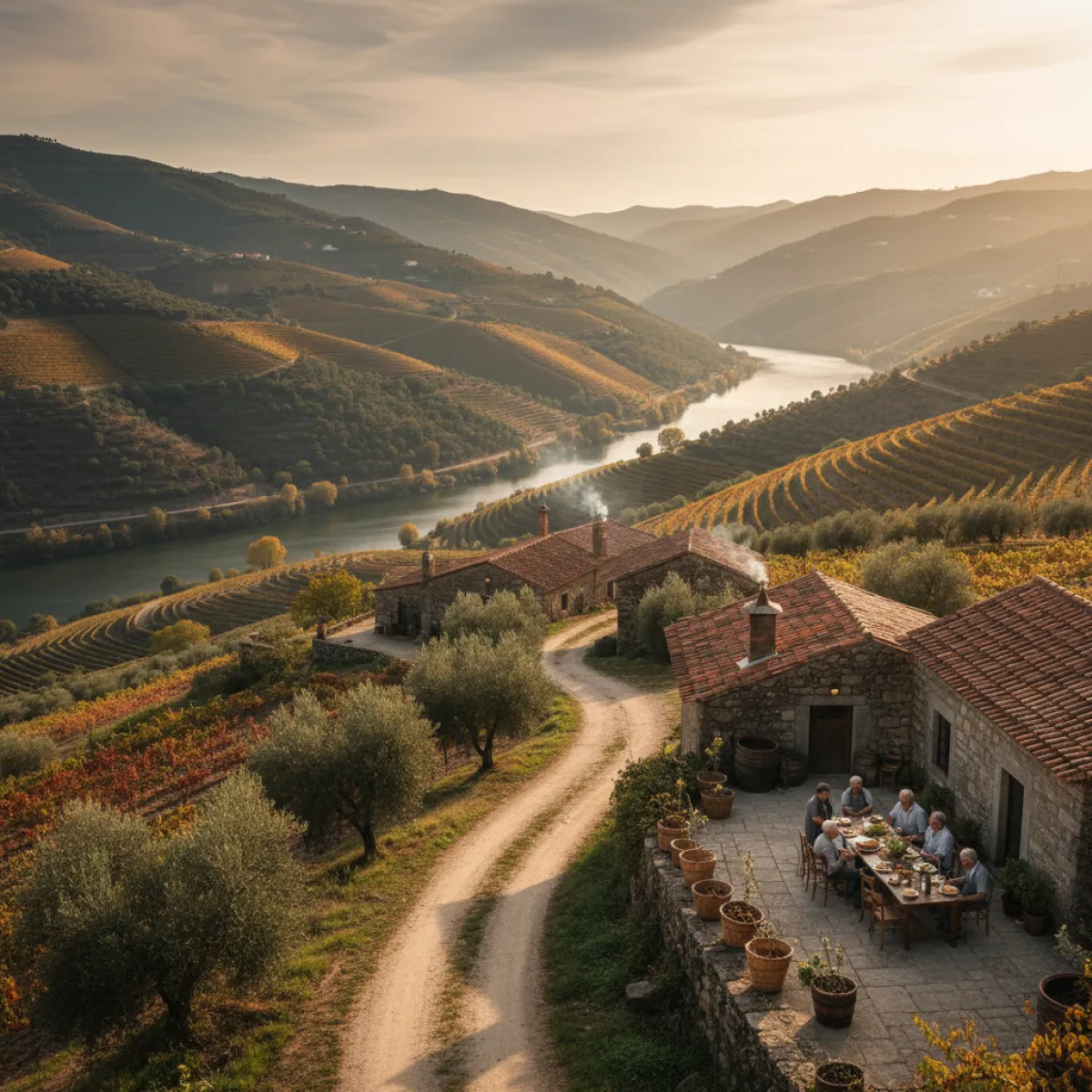
Sabrosa doesn't make the lists. It doesn't have Pinhão's photogenic train station, or the São Leonardo de Galafura viewpoint that everyone shares on Instagram, or a design hotel with an infinity pool overlooking the river. And that's precisely why it matters.
This municipality of fewer than six thousand people, wedged between Pinhão and Vila Real, is where the Douro wine machine actually works, no staging, no €85 tasting menus, no queues of minivans at the estate gates. Here, when you knock on a producer's door, the producer answers. And they're probably wearing muddy boots.
What Makes Sabrosa Different
Most Douro visitors concentrate on the Régua–Pinhão–Lamego triangle. Fair enough: that's where the big brands, the river cruises, and the spa hotels are. If you want to explore river escapes and the luxury of stillness in Lamego, you'll find a polished, comfortable experience. But Sabrosa offers something else. It offers the Douro before it knew it was a tourism product.
The municipality occupies a curious position in wine geography: it stretches from the banks of the Douro near Pinhão up to altitudes of 700 metres around Parada de Pinhão. This means that within a 20-kilometre radius you'll find vineyards on sun-baked schist and vineyards on granite battered by the north wind. It's a diversity of terroirs that few Douro municipalities can match.
Estates Worth the Detour
I won't attempt an exhaustive list, there are dozens of producers in the municipality, and many of them only sell in bulk to the big Port houses. The ones that matter to visitors are those that bottle their own wine and welcome people who show up, with or without an appointment.
Quinta do Noval
Let's start with the big name. Quinta do Noval, owned by AXA Millésimes, sits technically in the parish of Vale de Mendiz, within Sabrosa municipality. It's one of the most prestigious properties in the Douro, its Nacional, made from ungrafted pre-phylloxera vines, is one of the most expensive Port wines in the world. Visits exist but require advance booking, and the experience is more formal than homespun. Still, seeing those old vines in their amphitheatre above the valley is something that justifies the detour, even if you don't taste a drop.
The Small Producers
It's in the small estates that Sabrosa shines. The municipality is full of lagareiros, people who still tread grapes in granite lagares, who make batches of 500 or 1,000 bottles, who sell at the door or at the Vila Real market. I won't invent names of specific quintas I don't know in detail, but the advice is this: go to the Sabrosa town hall or the local tourism office and ask for their list of producers who receive visitors. It changes from year to year and is more reliable than any printed guide.
What I can say is that the Parada de Pinhão and Souto Maior area has producers making extraordinary table wines from grape varieties like Tinta Amarela and Rabigato, fresh wines with bright acidity, very different from the concentrated red Douro that dominates the shelves. Seek these wines out. They're the region's future.
The Town Itself
Sabrosa town isn't much in monumental terms, let's be honest. It has a pleasant square, a statue of Ferdinand Magellan (who was born here, or so local tradition claims, disputed by Ponte da Barca and Porto itself), and a Manueline pillory worth a photograph. There's also the Solar dos Magalhães, the manor house where the navigator supposedly was born, partially in ruins but under restoration.
You can walk the historic centre in twenty minutes. The granite houses, actual granite, the building material, line narrow streets that smell of firewood in winter and dry hay in summer. It's a typical Trás-os-Montes town, unpretentious and souvenir-shop-free.
Where to Eat
Dining in Sabrosa is honest and cheap. Expect Trás-os-Montes cooking without frills: kid goat roasted in a wood-fired oven, barrosã beef steak, duck rice, and in winter the inevitable cozido à portuguesa with everything the pig has to offer. A full lunch with house wine rarely exceeds €15-18 per person.
I won't recommend a specific restaurant because quality turnover is real in small places like these, what's excellent today changes cooks tomorrow. Ask locally. The taxi driver, the café owner, the woman at the grocery shop: any of them will be more reliable than TripAdvisor.
The Wine Lover's Circuit
If you're coming to Sabrosa for the wine, and you should be coming for the wine, organise yourself like this:
Day 1: Arrive late morning. Check in (there's local accommodation in the municipality, and rural tourism in the area offers converted stone houses with pools, search booking platforms, prices range from €60 to €120 per night). Have lunch in town and spend the afternoon exploring the centre and surroundings on foot.
Day 2: Dedicate the day to the estates. Book two or three visits in advance, one in the morning, one after lunch. Don't try to do five in a day. Tasting wine with attention requires time, and the conversation with the producer is half the experience. Save the late afternoon for driving down to the riverside area near Pinhão, where the terraced landscape at sunset is one of the most beautiful things Portugal has to offer.
Day 3: If you have a third day, use it to explore the surroundings. Lamego is less than an hour away, and in winter it offers an experience of comfort and quiet that complements the wine intensity of the Douro nicely. It's also worth investigating Lamego's musical tradition and sonic identity, which surprises anyone who doesn't expect to find fado outside Lisbon and Coimbra.
The Harvest Question
If you can choose when to come, come in September. The Douro harvest is an event, the noise of tractors on dirt roads, the smell of crushed grapes permeating the air, the groups of pickers singing on the hillsides. Some producers accept volunteers to tread grapes in the lagares, an experience no hotel spa can replicate.
But a warning: September is also when accommodation is most contested and producers are busiest. If you want calm visits and long conversations, come in May or October. May has the advantage of catching the vines in flower and pleasant temperatures. October has the golden post-harvest light and the first musts fermenting in the cellars, the smell is unmistakable.
Getting There and Getting Around
Sabrosa has no train station. The Douro Line train stops at Pinhão, about 15 kilometres away, and the journey from Porto (São Bento or Campanhã) is one of the most scenic in Europe, worth it as an experience in itself, with tickets around €15 in second class.
From Pinhão to Sabrosa, your best bet is a taxi or rental car. There's no reliable public transport between the two, and even if there were, to visit estates scattered across the countryside you'll need your own wheels. Renting a car in Porto and driving up the A4 to Vila Real takes about ninety minutes. From Vila Real, Sabrosa is 20 minutes on the EN 322.
An important note: secondary roads in the municipality are narrow and sometimes poorly signposted. Use GPS but don't trust it blindly, some quintas are down dirt tracks that Google Maps treats as national roads. If you're driving after wine tastings, designate a driver or use the traditional method: spit instead of swallow. Nobody will judge.
The Douro That Still Exists
There's a growing tension in the Douro between tourism and viticulture. The big estates have realised a tourist pays more for a two-hour experience than a bottle of table wine, and the result is visible: increasingly staged experiences, increasingly inflated prices, increasingly diluted authenticity.
Sabrosa resists this, not through virtue, but through circumstance. The town doesn't have enough charm to attract mass tourism, and its producers are too small to invest in tasting rooms with Scandinavian design. The result is a raw, honest, sometimes rustic, but genuine Douro. It's the Douro that existed twenty years ago across the whole valley and now only survives in the corners the television cameras haven't reached yet.
I don't know how long this will last. Property pressure is rising, television programmes have started talking about "secret quintas," and it's a matter of time before someone opens a boutique hotel with a rooftop bar on Sabrosa's square. When that happens, the spell breaks. So if this interests you, go now.
