A church that demands silence
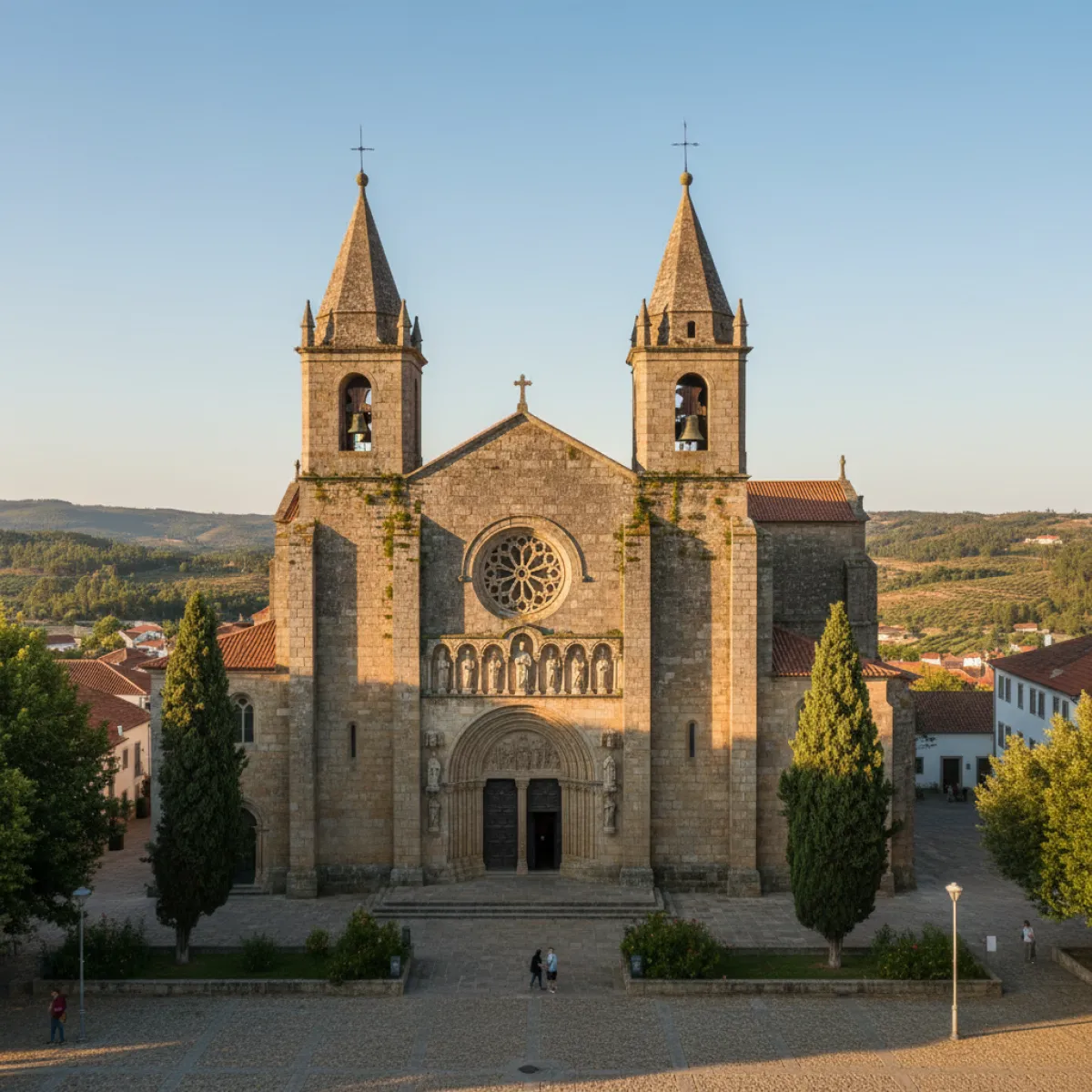
Some churches in Portugal ask you to pray. The Basílica Menor de Nossa Senhora da Assunção, on Largo General Claudino in Torre de Moncorvo, demands you shut up. There's a difference. You walk in, you look up at the baroque altarpiece in gilded woodwork covering the entire back wall, and whatever you were thinking about stops. It's not subtle. It was built in the 16th century to make you feel small, and five hundred years later, it still works.
What you're actually looking at
This church has been classified as a National Monument since 1910, and more recently Pope Francis elevated it to the status of Minor Basilica. That's a rare distinction in Portugal, and one look at the interior tells you why. The gilded retable behind the altar is the showstopper, but don't miss the biblical frescoes on the walls, their colours still remarkably intact after centuries, or the pipe organ in the upper choir. If you happen to visit during a liturgical celebration when the organ is playing, you'll understand why this instrument earned the title "king of instruments" in European sacred tradition.
Photos don't do the gilded woodwork justice. The depth of the carvings, the way natural light from the side windows catches the gold at different angles throughout the day. Go in the morning if you can. The morning light enters the nave and hits the altar in a way that the afternoon sun simply doesn't replicate.
Getting to Torre de Moncorvo
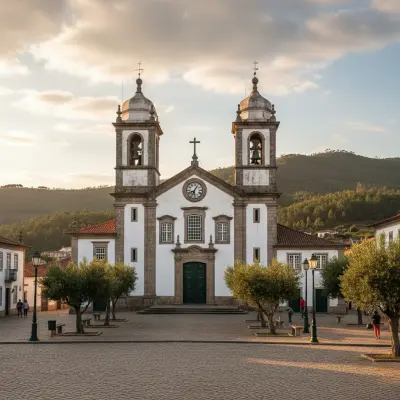
Torre de Moncorvo sits in the Upper Douro, a part of Portugal that most visitors skip entirely. That's their loss. The town has a compact, honest historic centre without the tourist staging that has taken over parts of the western Douro. The basilica sits right in the middle, at Largo General Claudino (5160-234 Torre de Moncorvo). You can't miss it.
From Porto, it's about two hours by car via the A4 and then the N220. The road through the Douro valley is beautiful but winding. If you're visiting in spring, combine it with the almond blossom road trip. Between February and March, the hillsides around Moncorvo turn white and pink with almond flowers. It's one of the best reasons to come to this region, and it lasts only a few weeks.
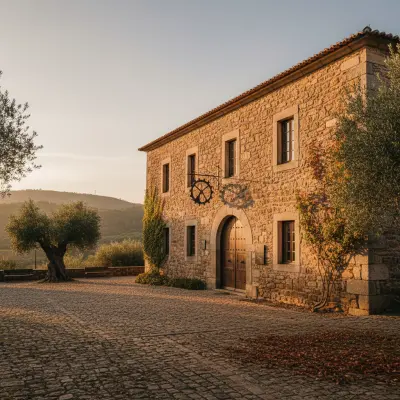
The town deserves at least half a day. After the basilica, wander the streets around the square. There are granite facades, the occasional Manueline window, and the kind of deep quiet you only find in towns where mass tourism hasn't arrived yet. Our March guide to Torre de Moncorvo gives you a fuller itinerary for the wider region.
Practical tips
Entry to the basilica is free or at a nominal cost (€). We don't have confirmed visiting hours, so check directly before making the trip, particularly outside summer. The diocese's official website (diocesebm.pt/basilicademoncorvo) may have updated information.
- Dress respectfully. This is an active place of worship. Cover your shoulders, no shorts above the knee.
- Bring small change. If there's a donation box, contribute. Maintaining monuments like this depends on it.
- No flash photography. The frescoes are fragile, and the gilded woodwork photographs better in natural light anyway.
- If the main door is closed, try the side entrance or ask at the nearest café on the square. In small towns, someone always has the key.
Eating in Moncorvo
Torre de Moncorvo is in the heart of Trás-os-Montes, which means the food is hearty and unpretentious. Expect posta mirandesa (thick-cut local beef), alheiras (the region's famous smoked sausage), and almond-based conventual sweets that make perfect sense here given the town's centuries-old almond groves. Don't leave without trying the amêndoados. They're dry, simple almond biscuits, and completely addictive with a strong coffee.
The basilica doesn't need historical context to impress. It works on a gut level: you walk in, you see the altarpiece, and you understand that someone five hundred years ago decided this spot in deep inland Portugal deserved the very best that money and faith could buy. They were right.