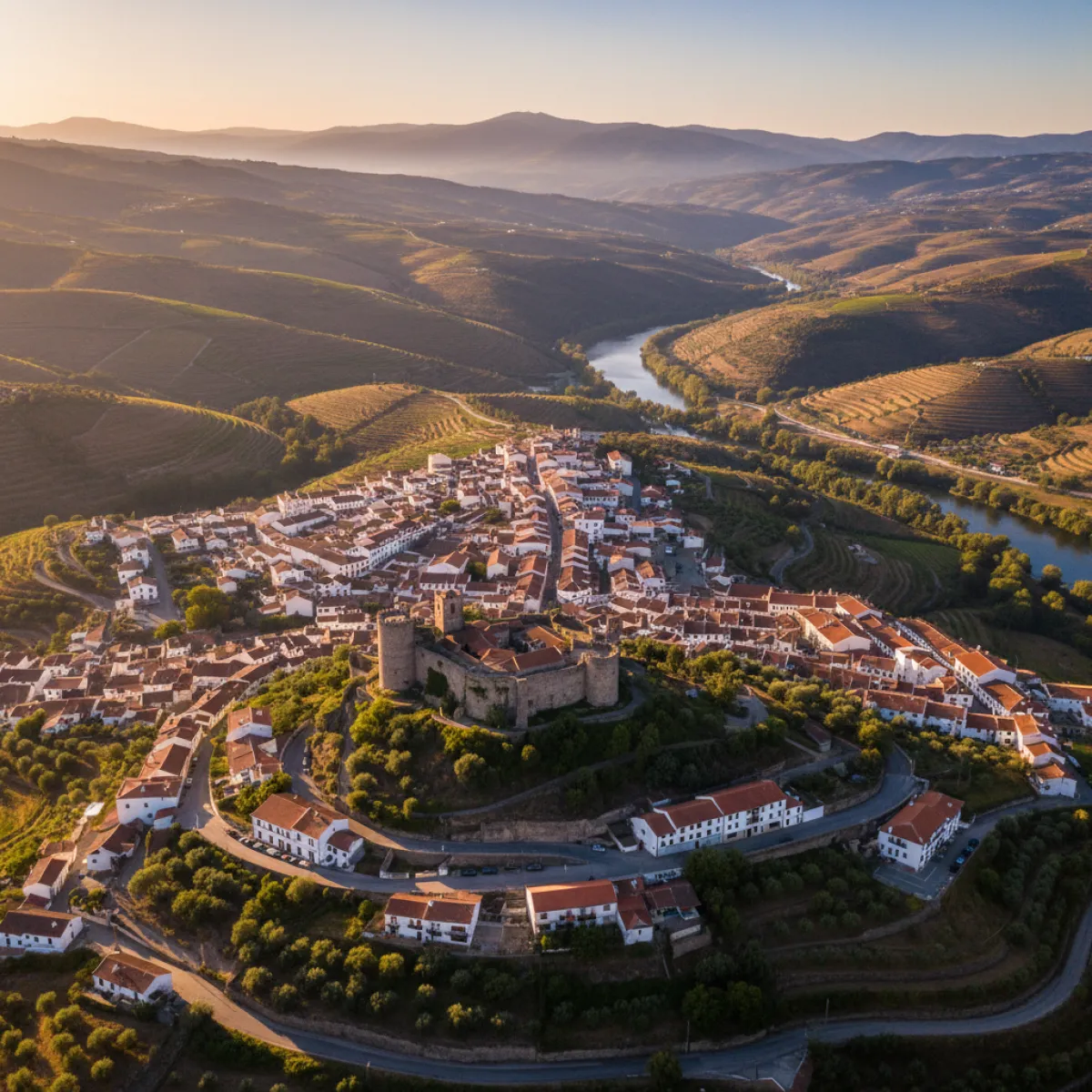
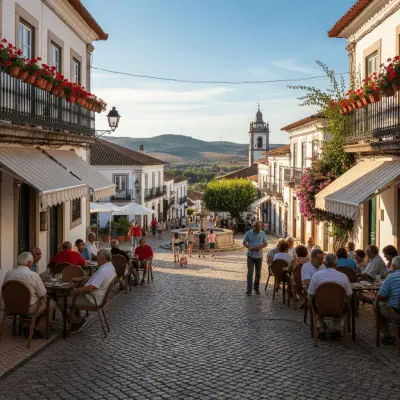
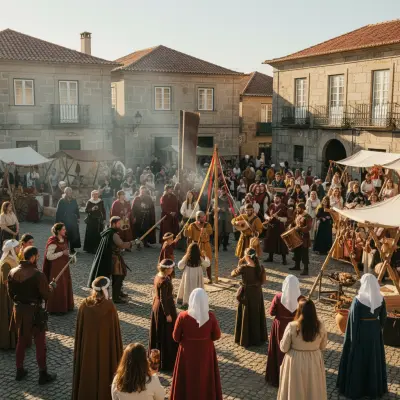
Torre de Moncorvo is the largest municipality in the Upper Douro, and for most of the year it runs at a quiet pace dictated by the seasons. But between February and March, when the almond trees bloom across the Vilariça and Sabor valleys, the landscape turns into a sweep of white and pink that alone justifies the trip. Moncorvo is northern Portugal's biggest almond producer, and the flowering isn't a niche event: it's the main occasion of the year, with a fair, market, and cultural programme filling the town's streets.
What you'll find in the town centre
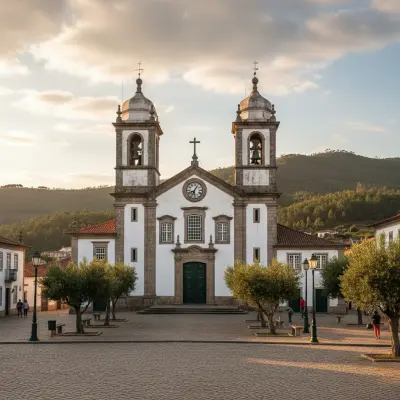
The Igreja Matriz, now officially the Minor Basilica of Our Lady of the Assumption, a title granted by Pope Francis in 2022, dominates the old centre. It's the largest religious temple in Trás-os-Montes, built between 1544 and the mid-17th century, with a 30-metre granite bell tower. Inside, the Triptych of the Life of St Anne, a 16th-century Mannerist altarpiece from an Antwerp workshop, is one of the most valuable pieces of sacred art in the entire region. Ask to visit the sacred art museum inside the church.
A short walk away, the Museu do Ferro e da Região de Moncorvo tells the story of the iron mines that shaped this area, Moncorvo sits on one of the country's largest iron deposits, exploited mainly during the 19th century. It's a small but well-assembled museum that gives real context to the territory.
At the table and in the field
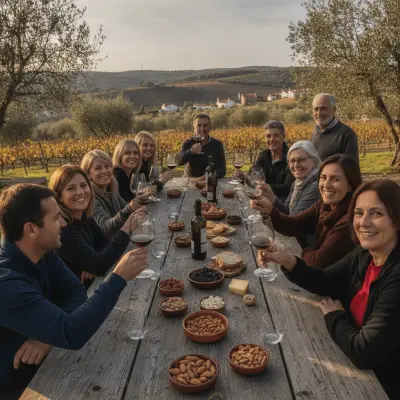
Moncorvo's gastronomy leans on products with protected designation of origin: Borrego Terrincho (a local churra breed lamb from the Terra Quente) appears in stews, roasts, and caldeiradas at nearly every restaurant in town. Migas, made with river fish, with tomato and fried salt cod, or with wild asparagus, are a staple you shouldn't skip. At Taberna do Carró you'll find casulas com butelo and posta à mirandesa; at O Lagar, the roast kid and salt cod dishes are reliable choices.
For dessert, Amêndoas Cobertas de Moncorvo are an institution: hand-crafted over eight consecutive days, with sugar worked to a precise temperature over toasted almonds in a copper basin. They're recognised as one of Portugal's 7 Wonders of Traditional Confectionery.
When to go and how long to stay
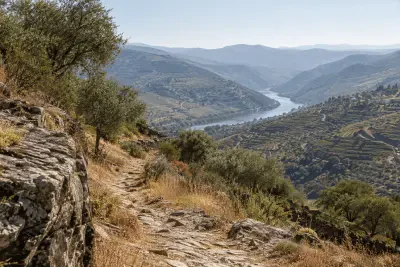
For the almond blossom, aim for late February to mid-March, exact dates shift with the weather. Outside that window, Moncorvo works well as a base for the Upper Douro: the Ecopista do Sabor, a 34 km trail between Pocinho and Carviçais, is excellent for walking or cycling. At Foz do Sabor, where the river meets the Douro, there's a recreation area with a café and river access for summer swimming. One full day covers the town; two days let you explore the panoramic viewpoints and the Vilariça valley at a proper pace.