Torre de Moncorvo in Bloom: Spring Gardens and Parks
When the almond blossom buses leave in April and May, Moncorvo turns green, fragrant, and almost secret. A guide for those who arrive late to the party: from the Sabor to the Reboredo, via Campo da Feira and a galão that costs less than two euros.
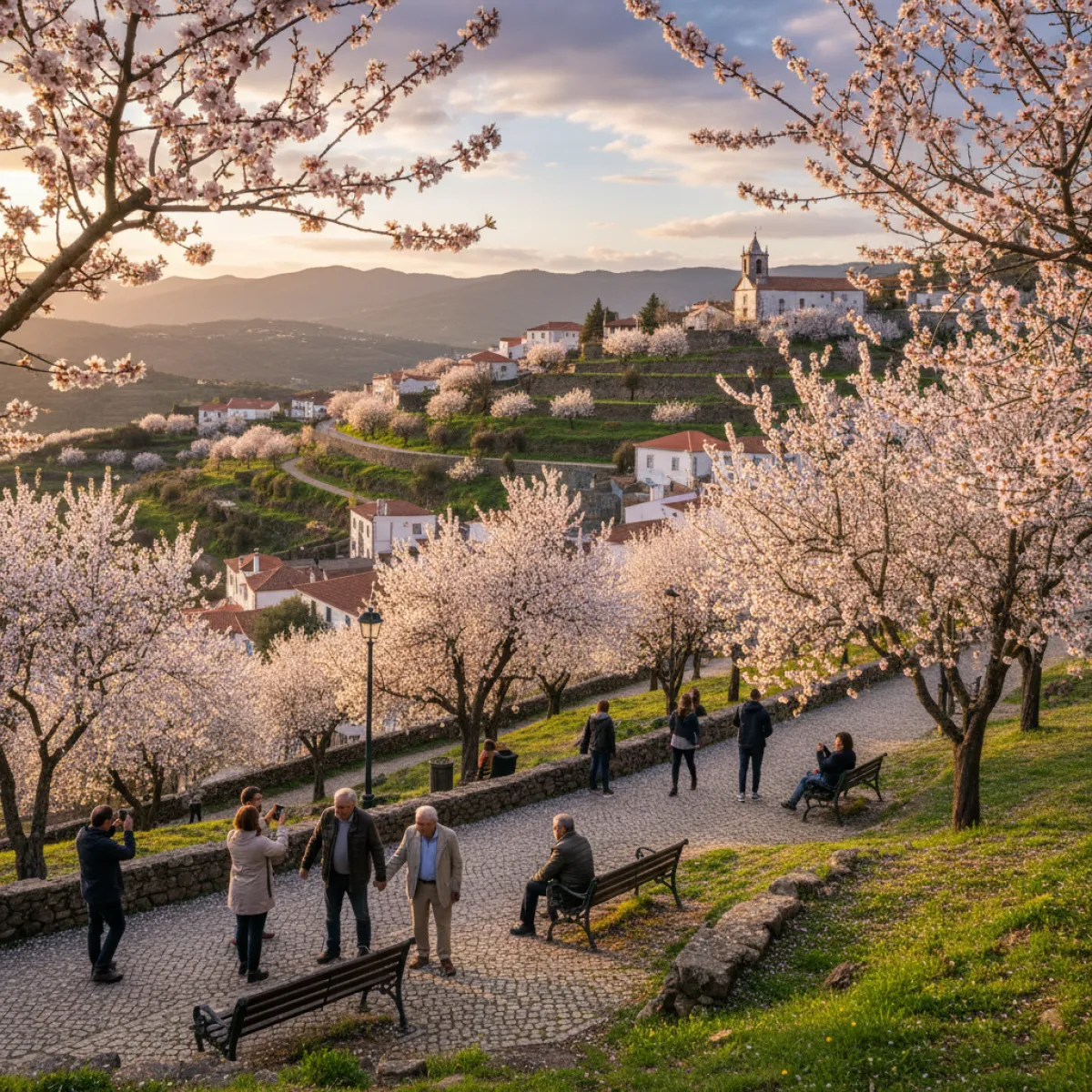
There's a certain semantic fraud in calling Torre de Moncorvo's green spaces 'gardens'. Up here, on the Trás-os-Montes plateau where the Douro bends and the Sabor empties into it, spring doesn't happen in geometric flowerbeds with botanical labels. It happens on entire hillsides: 800,000 almond trees opening white and pink between mid-February and mid-March, and then, once the main show ends and the tour buses head back to Porto, things actually get interesting.
Because it's in April and May, when nobody's looking, that Moncorvo becomes one of the greenest, most fragrant places in Portugal. Cherry trees follow the almonds. Then olive trees in bloom, with that sweet smell that clings to clothes. Yellow broom takes over the verges of the road to Felgar. And in the urban gardens, yes, those exist, you'll find roses, lavender, and the dry inland heat does the rest.
This is a guide for those who arrive late to the party, meaning after the almonds. But it also works for anyone who wants to skip the crowds and understand that spring here lasts almost four months, not three Instagram weekends.
Start at Largo do Castelo and the viewpoint nobody visits
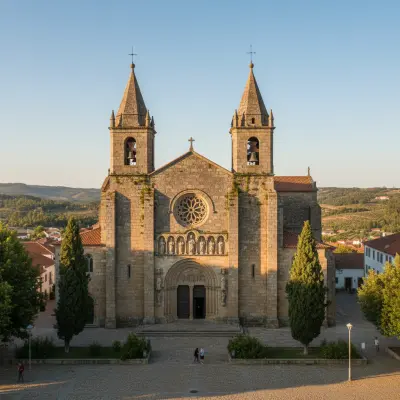
Before heading to the parks proper, you need to read the town. Park up high, near the town hall, and walk. Moncorvo is walkable in forty-five minutes, and anything else is a waste. Climb up to the Basílica Menor de Nossa Senhora da Assunção, the largest church in northeastern Trás-os-Montes, with a granite facade disproportionate to the village around it. The late Gothic interior is a surprise. What surprises more, though, is the small adjacent garden, with a couple of stone benches under century-old plane trees, where locals go to read the paper mid-morning. This is where it starts.
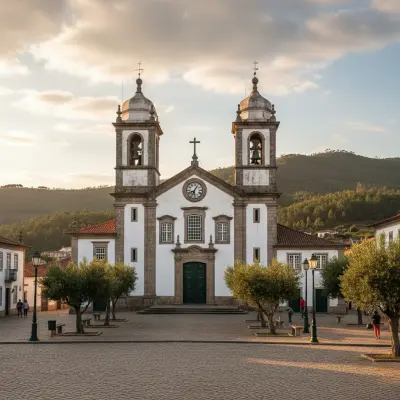
Two hundred metres on, step into the Igreja da Misericórdia de Moncorvo, with gilded woodwork in a state of preservation that shames more famous churches. Not a garden, obviously, but it belongs on the itinerary, because the square in front has orange trees that flower in April. The smell hits before the sight does.
The Sabor riverside: the open secret
Getting there and what to expect
The Vale do Tua Regional Natural Park technically begins thirty kilometres away, but the riverside strip of the Sabor that crosses the municipality is what people mean when they say 'park' in Moncorvo. For weekend visitors, the simplest access is to take the N220 towards Carviçais and then drop down on the municipal roads signposted to the Baixo Sabor dam.
By car it's twenty-five minutes from the village. By bike, all downhill, it's a lively forty minutes. The climb back is another matter, but in May, at twenty-two degrees, with the air smelling of rockrose and rosemary, it's worth any effort.
No flowerbeds here. Just steep banks, dark green water, black oaks, hackberries, ash trees, and an indecent quantity of wild orchids in April. Bring proper walking shoes, water, and the patience of someone who understands this isn't a manicured city park.
How to pack a decent picnic
Before leaving the village, detour to the small grocer on Rua Visconde de Vila Maior, no obvious sign on the front, but any local will point you. Buy crushed olives, goat cheese from Mirandela, presunto sliced to order, Carviçais bread, and a bottle of local wine. The supermarket near the roundabout at the village entrance is a decent backup, but you lose the ritual.
Campo da Feira garden: where the village breathes
Back in the centre, Campo da Feira is Moncorvo's formal garden. There are palms, yes, and rose beds that bloom spectacularly in May. There's also a kiosk that serves a galão for under two euros and almond cream pastries, obvious given the region, that turn the pause into a small event.
Sit. Don't check your phone. Watch. The retirees play dominoes in one corner, the schoolkids spill onto the lawn around half past three, and at five o'clock, regularly, an elderly man passes with a grey podengo who greets everyone by name. This is Moncorvo's real spring: slow, familiar, with a reserved bench.
A stop at the museum
A few metres on, the Museu do Ferro e da Região de Moncorvo deserves an hour. Yes, it seems out of place on a garden itinerary, but the history of the Reboredo iron mines explains why the surrounding hillsides turn that reddish colour at sunset. Geology is botanical too: ferruginous soil favours almond and olive, which is why spring here smells different from the Minho.
Reboredo and the Almond Tree Road (after the bloom)
Everyone knows the Reboredo range during the almond bloom. Few go afterwards. Mistake. In April and May, with the almond trees already in tender green leaf, yellow broom takes over the landscape. The road out of Moncorvo towards Cardanha climbs to eight hundred metres and offers views that rival any tourist viewpoint in the Douro wine region, with ten percent of the visitors.
Stop at the Sanctuary of Nossa Senhora da Teixeira at the top. There's a picnic area with stone tables, tall eucalyptus trees that throw shade even at midday, and a silence you can hear. Occasionally a tractor passes. Not much else.
For the full route, our guide Torre de Moncorvo: Almond Blossoms and a Spring Road Trip has the detail that won't fit here: the exact roads, the less obvious viewpoints, and where to have lunch midway.
Where to eat among the flowers
Restaurante O Lagar, in the village, does posta à transmontana with no theatrics and at reasonable prices for lunch, soup, main and drink included. Order the game alheira too if it's on that day, and the rice pudding with cinnamon stars on top. Book ahead, especially on weekends, because the dining room is small and locals were eating there long before tourism found the village.
For lunch with a view, drive up to Adeganha. The local taberna serves wood-fired roast goat on Sundays, with three terrace tables overlooking the range. Reserve, or give up.
Don't look for vegetarian restaurants. There aren't any, and pretending otherwise would be dishonest. What you'll find are decent salads, magnificent local cheeses, seasonal fruit, and the chance to put together a meatless meal almost anywhere, provided you ask clearly.
When to go, exactly
- Mid-February to mid-March: almond blossom. The tourist peak. Traffic at the viewpoints, buses, photographs. Beautiful, but chaotic.
- Late March to mid-April: cherry trees, first wild orchids on the Sabor, orange blossom in the village. Ten percent of the visitors.
- May: olive trees in flower, broom, roses at Campo da Feira, perfect temperatures. The best window, in our opinion.
- Early June: first heat, still tolerable. Avoid July and August, or prepare for forty degrees.
Where to sleep
There are manor houses and rural tourism properties in Cardanha and Felgar, and a few honest guesthouses in the village. For the mix of comfort and authenticity, look at the working estates: our guide on the Douro estates nobody talks about is useful inspiration, though geographically it sits an hour to the west. If you'd rather drop down to the main river and treat yourself a little better, the piece on river escapes and the luxury of stillness in Lamego is the way to go.
If you stay through the right weekend
In some years, usually in May or June, the village hosts the Torre de Moncorvo Medieval Fair, three days when the historic centre transforms. Confirm dates locally, since they vary, but if it lines up with your trip, extend it. Bonfire smells, merchants, falconry shows, and a version of the past more careful and less kitsch than most fairs of the kind.
Final advice for a spring well spent
- Dress in layers. In April and May, you leave home at twelve degrees and by midday it's twenty-five.
- Fill the tank before climbing into the range. Petrol stations in Moncorvo close early on Sundays.
- Buy fruit from the roadside stalls. The first strawberries arrive in April, and in May you'll find early cherries from the sunniest hillsides.
- If you're a photographer, the last hour before sunset on the Reboredo, on the west-facing slopes, makes any camera look better than it is.
- Learn to say 'bom dia' before entering cafés. You don't walk in and order an espresso. You greet first.
Moncorvo isn't the Crystal Palace Garden in Porto, and doesn't pretend to be. It's a village at the end of the map, with a hillside full of flowers, two months a year when it looks like a dream, and ten months when it carries on being itself, without staging. Spring here doesn't end with the almond blossom. It begins with it.