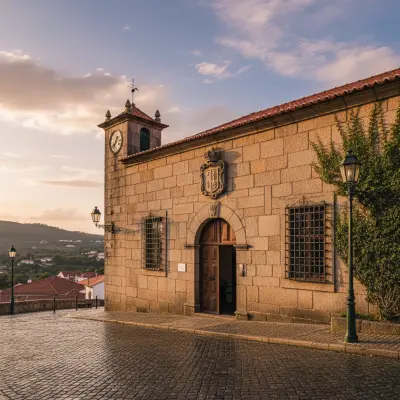
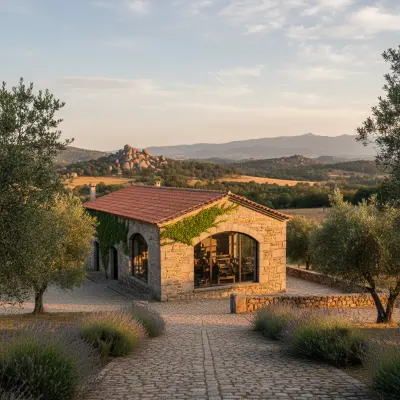
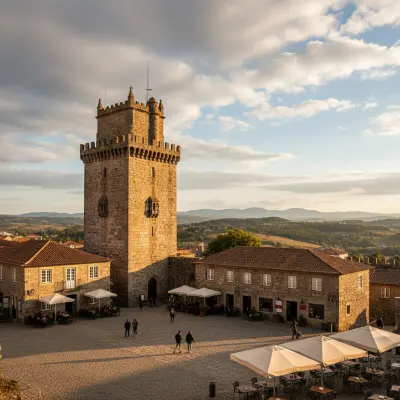
Guarda Market Crawl: What to Buy, Taste, and Skip
Saturday morning, eight o'clock, market hall of the highest city in Portugal. A frank guide to the DOP cheese worth the investment, the honey that crystallises as it should, and the jams with overly pretty labels you should walk past.
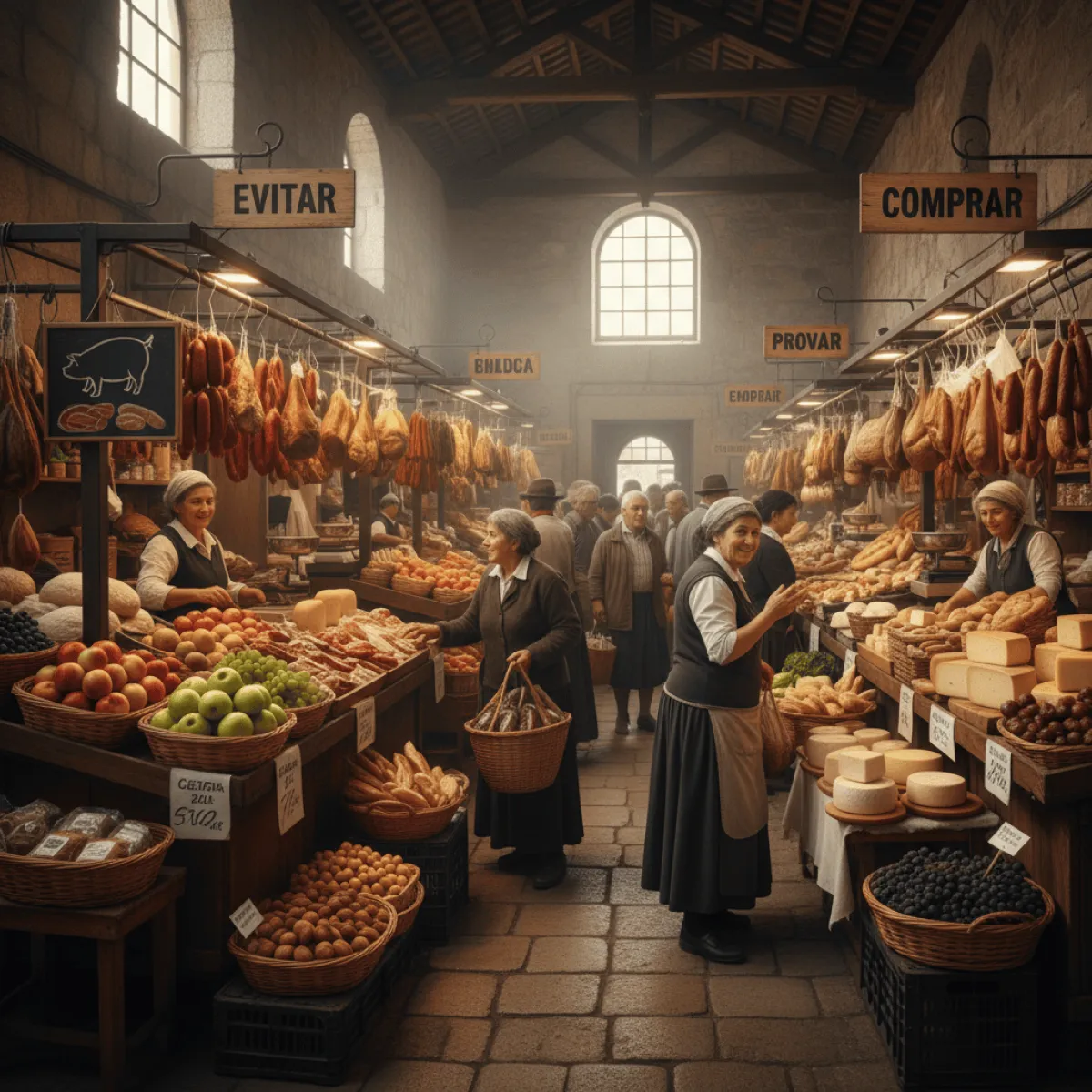
At seven thirty in the morning on Praça Luís de Camões, it's still cold even in June. Guarda sits at 1056 metres of altitude, and the thermometer remembers that every single day of the year. This is when the ritual begins: open-bed vans pull up to the Mercado Municipal, unloading crates of cabbages the size of small babies, sacks of Beira potatoes still caked in earth, and cheeses wrapped in butcher paper that, if they're any good, leave a greasy stain before they reach the counter.
This is a practical and frankly opinionated guide to a market crawl in the highest city in Portugal. It will tell you what to buy, what to taste at the counter, and what to walk past even when the lady insists. It's not a postcard. It's how I would do my Saturday shopping if I lived in Sé.
Where to go, and when
The Mercado Municipal da Guarda runs Monday to Saturday mornings. Saturday is the day. From nine onwards it fills with locals pushing trolleys, and by eleven it starts to empty because the best produce is already gone. If you want choice, arrive at eight. If you want bargains, arrive at eleven thirty, when producers would rather sell cheap than load it back into the van.
The main entrance opens onto the vegetable stalls. Resist the temptation to swing left towards the colourful pyramids of perfectly arranged vegetables. Those are, most of the time, from a wholesaler. Walk to the back of the market, where the older women sit with three crates of broad beans, a bunch of parsley and a basket of eggs. That's where the real food is.
What to buy: the short, honest list
Queijo Serra da Estrela DOP
You're at the foot of the Serra da Estrela, and it would be a culinary crime to leave Guarda without a cheese. But pay attention: not everything labelled "Queijo da Serra" actually is. The real Queijo Serra da Estrela DOP is made from raw milk of bordaleira or churra sheep, set with thistle rennet, and it carries a numbered seal that looks like a postage stamp glued onto the rind. Without the seal, it's still sheep cheese, possibly excellent, but not DOP and shouldn't cost the same.
Look for the amanteigado style: straw-coloured rind, paste that gives under your finger when you press it. If the lady cuts a slice and the paste runs slightly, that's what you want. It costs between 18 and 28 euros a kilo depending on the season, more expensive in late winter when there's less of it. Buy half a cheese if you're taking it home: a whole one weighs a kilo to a kilo and a half, too much for two people, and it doesn't freeze well.
Accept the taste. Good producers cut a corner and hand it to you with bread. If they don't offer, ask. If they refuse, change stall.
Cobertor de papa, off-market
Not in the market itself, but worth the detour: the textile tradition here is as strong as the cheese tradition. A few kilometres from the city, in Maçainhas, weavers still make cobertor de papa on pedal looms, a thick raw-wool blanket that warms you in a way no synthetic duvet can. If you're spending more than a day in the region, I strongly recommend the cobertor de papa weaving workshop: it's cheaper than buying a finished blanket and you walk away with a small piece you wove yourself.
Beira Alta honey
The honey from this region is dark, dense, with the flavour of heather and rosemary. It's not the sweet, docile honey of supermarkets. Look for jars with handmade labels, no computer artwork, and always ask which flowering it comes from. "Multifloral" is the honest answer for blended honey. "Urze" (heather) or "rosmaninho" (rosemary) should have a very specific colour and aroma: if it smells of nothing and is uniformly yellow, it's been sugared. Ask if it crystallises in winter: it should crystallise. Honey that never crystallises has been overheated. A half-kilo jar runs 5 to 8 euros.
Cured meats: yes to farinheira, careful with alheira
The local farinheira (a smoked flour-and-fat sausage) is dry, smoky and dense. Excellent grilled and split open, even better in a feijoada. Buy. Alheira from Guarda exists, but the truly great alheira, frankly, is further north in Mirandela or Vinhais. If you see alheira here, taste a tiny piece from the cut end first (the lady won't be offended) and see whether it tastes of garlic and olive oil or mostly of bread. If it tastes of bread, leave it.
Beira ham can be very good but it's temperamental. Ask them to slice it in front of you and smell the slice: it should smell of cured nuts and clean salt. If it smells rancid, the ham is too old or badly cured.
Chestnuts, in autumn
If you visit between October and December, take chestnuts. This is large-chestnut country, glossy-shelled, among the best in Portugal. At 3 or 4 euros a kilo, it's a steal. Roast them with coarse salt and a glass of jeropiga and you're home.
What to taste at the counter
There are three things you should taste before you buy, and almost nobody offers them unless you ask.
- Extra virgin olive oil: several stalls keep an open bottle. Ask for a teaspoon. It should bite slightly at the back of the throat and be a touch bitter. If it's only sweet, it's mediocre. If it smells of fresh olive, take it.
- Requeijão: a fresh whey ricotta made from the leftovers of cheese-making. Eaten with honey or pumpkin jam. Tasting before buying is mandatory because day-old requeijão has a sour edge. Fresh requeijão is sweet and light.
- Rye bread with chouriço baked inside: not really a tasting, more an obligatory purchase. There's a baker who shows up Saturday mornings with round loaves heavy as bricks, with chouriço baked into the dough. About 4 euros, and the best breakfast you can eat in the car on the way to your next stop.
What to skip (with affection, but firmly)
The ginjinha in decorative bottles printed with mountain scenery. It's syrup. If you want a bottle of something, buy aguardente velha at a proper shop.
The vacuum-packed "Queijo da Serra" sold from the small supermarket inside the market hall. If you're going to invest in cheese, buy it from a producer, not from industrial refrigeration.
The olives in plastic barrels near the entrance. They're almost always the same olives sold in any market in the country. If you want olives, taste first: the good ones have firm flesh, no bruising, and shouldn't taste mainly of vinegar.
Jams with overly pretty labels. In my experience at this kind of market, careful graphic design is a sign of resale. The good jams come in reused jars with handwritten stickers.
Where to eat lunch, after the shopping
The market closes around two. Before that, you'll be properly hungry. The city has several honest places in the historic centre where you can eat well for 12 to 15 euros, but I'll tell you a truth most guides won't: the best food in Guarda is rarely in the restaurants on the cathedral square. It's in the back-street tabernas, where lunch is taken alongside truck drivers and civil servants.
Look for the daily specials chalked on a slate. Roast goat kid on Sundays (in serious places it really is goat kid, not cheaper lamb), bacalhau à Beirã on Fridays, and bean and cabbage soup any day. Drink the house wine: the Beira Interior makes honest reds, and a jug runs 4 to 5 euros.
If you're celebrating and want to step up a notch, there are one or two serious tables near the old wall. I won't name names because menus change and I always regret naming a place in a guide that goes out of date: ask the man selling cheese where he eats on Saturdays. You'll hear the truth.
Mixing market with culture: the afternoon
After lunch, with no hurry, take a walk through the city. Guarda compacts itself around the cathedral, and in two hours you can see the essentials. I recommend three stops.
First, the Museu da Guarda, housed in an old seminary. It holds pieces that tell the story of this border city from prehistory to the twentieth century, with a sacred art collection better than you'd expect from a place this size. It's not the Louvre, but it's at human scale and you walk out with context for everything else.
Second, the Museu de Tecelagem dos Meios, which closes the loop on what you saw in the wool at the market and the blankets of Maçainhas. Here you understand that Guarda was for centuries a textile city, and that much of the heritage of the Beira region runs through the hands of weavers.
Third, climb the Torre de Menagem, the keep that's all that remains of the castle. The view from the top, on a clear day, opens onto the Serra da Estrela to the south and the plateaus of Beira to the north. It's not a pretty view in the sugar-coated sense: it's a stark, wide view that explains why this city existed as a frontier stronghold for eight hundred years.
If you stay an extra day
Guarda is a good base for the mountains. If you like walking, consider a walk in the Folgosinho area: pure rural landscape, real granite villages, and the kind of quiet that at 1300 metres of altitude is a different beast from city quiet.
If you're planning longer routes through Portugal, I can point you to other reading in the same vein of practical, frank guides: we have the honest guide to walks around Caldas da Rainha, the honest guide to Coimbra's Queima das Fitas, and the honest guide to the Fátima pilgrimage on May 13th. They serve as templates for travelling the country without falling into the usual clichés.
Bare-minimum logistics
- Getting there: Guarda has a station on the Beira Alta line (around 4h direct from Lisbon, around 4h30 from Porto with a change). By car, it's on the A23 or the A25, three hours from Lisbon, two and a half from Porto.
- Parking: there's paid parking near the Mercado Municipal and free street parking five minutes' walk away near the urban park.
- Clothes: even in summer, bring a jacket for the early morning. At 1056 metres, the wind cuts at eight in the morning even in August.
- Cash: small producers prefer cash. Carry small notes and coins. There's an ATM about two hundred metres from the market.
- Bags: bring large cloth bags. The plastic ones at the market are flimsy and cheese is heavy.
Do this once. Start at eight, taste everything they offer you, buy half a kilo of cheese, a jar of honey, a farinheira, and a chouriço loaf. Have lunch at a nameless taberna, climb the Torre de Menagem, and in the afternoon choose between museum and mountain. You'll go home tired, with a heavy bag, and the rare feeling of having seen a Portuguese city through the eyes of someone who actually lives there.