Torre de Menagem da Guarda
Ascend to Portugal's highest point at the Torre de Menagem in Guarda. Explore a unique military museum and enjoy panoramic views stretching from Serra da Estrela to the Spanish border.
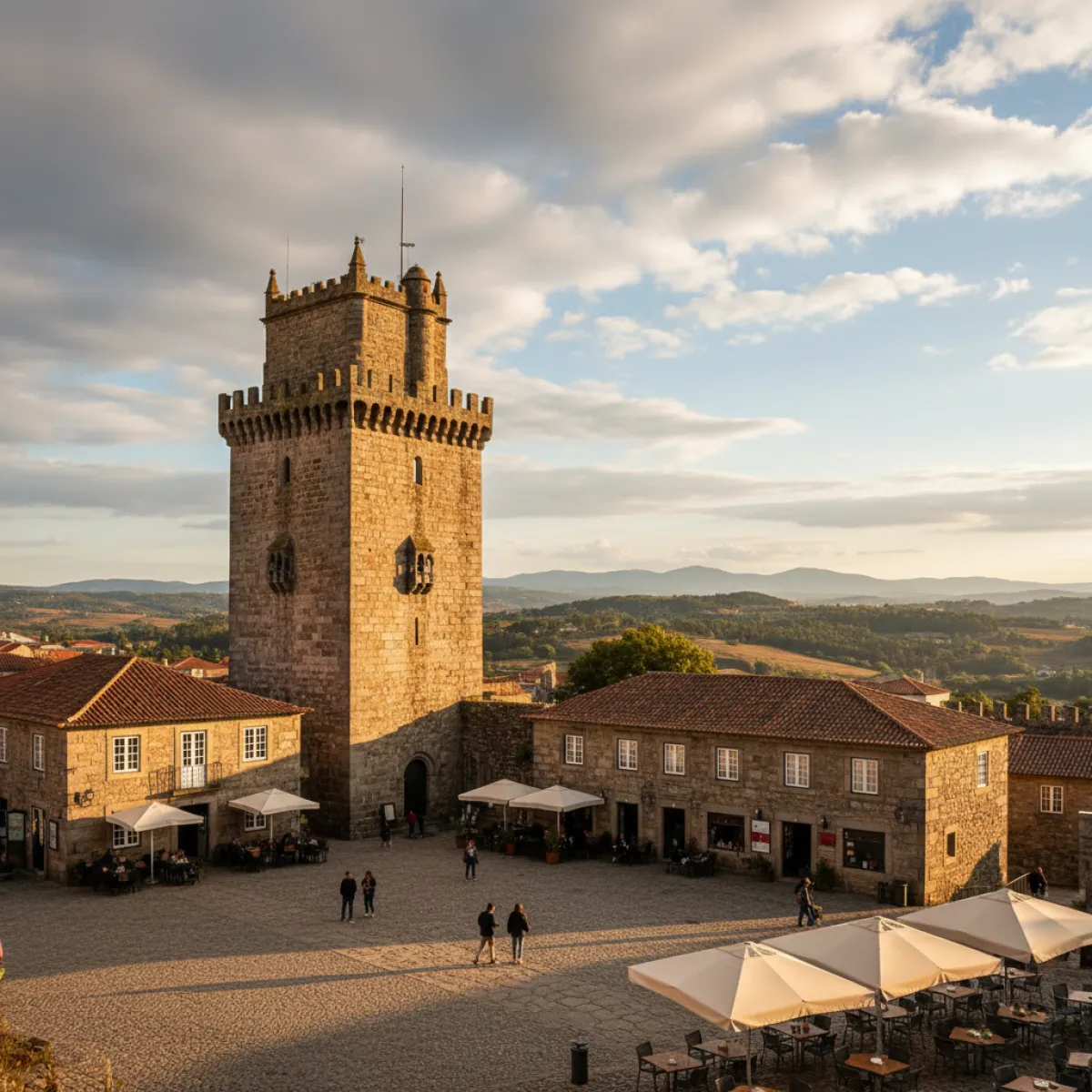
The Granite Sentinel: Ascending the Torre de Menagem in Guarda
Perched at the highest point of Portugal's highest city, 1,056 meters above sea level, stands a monument that serves as both a testament to military resilience and a premier viewpoint over the Beira Alta region. The Torre de Menagem (Castle Keep) of Guarda is not merely the remaining vestige of a medieval fortress; it is the ultimate symbol of a city born to be a frontier, a watchtower, and a sanctuary. To visit this space is to dive into a granite narrative that began in the 13th century and now serves as an interpretation center for the city's urban and military history.
As you approach Rua Dona Maria Luísa Godinho, the tower's presence is felt through its stark sobriety. Built during the reign of King Sancho I and later reinforced by King Dinis, the structure showcases the robust characteristics of Portuguese Gothic military architecture. The granite, quarried from the very heart of the nearby Serra da Estrela, gives the tower a grey hue that shifts in intensity according to the daylight, turning almost silver under the winter sun or deeply somber during the famous foggy days of "cold" Guarda.
The Interior: A Journey Through Military Memory
Stepping through the entrance portal, visitors are transported into an atmosphere where silence is broken only by the echo of footsteps on stone. The interior of the keep houses a museological nucleus of significant importance. Here, it is not just about observing empty walls; the rooms are populated by a collection of military weaponry and archaeological finds that tell the story of Guarda's evolution since the Middle Ages.
The exhibition is thoughtfully organized to highlight the daily lives of the soldiers who once guarded these ramparts. The armory, featuring swords, suits of armor, and stone projectiles, provides a clear understanding of the scale of the border conflicts with Castile. It is fascinating to observe how the military technology of the era adapted to Guarda's challenging topography, prioritizing height for defense and visual control over the surrounding valleys.
The Panorama: Where Portugal Meets Spain
The literal high point of the visit is the rooftop terrace. The climb up the narrow staircases requires some stamina, but the reward is one of the widest horizons in the country. From here, the gaze reaches the Serra da Estrela to the southwest, its peaks often retaining snow late into the spring. To the east, the borderlands (the Raia) and neighboring Spain draw a line of geographical continuity that history transformed into a frontier.
It is from this summit that the city's structure is best understood. Just a few steps from the tower, the monumental Guarda Cathedral rises like a granite ship anchored in the Praça Velha. The transition between the military power of the castle and the religious authority of the cathedral is short, revealing how the city consolidated around these two poles. For those wishing to deepen their understanding of how communities organized on these steep slopes, it is essential to explore the Jewish legacy of the highest city, as the narrow streets of the Jewish quarter begin right at the base of the old castle walls.
The Neighborhood and Historical Context
The area surrounding the Torre de Menagem invites a leisurely stroll. The castle district is a maze of alleys where granite is the rule and architectural details surprise at every turn. This is an area that breathes the essence of granite and grace, especially in the late afternoon when the golden light hits the stones and long shadows create an atmosphere evocative of past centuries.
Walking through these streets, you will notice markings on doorframes and Manueline windows punctuating the more noble facades. The proximity to the ancient Judiaria (Jewish Quarter) allows for a fluid transition between military history and the social history of Guarda, revealing a city that successfully integrated different cultures within its defenses.
Practical Tips for the Traveler
- When to go: Autumn and spring are the ideal seasons. In winter, Guarda lives up to its reputation as a cold city, and the wind at the top of the tower can be biting, though the view of the snow-capped mountains is unparalleled. Late afternoon provides the best light for photography.
- What to expect: A physically demanding climb. The stairs are steep and narrow, and are not recommended for those with reduced mobility or severe claustrophobia. However, the museum floors provide interesting places to pause and catch your breath.
- Dress code: Even in summer, bring a windbreaker. The altitude of Guarda means temperatures drop quickly as soon as the sun sets or the wind blows from the mountains. Sturdy shoes with good grip are mandatory for walking on stones polished by centuries of use.
- Getting there: The tower is located in the historic center. It is advisable to park your car in the peripheral zones or the underground lots near Praça Velha and walk the rest of the way, allowing yourself to feel the actual scale of the ascent to the castle.
- Reservations and Cash: Reservations are generally not needed for individual visits. The entry fee is symbolic (€), but it is wise to carry cash, as card terminals can have intermittent connectivity due to the thickness of the granite walls.
The Torre de Menagem is not just a monument to be seen from afar; it is a sensory experience. It is the scent of crisp mountain air, the rough texture of ancient stone, and the feeling of standing at one of the most strategic observation points in the Iberian Peninsula. As you descend, make time for a coffee in Praça Velha, looking back up at the tower and reflecting on the eight centuries of history it continues to watch over with its characteristic serenity.
