Granite and Grace: The Sephardic Heritage of Guarda's Old Town
Explore Guarda, Portugal's highest city, where granite walls and the silent lanes of the Jewish quarter reveal centuries of Sephardic resilience. A guide to the history and high-altitude soul of this Beira sentinel.
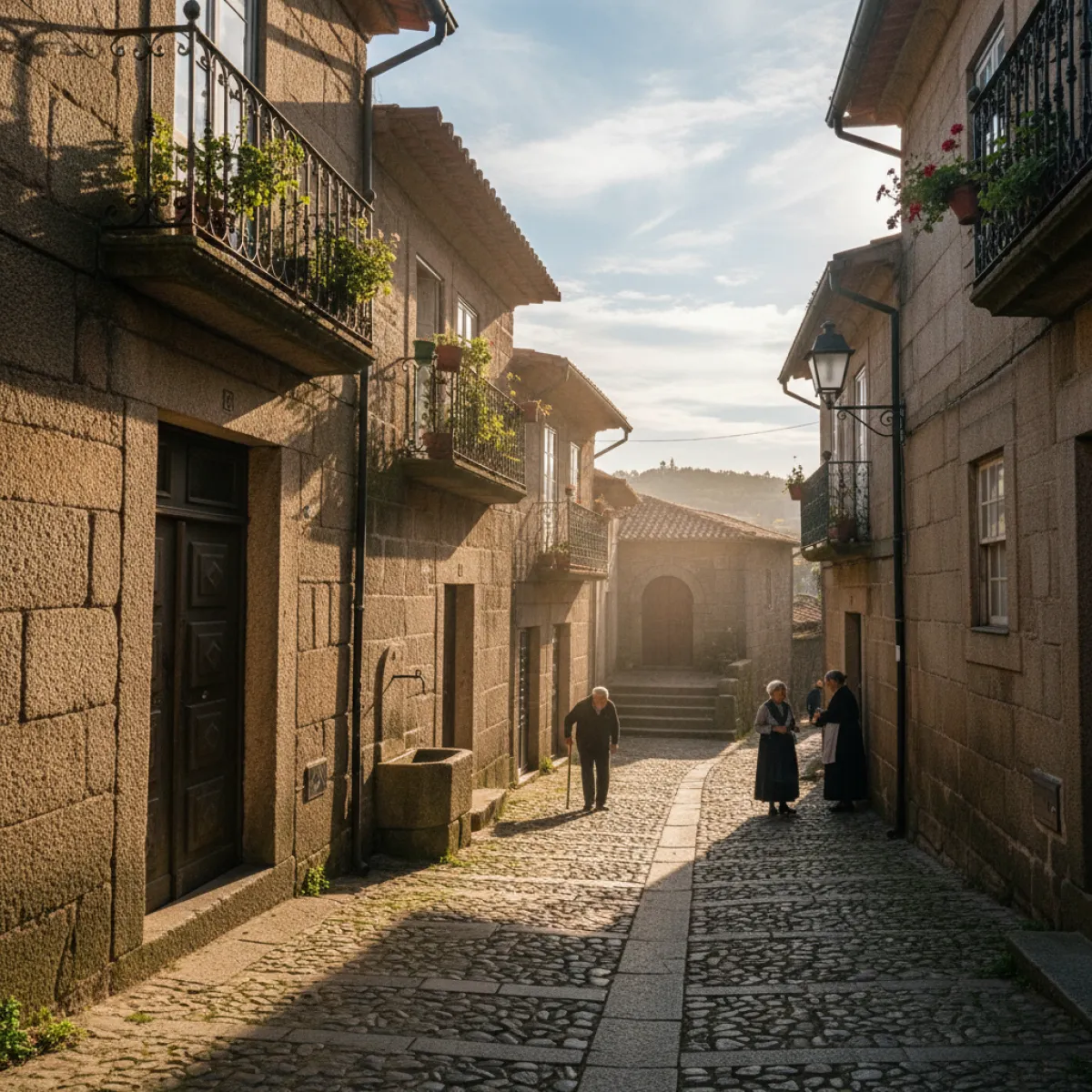
The Architecture of Resilience
Guarda is a city that defines itself through gravity and granite. Perched at over 1,000 meters above sea level on the northeastern flank of the Serra da Estrela, it is Portugal’s highest city, a fact that informs everything from the thickness of its walls to the stoicism of its inhabitants. Known as the city of the five Fs, Forte (Strong), Fiel (Faithful), Farta (Abundant), Fria (Cold), and Formosa (Beautiful), Guarda does not offer the immediate, sun-drenched gratification of the Algarve or the polished elegance of Lisbon. Instead, it offers a textured, melancholic beauty that requires a slower pace and a keen eye for historical nuance.
A Sentinel in the Mist
The city’s skyline is dominated by the Sé de Guarda, a cathedral that functions more as a defensive bastion than a mere house of worship. Construction began in the late 14th century, and its transition from Romanesque foundations to Gothic pinnacles reflects the shifting anxieties of a frontier kingdom. The granite here is darker, weathered by centuries of Atlantic winds and mountain frost. To walk its ramparts is to understand the strategic necessity of this place; it was built to watch over the border with Spain, a role it performed with unflinching loyalty for centuries.
For those navigating a broader Portugal Itinerary: A Week in the Heart of the Country, Guarda serves as a crucial inland anchor. It represents the transition from the rolling plains of the Alentejo and the Beira Baixa into the rugged, vertical world of the Beira Alta. It is a place where the landscape forces a certain introspection, a departure from the coastal cliches of sardines and surf.
The Silent Streets: Sephardic Heritage
Just below the cathedral’s shadow lies the Judiaria, the old Jewish quarter. In the 14th and 15th centuries, this was one of the most significant Jewish communities in Portugal, home to physicians, merchants, and tailors who were vital to the city’s economic life. Today, the Judiaria is a labyrinth of narrow, steep lanes where history is written in the stone doorframes. If you look closely at the right-hand side of many entrances, you will see small, diagonal incisions. These are the physical traces of mezuzot, the scrolls of parchment that once marked these as Jewish homes.
The story of the Guarda Sephardim is one of survival and transformation. Following the 1496 Edict of Expulsion, many chose to stay as 'New Christians.' The trauma of this forced conversion is visible in the architecture; look for the crosses etched over original Jewish markings, a desperate attempt to signify Catholic orthodoxy while secretly maintaining ancestral traditions in the privacy of the hearth. This is not a 'hidden gem', it is a living, breathing scar on the urban fabric, and walking these streets is an exercise in historical empathy.
Contrast and Connection
Traveling north from here often leads to a different kind of intellectual intensity. While Guarda represents the grit of the frontier, Coimbra: The Grammar of Time in Portugal’s Intellectual Capital offers a more refined, academic take on the Portuguese spirit. The two cities exist in a fascinating dialogue, one defined by the sword and the cold mountain air, the other by the book and the river Mondego. A visit to both provides a comprehensive understanding of the country's dual identity as both a land of explorers and a land of deeply rooted traditionalists.
The High-Altitude Table
Guarda’s climate demands a cuisine that is robust and unapologetic. This is the land of the Beira meat-eaters, where wild boar, venison, and goat dominate the menus. One must try the 'Caldo de Grão' (chickpea soup) and the 'Arroz de Carqueja,' a rice dish flavored with a local medicinal herb that thrives in the mountain scrub. But the undisputed star is the Queijo da Serra da Estrela. When ordered in a local tasca, it should be served at room temperature, its center so soft it must be scooped with a crust of rye bread.
For a contemporary take on Beira flavors, seek out the small restaurants tucked into the granite houses near the old city gates. Expect to pay between €30 and €50 for a substantial meal with wine. The local reds from the Dão region, characterized by their high acidity and elegance, are the perfect companion to the fatty, salt-cured meats (enchidos) that the city is famous for.
Practicalities for the Modern Traveler
Guarda is a logical stop for those following The Measured Pace: A Seven-Day Passage from Lisbon to Porto via the Ria, providing a rugged inland detour before descending back toward the Douro valley.
- When to Go: Visit in late autumn for the most atmospheric experience, when the fog rolls through the narrow lanes of the Judiaria. Late spring offers clearer skies and vibrant wildflowers in the surrounding Serra.
- Budgeting: Guarda remains one of the more affordable Portuguese cities. A comfortable daily budget of €120 per person covers high-quality lodging and excellent dining.
- What to Bring: A heavy coat is non-negotiable from October to May. The wind-chill at 1,000 meters is significant, even on sunny days.
Ultimately, Guarda is a city for the serious traveler, the one who finds beauty in the weight of history and the integrity of stone. It is a place that asks you to listen to the silence of the Judiaria and to respect the endurance required to build a life on the roof of Portugal. It is not always an easy city, but it is an essential one.
