Guarda: Wool, Burel and Souvenirs Worth Buying
Guarda is the highest city in mainland Portugal. It is also where the wool tradition survived best. An honest guide to the cobertor de papa, burel, Serra cheese, and what not to waste your money on.
Here is a rule I learned after twenty trips into the Beira Interior: if you leave Guarda with a fridge magnet or a Barcelos rooster bought from a street stand, you failed. The person who sold it to you also failed, because Guarda is not rooster country. Guarda is wool country. Blankets that weigh four kilos and last four generations. Serra cheese that runs onto the plate when you cut it with a heated knife. Granite worked by hand, not by Chinese pantograph.
This piece is not a list of tourist shops. It is an honest attempt to explain what makes a good souvenir in the highest city in Portugal, sitting at 1,056 metres, where the wind cuts in January and the sun cracks stone in August. I will tell you what is worth buying, what is not, and how I learned to tell one from the other.
The souvenir problem (and why Guarda is different)
A good souvenir has to do three things. It has to be made where you bought it, or at least nearby. It has to be useful, or beautiful, or ideally both. And it has to carry a story that survives outside its original context. A magnet of the cathedral does none of this. A cobertor de papa does all three.
Guarda has a rare advantage. The wool textile industry survived here better than almost anywhere else in the country. That is not an accident. Bordaleira sheep from the Serra da Estrela still graze the high plateaus. The waters of the Mondego and the Zêzere have washed wool for centuries. And there are still families, today, in Manteigas, in Maçainhas, in Belmonte, who weave the way their great-grandparents wove. This is not folklore. It is local economics.
The cobertor de papa: the most important object you can take home
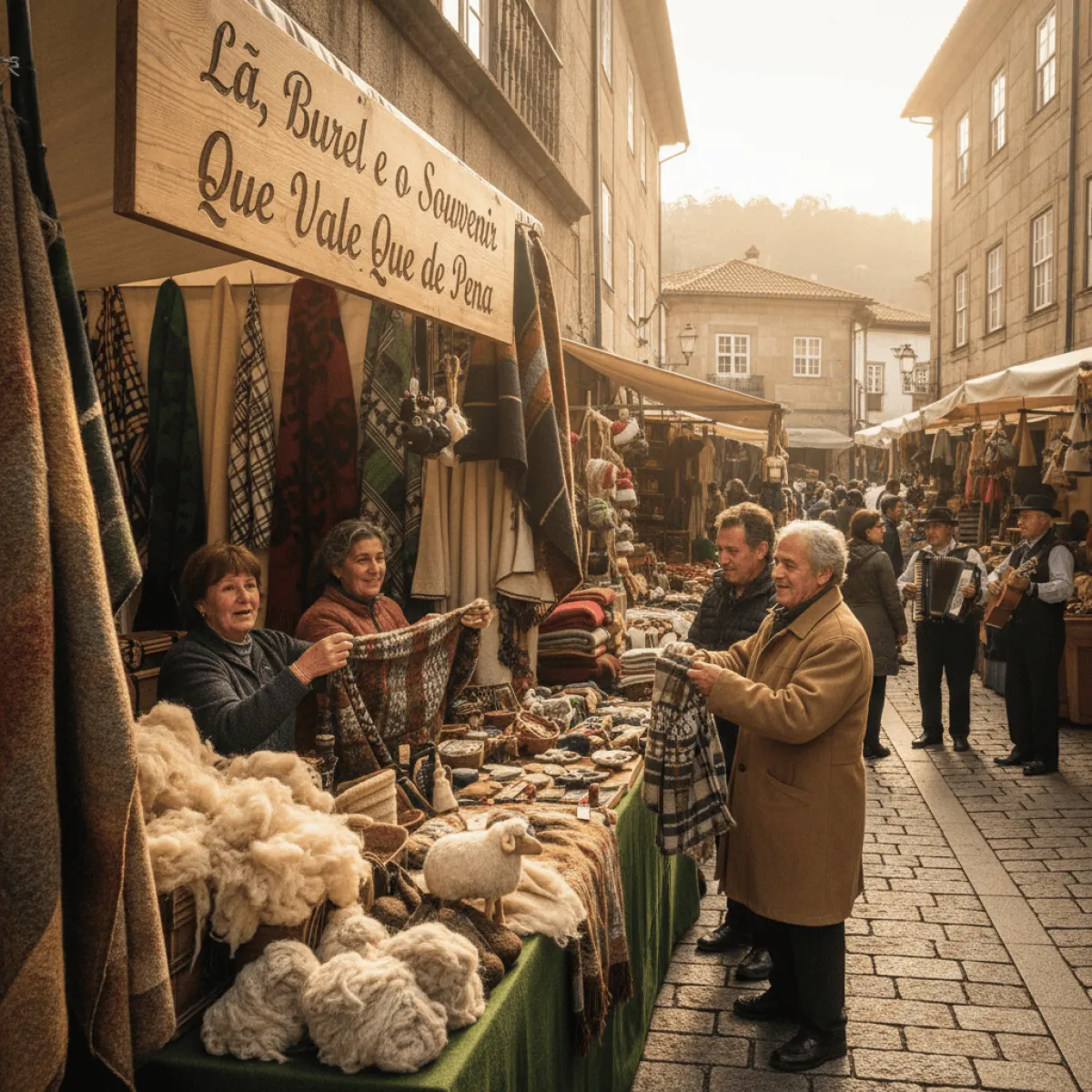
Start here. The cobertor de papa is the piece that defines the region. Traditionally used by mountain shepherds to survive months in the serra, it is woven in virgin wool, then beaten in water mills with wooden hammers until it gains a dense, almost waterproof texture that repels rain and wind. It weighs three to five kilos. Today it costs between 250 and 600 euros, depending on size and weaver.
Yes, it is expensive. Yes, it is worth every cent. Compare it with an industrial 80 euro blanket that lasts two winters. The cobertor your grandfather bought is probably still folded in someone's house. These blankets do not wear out. They get inherited.
The best way to understand what you are buying is to see it being made. I strongly recommend the wool weaving workshop in Maçainhas, a few kilometres from town. You spend a morning with weavers who still use wooden looms, you learn the difference between carded and combed wool, and you leave knowing you will never again confuse the real thing with a factory product.
For historical context, visit the Museu de Tecelagem dos Meios. It is small. It is honest. It has old looms, tools, blankets from the 1940s and 1950s that show how little the technique has changed, and staff who know what they are talking about. Set aside an hour. Check opening hours before you go. They shift with the season.
Burel: the wool the designers found
Burel is the cobertor de papa's cousin, but more refined. It is wool that has been pounded and felted into a thick, dense fabric, almost indestructible. For decades it was used to make shepherd capes and mule blankets. Today it is the raw material for slippers, cushions, jackets, bags and even hotel interiors. A Portuguese brand called Burel Factory, based in Manteigas, has done what very few have managed: it took a rural material, refused to dilute it, and sold it to Tokyo and New York at the price it deserves.
What to buy? I have a pair of burel slippers I have worn for seven years. They are still alive. They cost about 35 euros and, pound for pound, they were the best 35 euros I ever spent in a Portuguese shop. Other smart options: a cushion (50 to 90 euros), a small travel bag (from around 120 euros), or, if you are willing to invest, a short jacket, which can run up to 400 euros but will outlive most things in your wardrobe.
Honest advice: if you see burel for 15 euros, be suspicious. It is probably blended with synthetic fibres. Pure wool, properly felted, has a minimum price. Smell the piece. Real wool smells like wool. It does not smell like plastic.
Serra da Estrela cheese: the souvenir you eat
There are clear rules here, and almost no one follows them. Let me try.
- Always look for the DOP label. Queijo Serra da Estrela DOP is controlled, with strict production rules. Without DOP, it is only "Serra-style" cheese, which can be made anywhere.
- The amanteigado, the traditional buttery one, is the cheese you eat with a spoon. The aged version, cured more than six months, is cut with a knife and has a sharper, almost rustic-parmesan taste. Both are good. But the amanteigado is the one you want to take home to impress people.
- Buy directly from a producer, in Celorico da Beira or Gouveia. Or, if you stay in Guarda, choose a small cheesemonger with someone behind the counter who can answer the question "whose cheese is this?". If they cannot, walk away.
- An amanteigado of around 800g to 1kg costs between 25 and 40 euros. Cheaper than that, be suspicious. More expensive, you are probably paying for fancy packaging.
Practical tip: the cheese travels well in checked luggage if it is properly wrapped, sealed in plastic, and inside a box. In carry-on, in heat, it becomes an olfactory experience your fellow passengers will not appreciate.
Before you buy: learn how to look
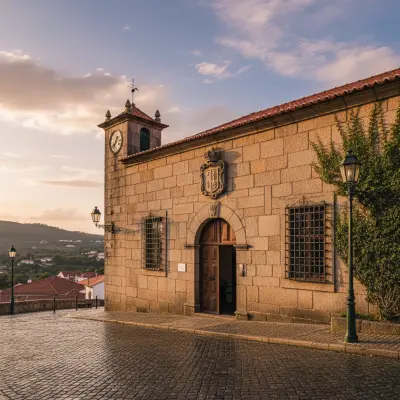
The best souvenir starts with knowing what you are looking at. Guarda is a small granite city with a medieval Jewish quarter, an imposing late fourteenth century cathedral, and fortifications that explain why it was a frontier town. Before walking into any shop, do this short circuit:
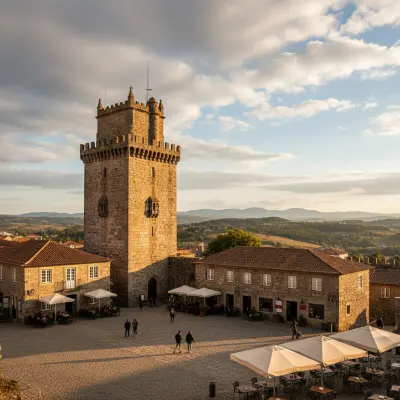
Climb the Torre de Menagem. It is what remains of the medieval castle and the highest point in the city. On a clear day you see all the way to Spain. It costs little, takes fifteen minutes, and gives you the city's scale instantly. Then walk down Rua do Comércio to Praça Luís de Camões, where the cathedral stands. Step inside. You do not have to pay to see the main nave, and you will understand that the local granite is not decoration here. It is structure. Everything was built from what came out of these quarries.
Finish at the Museu da Guarda, in the former seminary. It has religious art, archaeological pieces and an ethnographic section that shows how pastoral and textile life shaped the region. Knowing this turns the blanket you are about to buy from a pretty object into an object you understand.
What NOT to buy (and where NOT to buy it)
I will be specific, because this saves you wasted money.
- Barcelos roosters. They belong to Minho. Buying a rooster in Guarda is like buying a cowboy hat in New York City. It is not wrong, exactly. It is just out of place.
- Azulejos "hand-painted" for 5 euros in old town kiosks. They are transfers. The real hand-painted ones, when you find them, cost 30 to 80 euros and come from workshops in Lisbon, Coimbra or Aveiro. Buy them there, not here.
- So-called Castelo Branco embroidery in generic shops. The real ones, stitched in linen with silk, cost hundreds of euros and you have to find them in Castelo Branco itself, at the source. The cheap "souvenirs" with the same pattern are prints.
- Liqueurs in decorative porcelain bottles. Almost always, the liqueur inside is mediocre. If you want a bottle, take a Dão wine (the region begins to the west of Guarda), an aged Portuguese aguardente from a named producer, or a Serra da Estrela medronho from someone whose name is on the label.
Where to buy well in the city
I am not going to name specific shops. They open and close, and it would be unfair to praise or punish individuals. But there are universal rules that work in Guarda the way they work in any serious Portuguese city.
- Always ask who made the piece. If you hear "it is Portuguese", leave. If you hear "it is from Senhora Maria, in Manteigas, I drive there once a month to pick them up", stay.
- Shops linked to Serra da Estrela weaving cooperatives or to certified cheese producers are almost always safe. DOP rules and cooperative seals are not marketing. They are audit.
- Avoid the first shop on the main street next to the cathedral. Walk ten minutes more. Prices drop, and quality almost always rises.
Combining the purchase with the trip
Guarda is a good base for the Serra da Estrela. If you really want to understand what you are buying, give one day to driving up to Manteigas and Folgosinho. A mindful walk in Folgosinho teaches you more about wool than any museum. It is up there, on the plateau, that you understand why shepherds needed blankets that weigh five kilos. The cold in October, without warning, twenty minutes after lunch, justifies everything you are about to spend on a good piece of burel.
If you are travelling through the Centro region in early spring and stitching together an itinerary, it is worth crossing this piece with April walks around Caldas da Rainha or, for May, with Coimbra's Queima das Fitas. For travellers combining a visit to Fátima with the centre of the country, the honest pilgrimage guide helps you plan dates without falling into tourist traps.
Quick logistics
- Getting there: Intercidades train Lisbon-Guarda (around 4 hours, from 25 euros if booked early). From Porto, the Rede Expressos coach is more direct than the train.
- When to go: May, June, September and October. Summer is dry but hot. Winter is magnificent if you have a car and like snow, although some mountain roads close.
- Budget for serious souvenirs: a decent burel piece between 35 and 150 euros; a cobertor de papa between 250 and 600 euros; a DOP amanteigado cheese between 25 and 40 euros. Reasonable total for three meaningful pieces: 350 to 800 euros. Yes, it is real money. No, it is not expensive.
- What to avoid: souvenir shops selling magnets and roosters next to textiles. If they sell everything, they master nothing.
Souvenirs are a moral choice
I will end with a simple idea. Every euro you spend on local craft is a vote. Buy a hand-woven cobertor de papa and you keep a loom running for another month. Buy a pair of burel slippers and you sustain a wool producer who pays the shepherd who looks after the sheep grazing on the plateau. Buy a magnet made in China and you finance a middleman in Aveiro importing containers.
Guarda is not an easy city to walk into. It is austere. It is built of stone. But it has one of the most solid textile traditions in the country and cheese producers among the best in Europe. Leave with a piece that says that, not with a magnet.
A good souvenir is not sold in kiosks. It waits for the people patient enough to look for it.