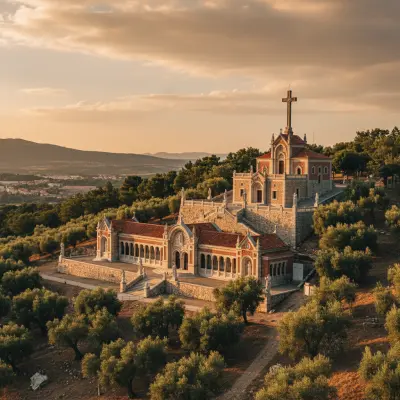
Fátima on May 13th: An Honest Pilgrimage Guide
The May 13th pilgrimage to Fátima draws half a million people, fills 7,000 beds and shuts traffic for 24 hours. This guide covers how to arrive, where to sleep, what to eat, and how to survive the candlelight procession without illusions or cheap irony.
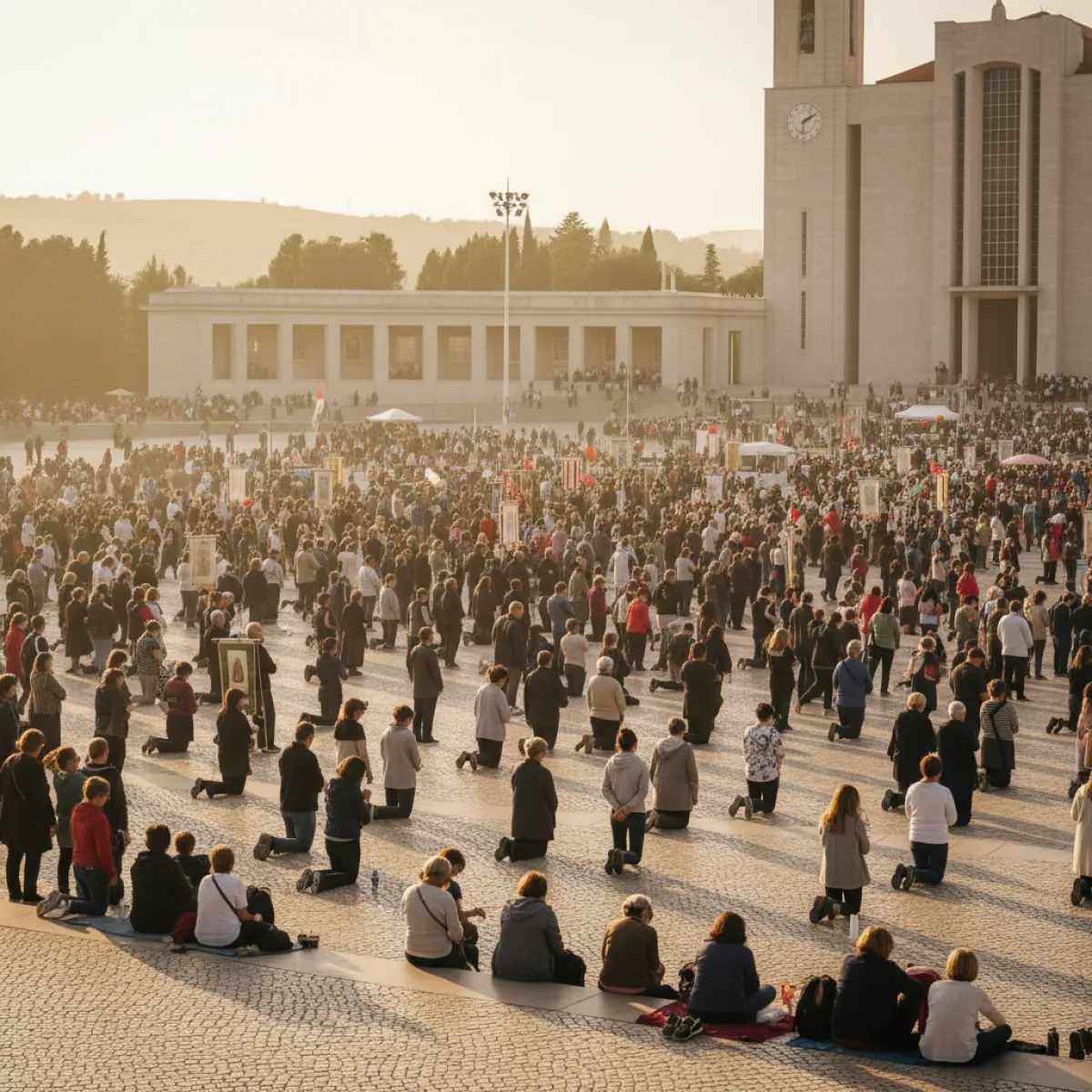
There's a moment, around 9.30pm on May 12th, when the Cova da Iria stops being a sanctuary and turns into something else entirely. Hundreds of thousands of people, candles in hand, in near-total silence. You hear the wind across the esplanade, the dragging steps of someone who walked three days from Lisbon, and somewhere far back, a single cough. That's it. And it's a lot.
If you've never been to Fátima for the May 13th pilgrimage, it helps to know what you're walking into. This isn't Lourdes, isn't Santiago, isn't a polite religious tourism event. It's one of the largest Catholic gatherings on Earth, rooted in the 1917 apparitions, and every year it draws between 200,000 and half a million people to the shrine grounds. It's also a logistical beast: hotels long sold out, streets shut, restaurants charging double, porters hustling for tips.
This guide isn't for devotees, and it isn't against them. It's for the curious traveller who wants to understand the May pilgrimage without illusions and without cheap irony. The faithful don't need me to explain what they're doing. Everyone else might.
What actually happens on May 12th and 13th
The international anniversary pilgrimage officially starts on the afternoon of the 12th and ends late on the morning of the 13th. The 13th marks the first apparition of 1917 to the three shepherd children: Lúcia, Francisco and Jacinta. But the heaviest moment, in terms of crowds, is the night between the two days.
The programme, which has been stable for decades, hangs on three set pieces:
- Afternoon of the 12th: the rosary at the Chapel of the Apparitions, around 6.30pm, followed by mass.
- Night of the 12th: the candlelight procession, typically between 9.30pm and 10.30pm. This is the image you've seen on every Portuguese TV channel. It's the most cinematic moment, and the hardest to photograph without annoying someone who's praying.
- Morning of the 13th: the international mass at 10am, followed by the farewell procession with white handkerchiefs waving in the air. It's the climax and the closing credit at the same time.
Always check times on the Sanctuary's official website before travelling. There are yearly tweaks, and in years with a papal visit or a major anniversary (like the 2017 centenary), everything shifts.
Getting there without losing your mind
Fátima sits 130 km from Lisbon and 200 km from Porto, on the A1 motorway. In normal traffic, it's an hour and a half from Lisbon. On May 13th, double it and prepare for a queue at the Fátima/Batalha exit.
If you're driving, three practical thoughts:
- Leave very early on the 12th (before 9am), or aim to arrive on the morning of the 13th after 6am, when the worst of the night traffic has passed.
- Use the long-stay car parks signposted by the Ourém council. Lots near the shrine fill up by the afternoon of the 12th and are then closed off by police.
- Don't try to park in Fátima town. Roads around the shrine are closed to traffic for around 24 hours.
By train, the closest station is Caxarias, about 12 km away. There are shuttle buses, but they're packed in this period. The cleanest option from Lisbon is Rede Expressos coach: it leaves from Sete Rios, takes about two hours, and drops you a short walk from the shrine. In normal times, it costs around 14 to 16 euros each way. Confirm at the counter.
The actual pilgrims walk. They leave from Lisbon, Lourinhã, Coimbra, Braga, some come from Spain. You'll see them on the N113 and N356, in reflective vests, carrying parish banners. Overtake them carefully and, for the love of God, don't honk.
Where to sleep (if you still can)
Plain talk: if you're reading this a week before May 13th, forget it. Fátima's roughly 7,000 beds book up months in advance, and hotels happily mark up rates by 50 to 100 percent.
Reasonable alternatives, by proximity:
- Ourém (15 minutes by car): cheaper guesthouses and a medieval town worth visiting in its own right. If you have time, devote a morning to the castle and old village. We've thought about how to do that with proper context in our piece on the archaeological roots of Fátima through Ourém Castle. It's a perfect counterweight to the shrine: silence, stone, almost no tourists.
- Batalha (10 minutes): a UNESCO monastery and decent hotels. Pairs well with Alcobaça and Nazaré on the way back.
- Tomar (30 minutes): more hotels, better dinner, and the Convent of Christ 15 minutes from the centre.
- Leiria (25 minutes): a mid-sized city with normal hotel prices.
People who turn up without a reservation sleep in their cars or in municipal halls converted into emergency dormitories. I'm not joking.
What to do outside the shrine
Fátima town, beyond the sanctuary, is honestly thin. Religious souvenir shops as far as the eye can see, tourist restaurants with menus in seven languages, and not much else. If you're staying two days, plan to leave the centre.
Valinhos and the olive groves
1.5 km from the shrine lies Valinhos, where the shepherd children grazed sheep and where, according to the accounts, later apparitions occurred. There's a walking circuit, the Caminho dos Pastorinhos, connecting Aljustrel (Lúcia's home village) and the Loca do Cabeço.
Honestly, this is the best thing Fátima offers outside the shrine. You walk among old olive trees, there's shade, there are benches, and even at the peak of the pilgrimage the crowds are manageable. To do this properly, with a sense of place and not as a checklist, read our guide on walking the Valinhos olive groves first. Go in the late afternoon of the 12th, before the candlelight procession. The light is good, the heat fades, and there's a quiet you won't get back at the main esplanade.
The Hungarian Calvary
In the Valinhos area there's also something most visitors miss: the Hungarian Calvary, donated by the Hungarian diaspora in the 1960s, with 14 sculpted Stations of the Cross and a chapel of Saint Stephen at the top. It's an odd, beautiful place, slightly off the official circuits. If you go to Fátima and only see the shrine, you miss the more interesting half. I'd argue the Hungarian Calvary is more moving than much of what you'll see down on the esplanade.
Eating in Fátima without getting fleeced
Most of the food in Fátima is defensive cooking: caldo verde, bacalhau à Brás, beefsteak for tour buses. Average at best.
Honest pointers:
- Don't eat within 100 metres of the shrine. Walk 10 minutes outwards and prices and cooking both improve.
- Look for a tasca, not a tourist restaurant. If the menu has photos and is translated into German, walk away.
- You're in the Médio Tejo region: chanfana, roast kid, suckling pig (Bairrada is not next door but its influence reaches here) and Rabaçal cheese are safe bets when done well.
- For lunch, soup, dish of the day and coffee for under 12 euros is realistic. Check locally: menus change, and in May prices climb.
For drinks, don't hunt for craft cocktails. Order house wine from the Estremadura or Tejo and call it done.
How to behave at the candlelight procession
The candlelight procession is why many travellers come on May 12th. It's spectacle in the literal sense, but it's also a religious moment for the people standing next to you. A few notes nobody bothers to write:
- Buy your candle at the shrine. It's cheap, the proceeds fund the Sanctuary, and it saves you fumbling for matches in the dark.
- Find your spot at least an hour ahead. After 9pm, moving inside the esplanade becomes nearly impossible.
- Phones: nobody will stop you filming, but be human. Don't film strangers' faces in close-up. Don't use flash.
- Dress in layers. May in Fátima can be 25 degrees in the afternoon and 10 at night, with wind. The shrine is an open esplanade. No shelter.
- If you're bringing children, pack ear protection. The PA system is loud.
May in Portugal is not only Fátima
Here's the less obvious angle. If you're planning a Portugal trip in May and have flexibility, consider pairing Fátima with something else. May is one of the country's best months, and the rest of Portugal happens too.
In Coimbra, the first week of May belongs to the Queima das Fitas, on which we wrote an honest guide to praxe: eight days of parade, concerts at the Estádio Cidade de Coimbra, and students in black capes doing things they wouldn't do sober. It's the perfect opposite of Fátima, and it sits 90 minutes away by car. While there, take the chance to see how Coimbra has been visually rewritten with our guide to the murals reshaping the Alta. Same city, different face.
Heading west towards the coast there's another route. Caldas da Rainha is an hour from Fátima, and May extends the conditions described in our piece on April walks around Caldas da Rainha. Óbidos lagoon, Foz do Arelho, farmers' markets: if the pilgrimage drains you (and it will), 24 hours of beach and pine forest is the right antidote.
What to pack
If you're going for a single day without sleeping in Fátima, the essentials:
- Water, plenty. The fountains at the shrine get crowded and queues build up.
- Comfortable shoes. You'll walk a lot, on hard stone surfaces.
- A jacket or thin waterproof. In May, evening rain in central Portugal is a real possibility.
- A thin cushion or mat if you plan to sit on the esplanade.
- A power bank. You'll film, you'll call someone, and the mobile network struggles during the procession.
- ID. There are spot checks at the shrine entrances.
- Small cash. Candles, donations, a bowl of soup: everything is easier with five euros in hand.
What to feel, or not feel
One last thing that doesn't fit the checklist. Some arrive at Fátima sceptical and leave shaken. Some arrive devout and leave crushed by the religious tourism around them. Some feel nothing at all. All three reactions are legitimate.
My only advice is: don't fake it. Don't go to Fátima on May 13th hunting for an Instagram epiphany. Go to see what happens, talk to someone who walked three days, eat a bowl of soup at 11pm in a café full of damp strangers, and notice that this pilgrimage, for all its commercial excess, is still one of the last places in the country where half a million people fall silent at the same time. In an age of permanent noise, that alone is worth the trip.