The Archaeological Roots of Fátima: A Journey Through Ourém Castle and its Medieval Village
Discover the historical origins of Fátima through a guided tour of Ourém Castle. Explore recent archaeological excavations and the medieval legend that gave its name to Portugal's most spiritual city.
The Stone Legacy: Exploring the Ancient Foundations of the Fátima Region
Many visitors to the Sanctuary of Fátima are unaware that the town's name and its deep history are inextricably linked to a strategic height located just a few kilometers away. Ourém Castle, perched atop a hill overlooking the vast landscape, is more than just a military monument; it is an archaeological complex revealing layers of human occupation dating back to the Bronze Age, through the Roman period and Islamic rule, to the consolidation of the Portuguese nation. This visit focuses on the Medieval Village of Ourém, a historic core where time appears to have stood still, offering a perspective that complements the spiritual modernity of the sanctuary.
The Encounter with History at the Exhibition Center
The experience begins at the Permanent Exhibition Center, managed by the Municipality of Ourém. This space serves as the gateway to the complex and is where visitors can grasp the context of the extensive archaeological excavations completed in 2021. This restoration project, one of the most ambitious in the region, stabilized the structures and, more importantly, exposed architectural elements that had remained hidden for centuries. In contrast to the architecture described in Sacred Silence: The Modernist Architecture of Fátima's Lesser-Known Chapels, Ourém Castle displays a robust Gothic and Manueline style, where every carved stone tells a story of defense and noble power.
Ascending the Towers and the Palace of the Counts
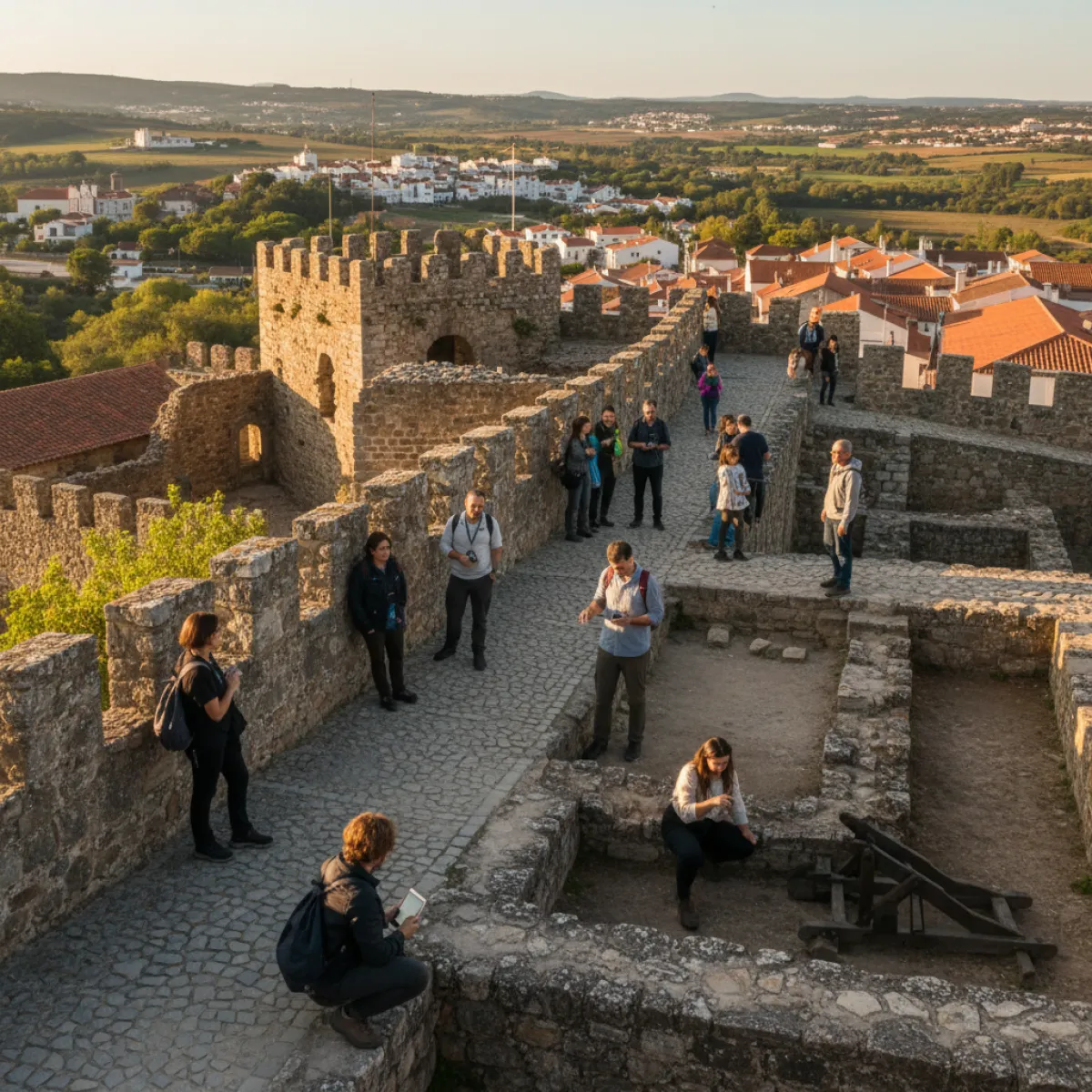
The guided tour leads visitors through the fortified gates to the imposing Palace of the Counts of Ourém. This building, commissioned by D. Afonso, the fourth Count of Ourém, in the 15th century, is a unique example of palatial architecture in Portugal. The guide provides a detailed explanation of the transition from purely military functions to a prestigious residence, highlighting the Italian-influenced brick towers, a rarity in the Portuguese construction landscape of that era. Walking through the now-recovered interiors, one can observe the remains of kitchens, audience halls, and cisterns that ensured the survival of the garrison during times of siege.
The path then leads to the castle itself, the highest structure in the ensemble. Here, archaeological excavations have uncovered the foundations of earlier defensive structures, allowing researchers to trace the evolution of the site since the Moorish period. The legend of Princess Fátima, a Moorish noble captured during the Christian Reconquista who converted for the love of a Templar knight, takes on a tangible historical dimension here. It is this narrative that gives the neighboring town its name, creating a direct link between this archaeological site and the world-renowned pilgrimage center.
A Walk Through the Medieval Village: Alleys and Excavations
Following the exploration of the main structures, the experience continues with a walk through the narrow streets of the Medieval Village. The uneven stone pavement requires appropriate footwear but rewards the visitor with curious details: Manueline-style windows, pointed arches, and the Collegiate Church, which houses the crypt of Count D. Afonso. Along the way, the guide points out areas where archaeologists are still active or where recent findings have shifted our understanding of medieval daily life. One can see silos carved into the rock, used for storing grain, and the foundations of ancient dwellings that demonstrate how the population organized itself around the central power of the castle.
Practical Tips and Planning
A visit to Ourém Castle is an activity that requires moderate physical preparation due to the steep inclines and irregular flooring. It is advisable to book the guided tour at least 48 hours in advance, especially during the summer months when demand is higher. Access to the castle is possible by car from Fátima (approximately 15 minutes), with a parking area at the base of the village, though walking up from there is the most authentic way to absorb the historical atmosphere.
- What to bring: Hiking shoes with good grip, water, a hat, and sunscreen, as much of the route is outdoors.
- Best time to visit: Morning tours (10:30 AM) or late afternoon tours (4:00 PM in summer) provide the best light for photography and help avoid the peak heat.
- Accessibility: Due to the archaeological nature of the site, many areas have limited accessibility for individuals with reduced mobility.