The Art of Wool: Cobertor de Papa Weaving Workshop in Maçainhas
Discover the secret of the Cobertor de Papa in a hands-on workshop in Maçainhas, Guarda. Learn the art of manual weaving with Mondegueira wool and witness the ancestral fulling process that brings these iconic blankets to life.
Reviving a High-Altitude Tradition
On the outskirts of Guarda, where the air is sharp and granite dominates the landscape, there is an enclave of cultural resistance that defies modern industrialization. The village of Maçainhas de Baixo is not just a point on the map of the Beira Alta region; it is the final stronghold of one of Portugal's most iconic textiles: the Cobertor de Papa (Pope's Blanket). Participating in a weaving workshop organized by the Associação O Genuíno Cobertor de Papa, under the Papachurra project, is a deep dive into a production cycle that has remained virtually unchanged for centuries, utilizing the wool of the Mondegueira sheep to create pieces of unparalleled durability and texture.
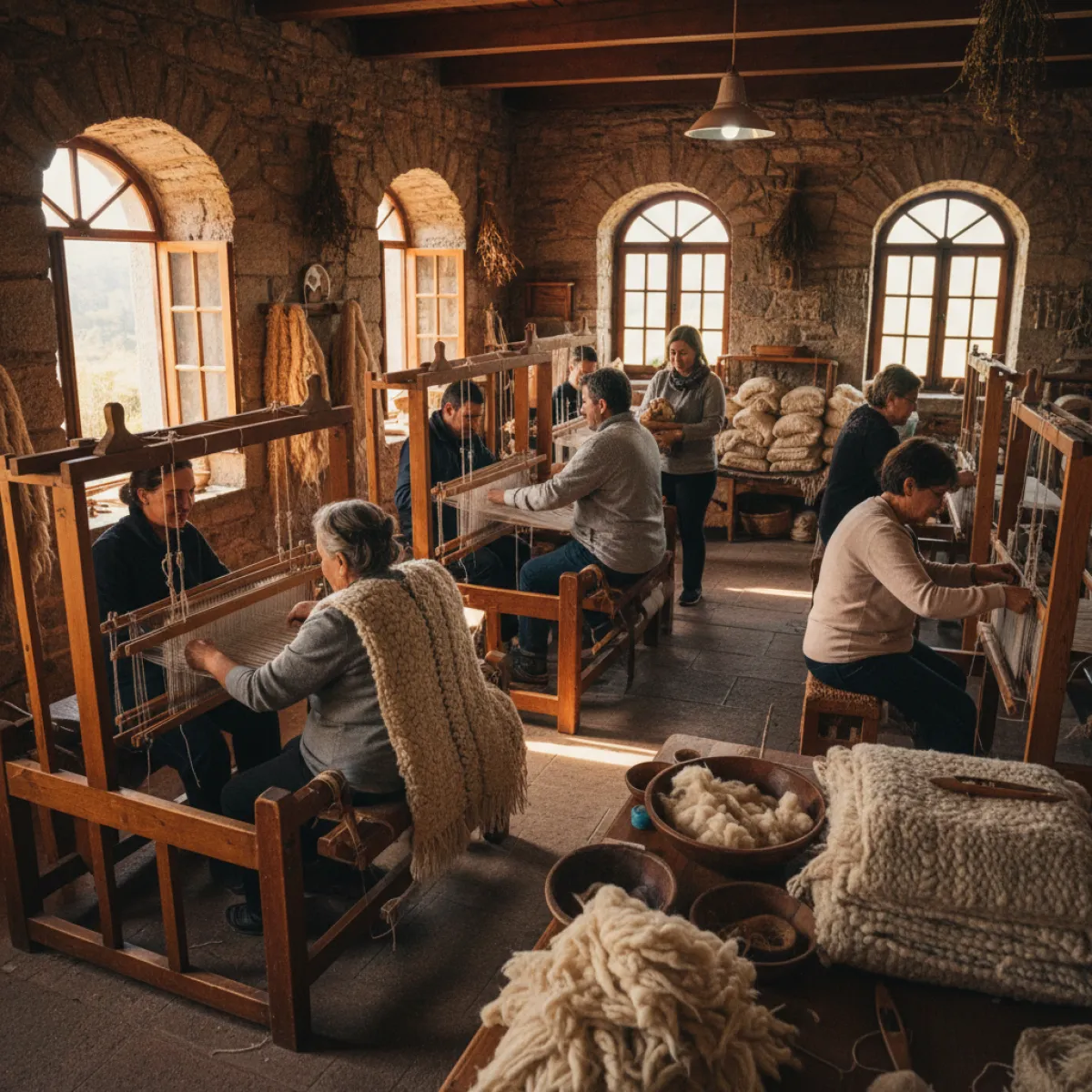
The experience begins at the former Artur Freire Blanket Factory, a building that breathes the industrial history of the region. Upon entering, the intense aroma of raw wool and lanolin fills the space, transporting the visitor to a time when the economy of the Serra da Estrela mountains depended entirely on flocks and looms. The workshop goes beyond teaching how to cross threads; it is a lesson in practical anthropology, where every movement on the manual wooden loom tells the story of shepherds who ascended the mountains protected by these heavy, long-haired blankets.
The Cycle of Mondegueira Wool
The first stage of the workshop focuses on the raw material. Unlike fine, soft Merino wool, the wool of the Churra Mondegueira sheep is robust, long-fibered, and rustic. This specific characteristic is what allows for the creation of the blanket's famous long-haired nap. During the session, participants learn to distinguish the natural colors of the wool, white, brown, and "pardo" (a grayish-brown), which undergo no chemical dyeing. The preparation process, from carding to spinning, is explained in detail by master artisans who still command the technique, revealing how the wool is cleaned while preserving the natural oils that make the blanket water-resistant.
Sitting at the Loom: The Rhythm of Time
The core of the experience occurs at the imposing manual looms. Under the guidance of experienced weavers, participants are invited to take control of the shuttle. The work requires coordination between the hands, which guide the weft thread, and the feet, which operate the treadles to alternate the warp threads. The rhythmic sound of the wood striking the fabric, the characteristic "clack-clack", becomes a form of active meditation. The goal is not immediate perfection but an understanding of the tension required for the fabric to achieve the correct density. Each added line is a contribution to a piece that, in theory, can last more than a lifetime.
The Mystery of the Pisão
What truly distinguishes this workshop from any other weaving experience in Portugal is the explanation of the finishing process in the "pisão" (fulling mill). The blanket leaves the loom as a rustic fabric, but it is the force of the water and the mechanical beating in the fulling mill that cause it to shrink and raise the nap. Although the fulling mill is a massive machine often located outside the main weaving workshop, its logic is central to the learning process: without this intensive felting and washing treatment, the Cobertor de Papa would be just another ordinary wool blanket. The artisans explain how the region's ice-cold water helps fix the fibers, giving it the famous ability to repel rain and the extreme cold of Guarda.
Exploring Guarda's Heritage
The workshop's location in Maçainhas invites a deeper exploration of Portugal's highest city. After hours dedicated to the loom, it is natural to seek the contrast between the ruggedness of the wool and the historical sophistication of the urban center. Many visitors take the opportunity to discover the jewish legacy of the highest city: a walk through guarda's judiaria, where the marks of history intersect with the stones that support the city. It is an opportunity to understand how the textile industry and the presence of artisan communities shaped Guarda's identity over the centuries.
For those who prefer a focus on architecture and religious symbolism, the guide granite and grace: the sephardic heritage of guarda's old town offers a complementary perspective on the austere and solemn atmosphere that characterizes this region. Like the Cobertor de Papa, Guarda is made of layers of history that require time and patience to be properly appreciated.
Practical Tips for the Workshop
For those planning a visit, practical considerations are essential. The workshop takes place in a real working environment, so comfortable clothing that you don't mind getting covered in wool fibers is recommended. Winter is, interestingly, the most authentic time to have this experience, as the natural warmth of the workshop contrasts with the cold outside, allowing you to fully appreciate the functionality of the pieces being produced. Reservations are required at least one week in advance, as availability depends on the artisans' production pace and material preparation.
- What to bring: A notebook for technical notes and comfortable, closed-toe shoes.
- Duration: The introductory workshop lasts approximately two to three hours.
- Transport: Maçainhas de Baixo is about a 10-minute drive from the center of Guarda; there is easy parking next to the association.
Upon finishing the session, participants take with them not just a fabric sample or the memory of an ancient gesture, but the awareness that they are supporting the survival of a global heritage. In a world of fast consumption, the Cobertor de Papa stands as a testament to durability and respect for the natural resources of the Serra da Estrela.