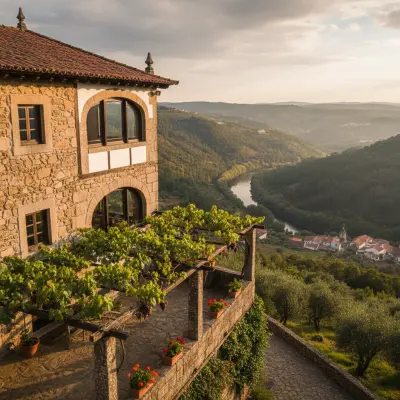
Coimbra: The Grammar of Time in Portugal’s Intellectual Capital
Beyond the black capes and the centuries-old university, Coimbra is a labyrinth of medieval history and rustic gastronomy. Discover the hidden corners of the Baixa and the viewpoints surveying the Mondego with a sophisticated eye.
A City of Layers
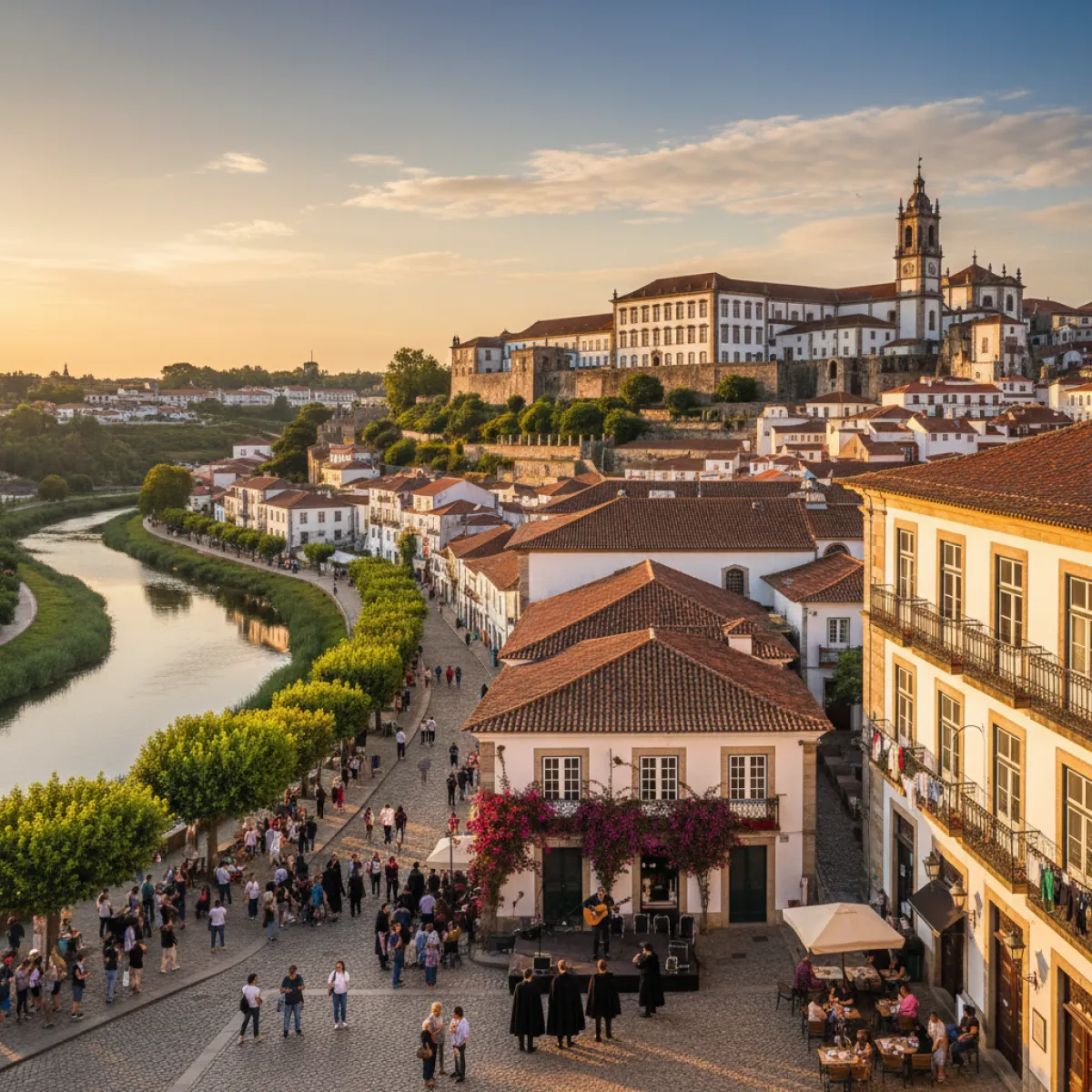
Coimbra does not yield to the casual observer. It is a city of distinct, historical strata where the weight of academic tradition isn't merely a performance for tourists but a constant pulse governing the rhythm of steep ascents and descents toward the Mondego River. While Lisbon expands in its Atlantic light and Porto closes in on its granitic industriousness, Coimbra remains introspective, almost austere, guarding within its hilltop courtyards nine centuries of intellectual evolution. To the traveler arriving for the first time, the impression is one of stark verticality: the University, crowned by its 17th-century clock tower, surveys the landscape from the summit, while the Baixa (Lower Town), commercial and pragmatic, hums along the riverbanks.
The Heights: Rigor and Ritual
Climbing the Couraça da Estrela or tackling the Quebra-Costas ('Back-Breaker') steps is a necessary rite of passage. In the Alta, the air feels denser, charged with history. Here lies the Paço das Escolas, where Mannerist and Baroque architecture perform a choreography of stone. The Joanina Library is, without question, the epicentre of this aesthetic upheaval. Move past the surface-level descriptions; the Joanina is an exercise in power and knowledge. Its three grand halls, clad in gold leaf and exotic woods from Brazil, house not only thousands of rare volumes but also a resident colony of bats that, since the 18th century, has protected the paper from insect infestations. It is a functional Baroque ecosystem. Nearby, the Science Museum offers an Enlightenment-era counterpoint to the religious weight of the surrounding structures.
The Baixa: Between the Sacred and the Profane
Descending toward the river, the city shifts gear. Rua da Sofia, a UNESCO World Heritage site, is a corridor of Renaissance colleges that once teemed with theological debate. Today, life is concentrated in Rua Ferreira Borges and Largo da Portagem. This is where traditional commerce endures, with fabric shops that seem suspended in time and pastry shops guarding centuries-old conventual recipes. The Santa Cruz Monastery is essential. Here lie the first kings of Portugal, Afonso Henriques and Sancho I, in a national pantheon that breathes the solemnity of the Manueline style. For a mid-afternoon pause, Café Santa Cruz, housed in the monastery’s former auxiliary church, provides the ideal setting with its vaulted ceilings and stained glass, where the sounds of Coimbra Fado often echo spontaneously.
Perspectives and Silence
Crossing the Santa Clara Bridge provides a necessary change in perspective. From the left bank, Coimbra’s silhouette reveals its full majesty, a cascade of white buildings and terracotta roofs tumbling down to the water. For those seeking a wider lens and a reprieve from the crowds, the Miradouro do Vale do Inferno provides a panoramic sweep that captures the city’s verticality in its entirety. From this vantage point, one understands how the Mondego snakes through the plains, separating the scholars' hill from the fertile fields beyond. This site, often bypassed by hurried itineraries, offers the quietude needed to process the city's historical density. Coimbra serves as a pivotal node for any broader exploration of the region, perhaps following a Portugal Itinerary: A Week in the Heart of the Country.
The Palate of Tradition
Coimbra’s gastronomy is a lesson in economy and depth. The signature dish is Chanfana, old goat meat slow-cooked in red wine within black clay pots in wood-fired ovens. This is not a dish for the rushed; it requires patience and a side of boiled potatoes and turnip greens. In the Baixa, avoid the generic tourist menus and seek out the tabernas where Bairrada wine is served in clay carafes. In the world of sweets, the Pastel de Santa Clara and the Arrufada are direct heirs to the patience of the Poor Clare nuns. A daily budget of €60 to €80 per person allows for a high-end experience, including dinner at one of the emerging contemporary restaurants near the Sé Velha and guided access to the university's restricted areas.
The Intellectual’s Lament
As evening falls, Coimbra Fado takes center stage. Unlike Lisbon’s Fado, which is sung by men and women alike in taverns, Coimbra’s version is strictly male, performed by students and alumni draped in black capes (capa e batina). It is a song of departure, of longing for the academic years. The etiquette is strict: one does not applaud. At the end of a performance in Praça do Comércio, silence is only broken by a solemn clearing of the throat from the audience, a sign of respect that carries more weight than any boisterous ovation. Slow travel is the only way to appreciate this intellectual weight, much like the journey described in The Measured Pace: A Seven-Day Passage from Lisbon to Porto via the Ria, where a stop in Coimbra acts as a moment of reflection before the faster pace of the north.
Practicalities
- When to visit: May brings the 'Queima das Fitas', the city's graduation festival, which is intense and celebratory. October offers the serenity of autumn and the return of the student body, with ideal walking weather.
- Getting there: The Alfa Pendular train connects Coimbra to Lisbon in 1.5 hours and Porto in 1 hour. Coimbra-B is the main station; a quick shuttle train connects to Coimbra-A in the city center.
- What to avoid: Do not attempt to drive into the Alta; the streets are narrow and parking is an exercise in frustration. Use the public elevator or the stairs near the market.