Miradouro do Vale do Inferno
Discover Miradouro do Vale do Inferno, the most iconic vantage point on the Mondego's left bank. A complete guide on how to get there, what to bring, and the best time to contemplate Coimbra's stunning skyline.
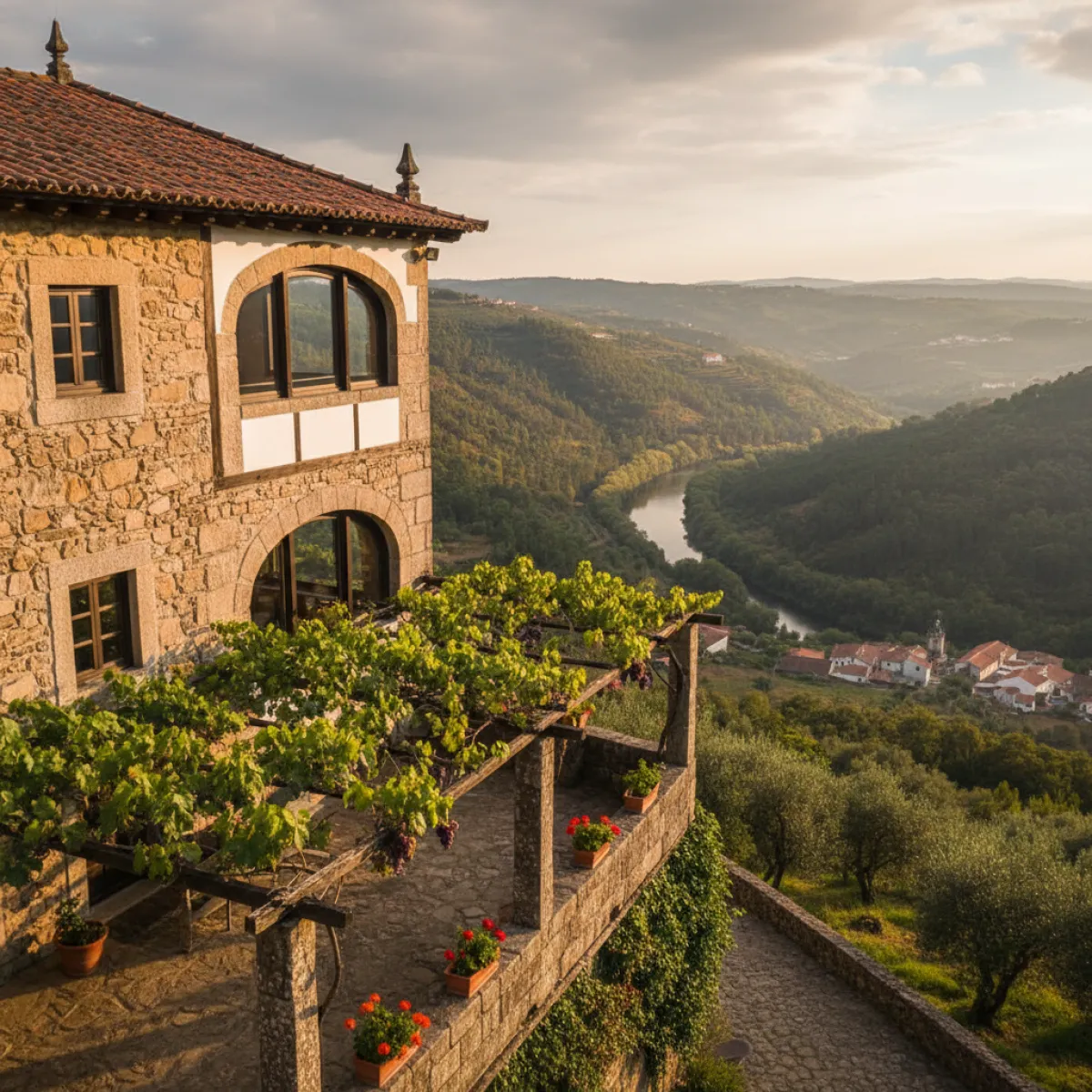
A Window Over the Mondego: The Essence of Miradouro do Vale do Inferno
Coimbra is a city that reveals itself in layers, a tapestry of stone and memory stretching across the hills flanking the Mondego River. While most visitors focus on ascending to the towering University or exploring the cloisters of the Old Cathedral, there is a vantage point on the left bank that offers an almost cinematographic perspective of the urban landscape. The Miradouro do Vale do Inferno, located on the Ladeira do Vale do Inferno, is not merely a passing stop; it is an invitation to lingering contemplation of what was once the kingdom's capital.
The name, somewhat dramatic and steeped in mysticism, contrasts deeply with the serenity of the view it provides. At Vale do Inferno (Hell's Valley), the horizon opens up to reveal the majestic University Tower, the terracotta rooftops of the Baixa (downtown), and the graceful curve of the river embracing the city. It is here that one truly understands Coimbra's geography, the way the city organized itself around knowledge and religion, climbing the hill with an architectural density that has survived centuries.
The Journey: Between the Slope and History
Reaching the Miradouro do Vale do Inferno requires either physical effort or attentive driving. Situated in the parish of Santa Clara, access is gained via the Ladeira do Vale do Inferno, a road that winds up the hillside. For those who enjoy walking, the ascent from the Santa Clara Bridge is an invigorating exercise. Along the route, the urban environment gives way to a more residential and tranquil atmosphere, typical of the left bank, which has always maintained the role of a silent observer of the Right Bank's hustle and bustle.
If you opt for the pedestrian route, be prepared for a considerable incline. However, the reward is immediate: with every turn, the city seems to gain a new dimension. It is advisable to wear comfortable footwear with good grip, as the Portuguese cobblestones and the slopes in this area can be slippery, especially on humid days. For those who prefer the comfort of a car or a taxi/ride-share, the journey is short, but parking at the site is limited, requiring some patience to find a spot that does not obstruct local traffic.
Coimbra's Skyline in Detail
From the parapet of this viewpoint, the view is dominated by the silhouette of the University of Coimbra, a UNESCO World Heritage site. The whiteness of the Via Latina stones gleams under the sun, while the 'Cabra' Tower punctuates the sky. Further down, the New Cathedral and the Old Cathedral stand out in the urban fabric, witnesses to the evolution from Romanesque to Baroque. The Mondego River, the 'river of poets,' serves as a mirror, reflecting the city lights at dusk or the morning mist that often envelops the lower areas.
This is a privileged spot to observe the Santa Clara Bridge and the Pedro and Inês Bridge, the latter with its contemporary and colorful design connecting the gardens of both banks. Detailed observation allows one to identify the Mondego Green Park, where local life happens amidst walks and outdoor cafés, and the Sofia area, another UNESCO-protected zone extending beyond the train station.
When to Go: Light and Weather
The Miradouro do Vale do Inferno is accessible at any time, but certain moments elevate the experience to its peak. Late afternoon, known as the 'golden hour,' is the most sought-after period for photographers and enthusiasts. As the sun sets behind the Santa Clara hills, the light bathes the city in an amber hue that seems to breathe life into the University's centuries-old stones. It is a visual spectacle that justifies the climb, providing a tranquil ambiance difficult to find in the historic center.
Autumn mornings also have their charm, when the mist slowly rises from the river, revealing the city bit by bit. During winter, the crispness of the air allows for views of details in the distant mountains, while in summer, the breeze rising from the river makes the site a cool refuge to escape the intense heat sometimes felt in the narrow streets of the Baixa.
Practical Essentials and 'What to Order'
As a public, outdoor viewpoint, there is no catering service directly on-site, nor is there a need for reservations. However, to make the visit truly special, we suggest a sophisticated picnic approach. Before starting your ascent, stop by one of the traditional bakeries in Santa Clara or the Baixa and pick up some 'Pastéis de Santa Clara' or the iconic 'Arrufadas de Coimbra.' Pair them with a bottle of fresh water or, if it is a celebratory moment, a sparkling wine from Bairrada, the neighboring wine region.
- Cost: Free (Public access).
- Dress Code: Casual and sporty. Avoid high heels due to the irregular terrain nearby.
- Photography: Bring a wide-angle lens to capture the breadth of the view, but don't forget a telephoto lens to isolate the details of the university architecture.
- Payments: If you decide to stop at a café nearby, remember that some smaller establishments may require a minimum amount for card payments; always keep some cash with you.
Exploring the Santa Clara Surroundings
A visit to the viewpoint should be integrated into a broader itinerary through the left bank. Just minutes away lies the Monastery of Santa Clara-a-Nova, where Queen Saint Isabel, the city's patron saint, rests. The monastery also offers superb views but within a more monumental framework. Do not miss the chance to visit the ruins of the Monastery of Santa Clara-a-Velha, a fascinating example of Gothic architecture that was reclaimed by the river's waters for centuries.
For those traveling with children or with historical curiosity, 'Portugal dos Pequenitos' is a short distance away, offering a playful journey through Portuguese architecture on a reduced scale. Ending the day with a stroll through the gardens of Quinta das Lágrimas, the setting for the tragic love of Pedro and Inês, is the ideal way to close the discovery cycle of this area so rich in heritage and emotion.
In short, the Miradouro do Vale do Inferno is an essential stop for anyone seeking to understand the soul of Coimbra. Away from the crowds, it offers the necessary silence to appreciate the beauty of a city that takes pride in its past while looking hopefully toward the future. It is an experience that appeals to the senses and remains in the memory long after you have descended the slope back to the banks of the Mondego.
