The Measured Pace: A Seven-Day Passage from Lisbon to Porto via the Ria
An editorial journey through the contrasts of Portugal, from the vertical light of Lisbon to the granite solidity of Porto, with an essential stop in the canals of Aveiro.
The Geography of Sentiment
Portugal is not measured in kilometers, but in the variation of light and the density of granite. For those seeking to understand the backbone of this country in a single week, the journey between Lisbon and Porto, with a necessary and unhurried stop at the Ria de Aveiro, offers a complete narrative of Lusitanian identity. This is not a checklist itinerary; it is an immersion into a culture that masters, like few others, the art of unvarnished hospitality.
When planning this crossing, the traveler must consider that time in Portugal flows differently. The Portugal Itinerary: A Week in the Heart of the Country serves as an essential compass for navigating between the capital's effervescence and the northern solidity, ensuring that transitions are as rewarding as the destinations themselves.
Days 1 and 2: Lisbon’s Verticality
Lisbon demands strong legs and a keen eye for the details of Pombaline facades. Begin in Príncipe Real, far from the excessive noise of the Baixa. Here, commerce is curated and the gardens provide the necessary shade for a late breakfast. Avoid the 28 tram during peak hours; instead, walk through Graça in the late afternoon, where the Tagus's golden light hits the city with almost cinematic precision.
On the second day, Belém is inevitable, but approach it through the brutalist architecture of the Belém Cultural Center rather than just the Manueline monuments. A budget for Lisbon should account for approximately 150 to 200 euros per day for a discreet luxury experience, including dinners at contemporary taverns where wine is served with knowledge and without pretension.
Day 3: Sintra’s Romantic Humidity
Sintra is a microclimate of ideas and mist. Logistics here are crucial: arrive early, preferably by train from Rossio station, to avoid the strangled traffic of the hills. While most lose themselves in the queues for the Pena Palace, direct your interest toward Monserrate. It is an exercise in botanical exoticism and Gothic architecture that summarizes the Romantic spirit without the claustrophobia of the crowds.
Day 4: The Salt and Iron of Aveiro
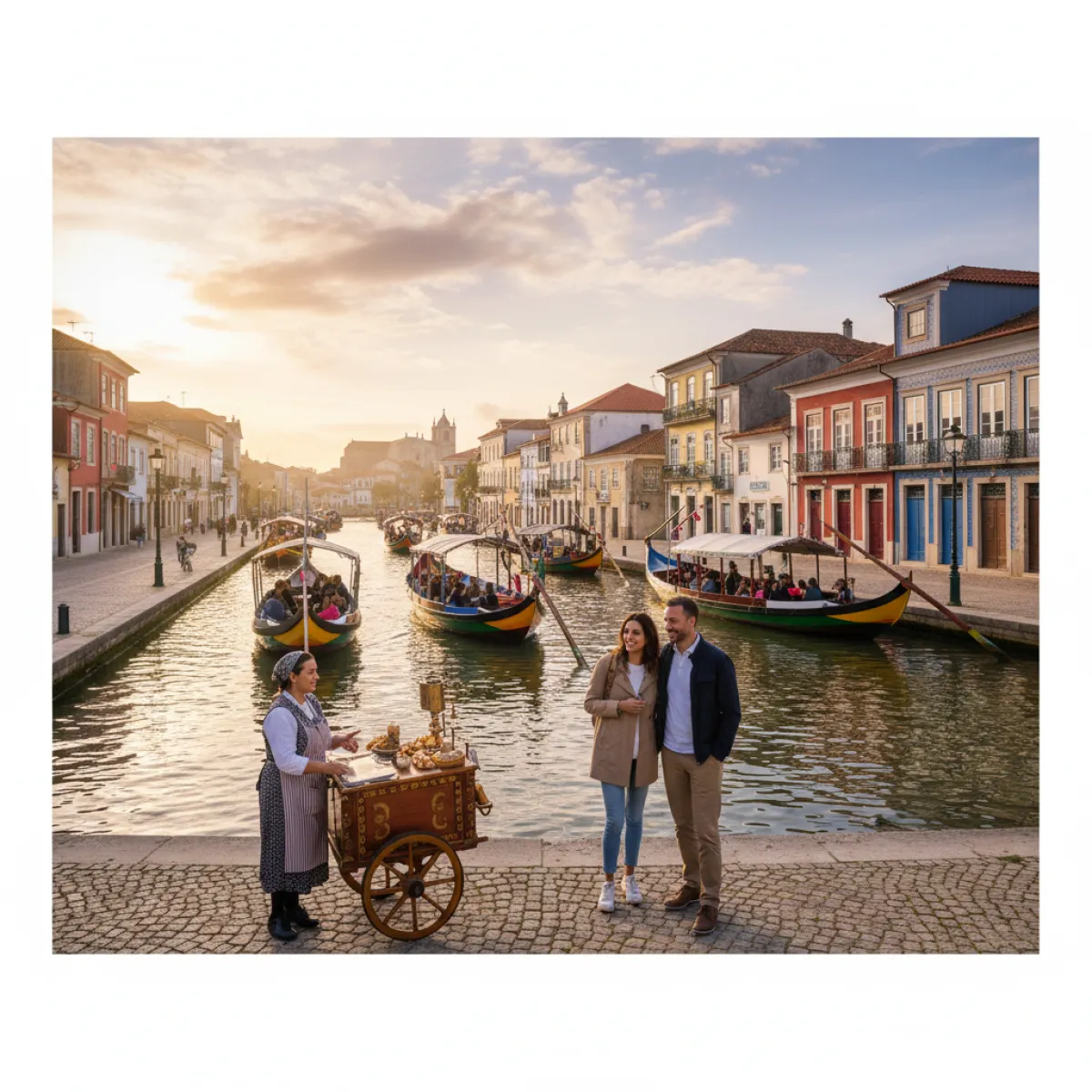
Midway between the two metropolises lies Aveiro. Often reduced to irrelevant geographical comparisons, the city should be appreciated for its technical and aesthetic relationship with water. The Ria de Aveiro is the economic and visual heart of the region. The moliceiros, boats with elegantly painted bows, were originally working tools for harvesting seaweed; today, they are the guardians of the urban landscape.
Stay in one of the Art Nouveau hotels along the central canal. The budget in Aveiro is gentler, allowing for luxuries such as a private tasting of Ovos Moles, the conventual sweet that defines local confectionery, or a dinner of fried eels in one of the typical cellars of the Beira-Mar neighborhood. The light in Aveiro, reflected in the salt pans, has a purity that cleanses the gaze before arriving in the North.
Days 5 and 6: Granite and Douro in Porto
Porto greets you with a sobriety that contrasts with Lisbon's luminosity. It is a city of layers. Start in Cedofeita, the arts district, where galleries coexist with independent design shops. Porto is meant to be walked, descending from Virtudes to Ribeira, feeling the shift in scale from narrow streets that empty into the river's amplitude.
Crossing the Luís I Bridge to Vila Nova de Gaia is mandatory, not for the tourist side, but to visit the Port wine cellars that maintain centuries-old aging processes. Choose the smaller houses, where the explanation of the Douro's schist soil is delivered with technical passion. Dedicate at least one afternoon to Serralves; the museum by Álvaro Siza Vieira and its surrounding park are the pinnacle of Portuguese modernism.
Day 7: The Consecration of the Valley
Conclude the week with an excursion to the Douro Wine Region. The Douro line train, departing from São Bento station, offers one of the most scenic railway journeys in Europe. It is the logical conclusion: seeing where the wealth that built the cities you visited originates. It is a place of silence and earth, where human effort carved the terraced slopes that defy gravity.
This itinerary, while dense, prioritizes the quality of observation over the quantity of monuments. It is an invitation to view Portugal as a living entity, in constant dialogue between its maritime past and a cosmopolitan, conscious present.
