Beja Castle: every one of those steps earns the view
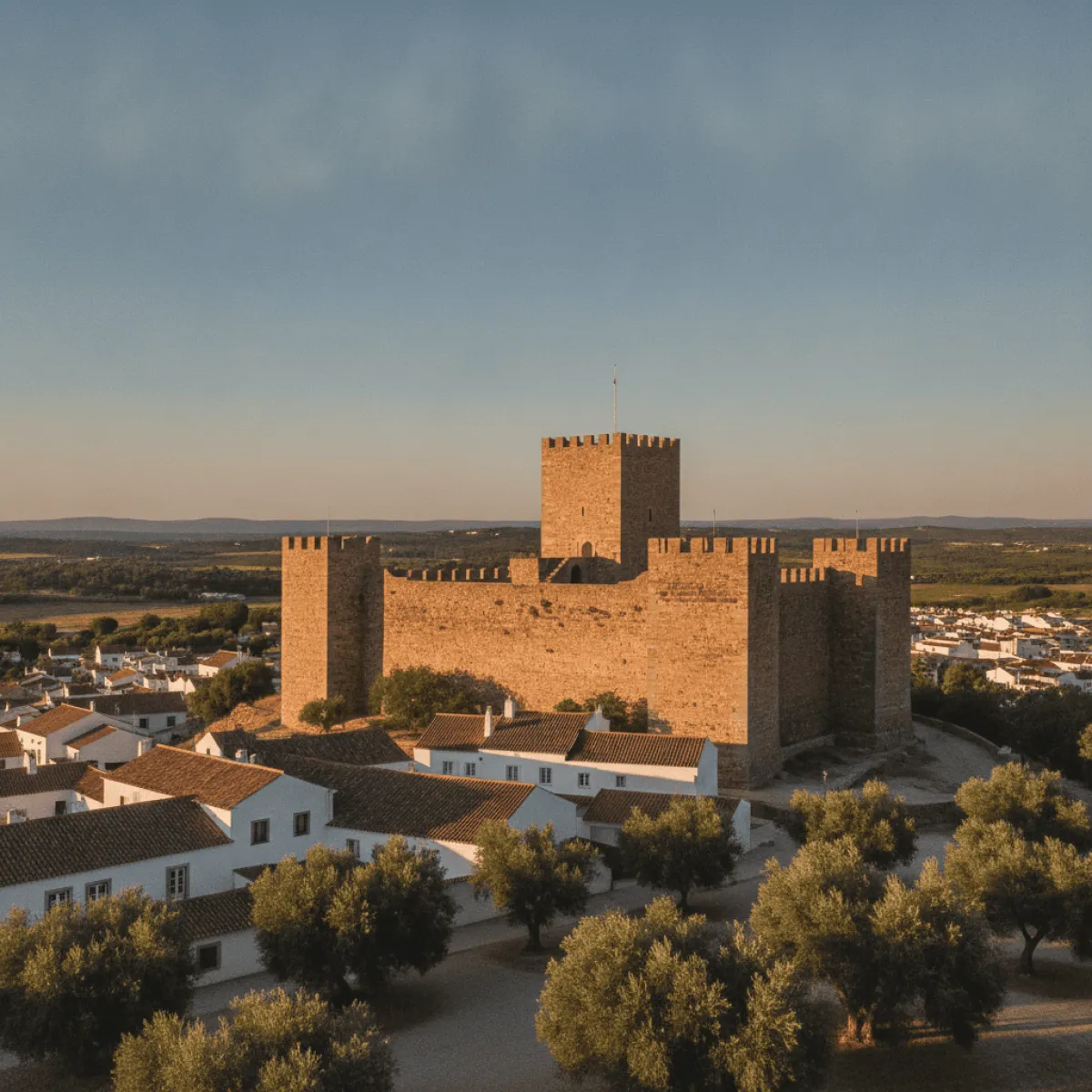
Some Portuguese castles you visit out of duty. Then there is the Torre de Menagem in Beja, which you visit with your legs. It is 40 metres of vertical granite, one of the tallest military towers in the country, and the only way to the top is on foot, step by narrow step, up a tight spiral staircase that was clearly not designed for tourists with big backpacks. When you finally come out onto the top platform, the Lower Alentejo opens in every direction: plain, plain and more plain, dotted with olive trees and grain fields that change colour with the season. On a clear day you can see a very long way. It is the most honest reward a monument can give you.
Where it is and how to get there
The castle sits at the highest point of the city, at Largo Dr. Lima Faleiro, 7800-302 Beja, in the heart of the old town. If you arrive by car, forget about parking at the door: the surrounding streets are narrow, medieval and mostly pedestrian. Leave the car in one of the lots near the walls or in the lower part of town and walk up. It is a ten to fifteen minute climb from most points in the centre, always uphill, which makes complete sense once you realise this was the city's defensive high ground. Walking through the whitewashed streets is, in fact, the only decent way to arrive: you pass churches, squares and facades that justify the detour on their own.
Beja is a city to be done slowly and on foot. If you want context before you climb the tower, it is worth reading our guide to the geometry of silence in the deep Alentejo first, which explains why this city moves at the pace it does.
The tower, and what to see inside
The Torre de Menagem is the undisputed star, classified as a National Monument and built in Gothic style. It dominates the landscape so completely that you can see it from almost everywhere in town and from much of the road that leads to it. Inside, the floors stack up as you climb, with vaulted rooms and windows that frame the plain like paintings. Do not expect period furniture or theatrical reconstructions: what you get here is stone, space and light, and that is enough. The climb is not for anyone with bad knees or a fear of heights, and in the Alentejo summer you should bring water, because the staircase is enclosed and it heats up.
Admission is cheap, in the € range, and the site also houses the tourist office, which is handy: use it to confirm that day's opening hours right there, since they vary through the year and we recommend checking directly before planning your visit. You can call +351 284 311 913 or check the Beja Town Hall website. Do not trust hours found on third party sites: confirm them.
Practical advice from someone who has climbed it
- Go early morning or late afternoon. Midday Alentejo sun does not forgive, and the view from the top is far better in low, raking light.
- Closed, comfortable shoes. The steps are uneven and worn by centuries of use. Flat-soled sandals are a bad idea.
- Bring small change. Entry is cheap, but keep physical cash on hand to avoid surprises; check accepted payment methods at the tourist office.
- No booking needed. Individual visitors walk straight in. For large groups, it is worth phoning ahead.
- Combine it with the rest of the old town. The tower takes twenty minutes; save the rest of the morning for the city around it.
What to do nearby
Climbing the tower is a well-spent half hour, but it would be a mistake to come to Beja only for this. The historic centre is compact and entirely walkable. To see the city at its best, our guide to the high point of the Lower Alentejo maps a route that links the castle to the most interesting squares and churches without wearing you out.
If you come on a market morning, drop by the municipal market before or after the climb: our Beja market crawl guide tells you exactly what to buy, what to taste and what to skip. It is the best way to pair history with your stomach in a single outing.
Where to stay and how to stretch the visit
Beja deserves at least one night, especially if you want to catch the tower in morning light and see it lit up again after dark. To sleep in keeping with the city's register, the Pousada Convento de Beja, set in a former convent, is the choice for anyone who wants to stay inside the historic spirit. For something simpler and more familiar, Maria's Guesthouse does the job nicely.
And if you have more days and the heat builds, Beja is a good base for a run to the coast: Praia da Zambujeira do Mar is just over an hour away by car and rounds off a trip that began at the top of a Gothic tower and ended with your feet in the sand.
Is it worth it?
It is. Beja Castle does not have the postcard drama of other, more famous Portuguese castles, but it has one of the tallest towers in the country and a view that justifies the steps on its own. It is cheap, it is honest and it is not crowded. Climb slowly, bring water, confirm the hours before you go, and give yourself time to stand up there and look at the plain. That is what you climb for.