
Sleep
€€
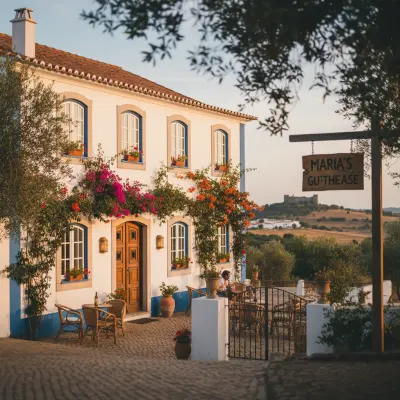
Maria's Guesthouse
Beja
A 13th-century Franciscan convent reconverted into a pousada inside Beja's old walls, with cloister, pool, and restrained rooms. It's history without theatre, and the most logical base for two nights in the Lower Alentejo, if you skip the summer peak.
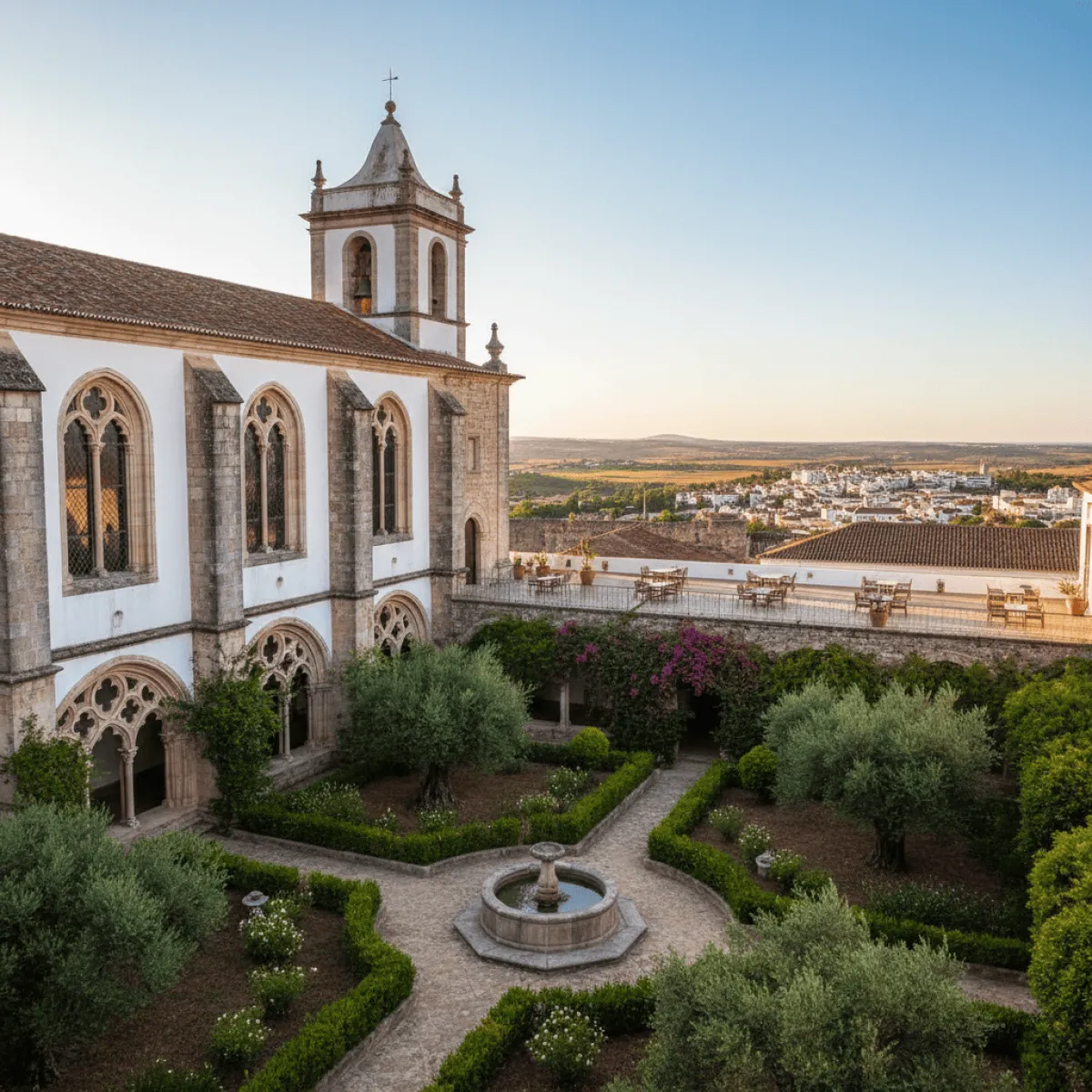
The Pousada Convento de Beja is not a theme hotel with friars' habits hanging on the walls. It's a 13th-century Franciscan convent reconverted with restraint, inside the old town walls, on Largo D. Nuno Álvares Pereira. The entrance is discreet, almost austere. That is exactly what you'd expect from an order that took a vow of poverty, and exactly what has been kept here, with the upgrade of decent sheets and a swimming pool in the old cloister.
Beja is the capital of the Lower Alentejo, about two hours by car from Lisbon via the A2 and A26. The Intercidades train also stops at Beja station, ten minutes on foot from the historic centre. The pousada sits inside the medieval grid, near the Castle and the Rainha D. Leonor Museum, which itself occupies the former Convento da Conceição. If you arrive by car, expect the usual narrow one-way streets you find in any walled Alentejo town. There is street parking nearby, but it's easier to leave the car and walk. Walking is how Beja makes sense anyway: twenty minutes from one end of the old town to the other, at most.
For context before you arrive, our guide on the geometry of silence in Beja is worth a read. This is not a city for hurry.
The original convent dates from the 13th century, founded by Franciscans, with the usual alterations five centuries of use will impose: cloister, refectory, church, dormitories. The conversion into a pousada kept the monastic structure visible without fetishising it. The corridors are long and white, the cells became rooms, and the old chapel is still there, now used for events. The cloister now houses an open-air pool, which may offend purists, but it works: blue water against pale stone is one of the best scenes the hotel offers in July and August, when Beja casually hits 40 degrees Celsius.
Rooms are comfortable, with high ceilings and a lot of white, in the post-renovation Pousadas de Portugal style. Don't expect Lisbon studio interior design, this is a chain property operated by Pestana, with all the predictability that implies. Ask for a room facing the cloister, they're quieter and the view earns it. Rooms facing the street get morning sun and some square noise.
The hotel restaurant serves adapted Alentejo cuisine: migas, lamb stew, açorda, conventual sweets. It's correct, it's expensive, and it does the job if you arrive late by car and don't want to head out again. But I'll be straight: in Beja there are taverns and restaurants in the old town that serve the same plates for half the price with more character. Use the restaurant for breakfast, which is included and generous, and eat out at least once or twice.
The hotel bar is a decent place for a digestif after dinner in town, with armchairs, low light, and a reasonable Alentejo wine list. Order a Pêra-Manca if it's available and you're in celebration mode, or a Cortes de Cima or Esporão for something more grounded.
The price band is €€€. In low season, November to March outside holidays, you can find doubles below 150 euros with breakfast. In July and August the rate nearly doubles and the value drops, because the heat in Beja is serious and the cultural calendar thins out. If you can choose, go in April, May, October, or early November. May is particularly good: temperatures are pleasant and you can pair the inland visit with the coast, as we suggest in Costa Vicentina in May.
The guest mix is mostly Portuguese couples on weekend breaks, some French and Dutch road-trippers crossing the Alentejo, and occasional event groups. It's not a hotel built around small children, but it doesn't turn them away either.
Book direct at pousadas.pt or by phone on +351 284 313 580. Direct rates are usually equivalent to the OTAs and cancellation tends to be more flexible. Cards are accepted, no need for cash. There's no formal dress code, but the restaurant at dinner appreciates you swap the beach shorts and t-shirt for something less casual. Standard pousada check-in is from 3 pm with check-out at noon, but confirm directly if you're arriving outside the usual window.
If you're travelling with a dog, ask in advance: pousadas vary on policy, and this one usually accepts pets for a fee, though it's not guaranteed. Wi-fi works, air conditioning works, and there's room service. The lift covers most floors, but some historic corridors still have steps, so if mobility is limited, request a room on a directly accessible floor.
Beja is a small city with more to see than it looks. The Castle, with its keep tower, is five minutes away on foot. The Rainha D. Leonor Museum, in the former Convento da Conceição, is worth visiting just for the baroque chapel. The Cathedral is understated but lovely. For lunch out, climb up to the high point of the Lower Alentejo and come back down to one of the central taverns.
If you stay more than two nights, do a coast run. Praia da Zambujeira do Mar is about an hour and a half by car and it's where you start to understand why the Beja district reaches all the way to the Atlantic. For a more domestic, less corporate alternative to the convent itself, consider Maria's Guesthouse, which plays a different game: cheaper, more personal, less polished.
The Pousada Convento de Beja is a solid, predictable choice in the best sense. It's history without theatre, comfort without unnecessary luxury, and an unbeatable location inside the walls. It's not the most surprising property in the Alentejo, but it's the most logical place to spend two nights in Beja if you want to sleep well, dive into the cloister pool after a hot afternoon, and walk straight from the convent door into town. Book ahead for spring and autumn weekends, those are the busy ones, and skip the summer if you can.