Praia da Zambujeira do Mar
Nestled between towering schist cliffs, Praia da Zambujeira do Mar is a highlight of the Alentejo coast. This guide explores the raw beauty of Odemira, from the sunset rituals at the chapel to the incomparable freshness of local seafood.
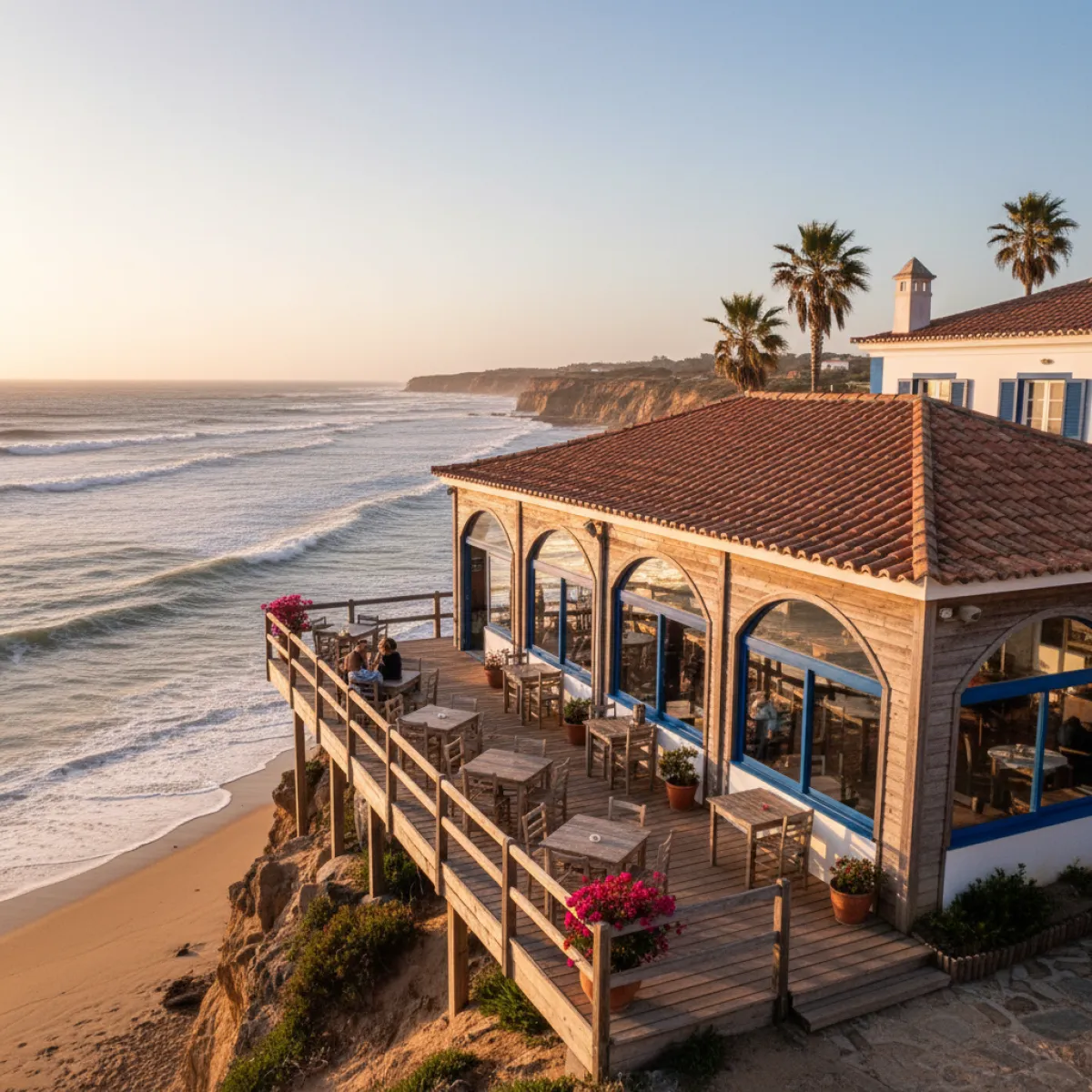
The Schist Sanctuary: Praia da Zambujeira do Mar
There are places where geography seems to have been designed with a flair for the dramatic, and Praia da Zambujeira do Mar is undoubtedly one of those stages. Tucked away in the municipality of Odemira, this cove is more than just a stretch of sand; it is a sanctuary sheltered by towering schist cliffs that stand like dark sentinels against the relentless power of the Atlantic. Unlike the sprawling, flat beaches of the North or the turquoise gentleness of the central Algarve, Zambujeira offers a raw, untamed beauty where the roar of the waves crashing against the rocks provides a constant soundtrack to a village perched on the precipice.
The Arrival and the Urban Landscape
The experience of Zambujeira begins long before your feet touch the sand. The village itself, with its whitewashed houses trimmed in traditional blue and streets that invariably lead to the ocean, maintains a human scale that encourages a slower pace of life. The main access to the beach is through a wide staircase that snakes down the cliffside, gradually revealing the full scale of the bay. For those who wish to avoid the physical exertion of the climb, there are access ramps, but the descent on foot is a ritual that allows one to fully appreciate the verticality of the landscape. The sand is fine and pale, creating a striking contrast with the jagged black rocks and the deep blue hues that define this coastline.
This location is an essential stop for anyone exploring the district of Beja. While we often associate this region with the endless golden plains of wheat and cork oaks, Odemira’s maritime facade offers a necessary counterpoint. When planning your journey through the hinterland, it is worth remembering that Beja: The Geometry of Silence in the Deep Alentejo is a concept that extends even here, where the silence of the plains is replaced by the contemplative stillness of the ocean. Despite being an urban beach, Zambujeira retains an aura of isolation, particularly outside the peak summer months.
Gastronomy: The Flavors of the Southwest
One does not visit Zambujeira do Mar solely for the sun. The local culinary culture is a cornerstone of the experience. What to order? The answer is invariably whatever the sea yielded that morning. 'Percebes' (goose barnacles) are the crown jewel of the region. Harvested at great personal risk by local 'mariscadores' from the wave-lashed rocks, these crustaceans taste of the pure Atlantic. They should be eaten simply boiled in seawater, served while still lukewarm.
For a more substantial meal, look for Arroz de Ligueirão (razor clam rice) or a traditional Caldeirada (fish stew) in village mainstays like 'A Barca' or 'O Sacas' (located a short drive away at the fishing harbor of Entrada da Barca). If you prefer grilled fish, the local sea bream and sea bass are peerless. Pair your meal with a crisp white wine from the Setúbal Peninsula or a high-altitude Alentejo white, which perfectly balances the natural oils of the fresh fish.
When to Go and What to Expect
Zambujeira do Mar is a place of shifting moods. In the summer, the climate is tempered by the sea breeze, making it an ideal retreat when temperatures in the inland plains soar above 40°C. It is important to note that while the sun is powerful, the Atlantic water here is bracing (read: cold), rarely exceeding 18 or 19°C. In August, the village undergoes a dramatic transformation due to a major music festival nearby, losing much of its characteristic tranquility. To capture the true essence of the village, the months of May, June, and September are ideal.
The evening light is perhaps Zambujeira's greatest asset. The sunset, viewed from the small chapel of Nossa Senhora do Mar at the cliff's edge, is a moment of collective communion. The beach’s orientation allows the sun to dip directly into the ocean, painting the cliffs in shades of fiery orange and deep violet.
Practical Tips and Logistics
- Getting There: The drive from Beja takes approximately 1 hour and 30 minutes via the N121 and N120. From Lisbon, the A2 motorway is the fastest route, exiting towards Sines/Odemira.
- Parking: There are several parking areas at the top of the cliff, but they fill up very early in July and August. Arriving before 10:00 AM is highly recommended.
- Reservations: For the most reputable restaurants, booking at least two days in advance is essential during the summer season.
- Payments: While most establishments accept cards, it is wise to carry cash for smaller cafes or the traditional 'bola de Berlim' sellers on the beach.
- Dress Code: Even on the hottest days, bring a light sweater or jacket for the evening. The northern wind (known as the 'nortada') often makes an appearance as soon as the sun goes down.
Traversing this coastline, one realizes that Portugal’s beauty lies in its diversity. Just as the high point of the Lower Alentejo offers a panoramic view over the land, Zambujeira provides a profound look at the horizon. It is a destination that demands time to be understood, far from the rush of mass-market tourist itineraries.
