Beja: The Geometry of Silence in the Deep Alentejo
Explore Beja, the marble sentinel of the Deep Alentejo. An expert guide to the Roman legacy of Pax Julia, the tragic history of the Portuguese Letters, and the austere beauty of the plains.
The Capital of the Plains
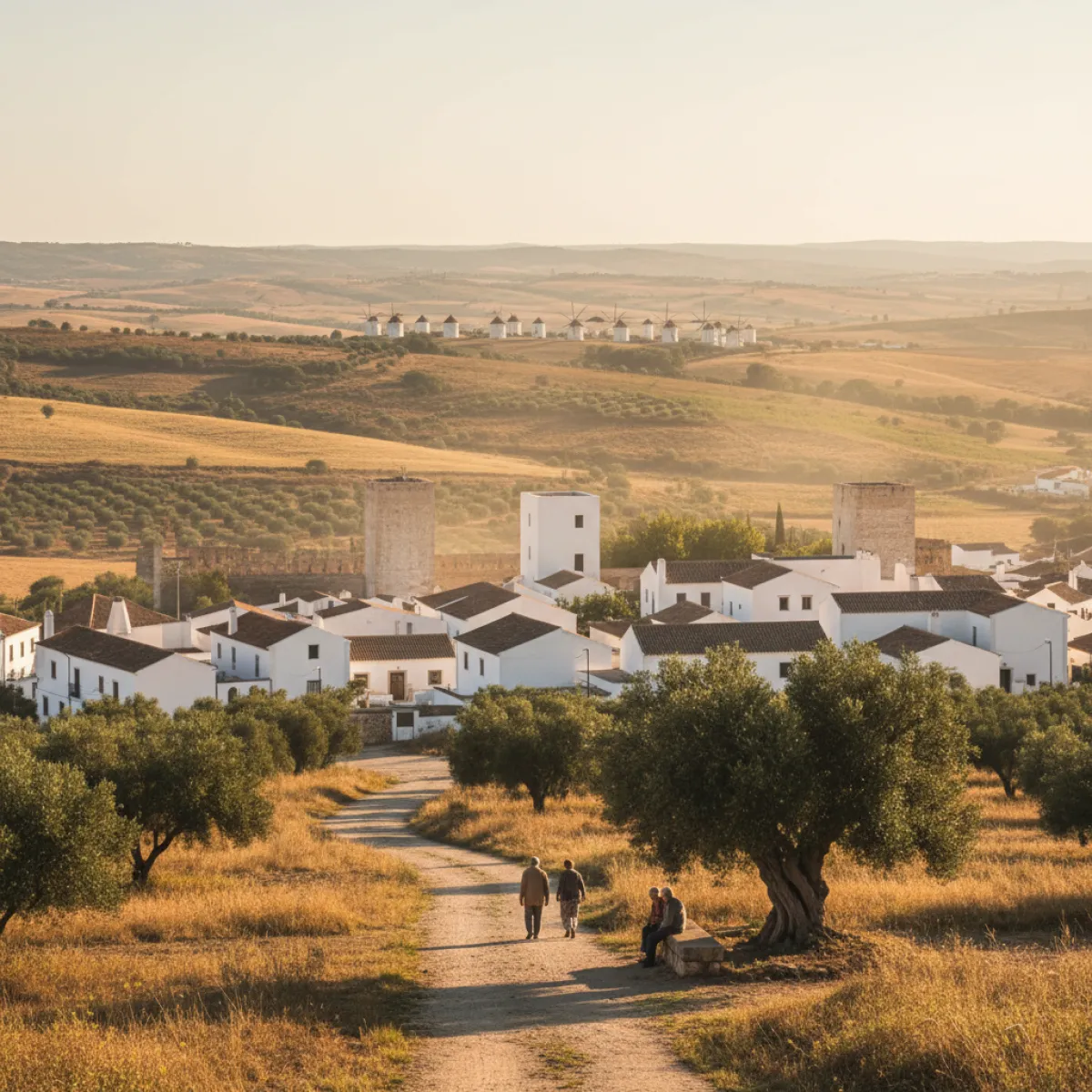
To reach Beja is to make a commitment to distance. Unlike the rolling, cork-dotted hills of the Alto Alentejo, the landscape south of Évora undergoes a dramatic flattening. This is the Baixo Alentejo, a territory defined by a brutal, sun-bleached horizontalism where wheat fields and ancient olive groves dominate the frame. Beja sits atop a modest hill, a whitewashed sentinel that does not beg for attention. It is a city of high noon and long shadows, demanding a specific kind of traveler, one who finds beauty in austerity rather than excess.
While many treat Beja as a mere extension of its northern neighbor, the comparison is flawed. In Évora: The Slow Pulse of the Alentejo, we find a city refined by centuries of royal favor and university life. Beja, by contrast, feels closer to the soil. Its pace isn't just slow; it is deliberate, dictated by the relentless Alentejan sun and the seasonal requirements of the surrounding farmland. It is a place of unvarnished honesty.
The Pax Julia Legacy
Modern Beja rests on the bones of Pax Julia, one of the most significant administrative centers of Roman Lusitania. The Roman influence is less of a museum piece here and more of a foundation. You feel it in the directness of the streets and see it in the repurposed marble blocks embedded in medieval walls. Unlike the layered grandiosity described in Stone and Silence: A Sentimental Guide to Évora, Beja’s Roman heritage is stark and functional, a reminder of a time when this was the strategic heart of the Iberian south.
The Keep: A Marble Statement
The skyline is dominated by the Castle of Beja. Its Torre de Menagem (Keep), built from local marble in the late 13th century under King Denis, is arguably the finest in Portugal. At 40 meters tall, its crenellations offer a masterclass in Gothic-Manueline architecture. The climb to the top is narrow and dizzying, but it provides the essential orientation needed to understand this region. From the summit, the Alentejo reveals itself as an ocean of gold and green, while below, the city’s labyrinth of terracotta roofs and lime-washed courtyards feels like a fragile island of civilization in the vastness.
The Letters of a Portuguese Nun
For those interested in the darker, more romantic corners of history, the Museu Regional Rainha Dona Leonor is the city’s psychological heart. Housed in the former Convent of the Conception, it is a space of extraordinary artistic density, Moorish-inspired tiles, intricate Manueline carvings, and a sense of profound isolation. It is also the setting for the *Letters of a Portuguese Nun*, a 17th-century literary sensation consisting of five passionate, desperate letters allegedly written by Sister Mariana Alcoforado to her fleeing French lover. Whether the letters are authentic or a clever French fiction remains debated, but standing before the convent’s barred windows, the narrative of forbidden desire and monastic silence feels undeniably real.
The Alentejan Table: A Study in Restraint
Dining in Beja is an exercise in purity. If One Day in Évora: A Precision Itinerary for the Alentejo Capital guides you through the sophisticated plates of the regional capital, Beja brings you back to the essence of the shepherd’s kitchen. Here, the holy trinity of Alentejan cuisine, bread, olive oil, and garlic, is elevated to an art form.
The Essential Orders
- Ensopado de Borrego: A rich lamb stew where the meat is braised until it yields at the touch of a fork, served over thick slices of rustic bread that act as a sponge for the garlic and herb-infused broth.
- Açorda de Coentros: A coriander-based bread soup that is the litmus test for any local chef. It should be vibrant, aromatic, and served with a perfectly poached egg.
- Encharcada: Beja’s signature conventual sweet. A decadent mixture of egg yolks and sugar syrup, lightly browned on top. It is unapologetically rich and best paired with a strong *bica* (espresso).
For an authentic experience, head to *O Toucinho*. There is no pretense here; the service is brisk and the focus is entirely on the quality of the Black Iberian pig and the freshness of the seasonal herbs. Budget approximately €30-€40 for a full meal with a bottle of local red, such as those from the nearby Herdade da Malhadinha Nova.
Practicalities and Timing
Beja is not a year-round destination for the faint of heart. In July and August, the heat is a physical weight, often surpassing 40°C (104°F), and the city effectively shuts down during the afternoon. The ideal windows are March to May, when the plains are carpeted in wildflowers, or October, when the harvest brings a different kind of energy to the air.
Logistically, a car is essential. The drive from Lisbon takes roughly two hours, while Faro is 90 minutes to the south. While there is a train station, the connections are infrequent and often involve long waits in Entroncamento or Casa Branca. For accommodation, the Pousada de Beja, located in the former São Francisco Convent, offers a quiet dignity. The stone corridors and high-ceilinged rooms provide a necessary cool refuge from the Alentejo sun. Rates typically range from €130 to €200 per night.
The Verdict
Beja is for the traveler who seeks the Alentejo in its most concentrated, least decorated form. It is a city of deep history and quiet pride, where the architecture of the void meets the rigor of the plains. It requires patience and a tolerance for silence, but for those who listen, Beja speaks more clearly than anywhere else in the south.
