One Day in Évora: A Precision Itinerary for the Alentejo Capital
A precision guide to exploring the Alentejo capital in 24 hours. From the Roman Temple to conventual sweets, discover how to navigate Évora's silence and history with sophistication.
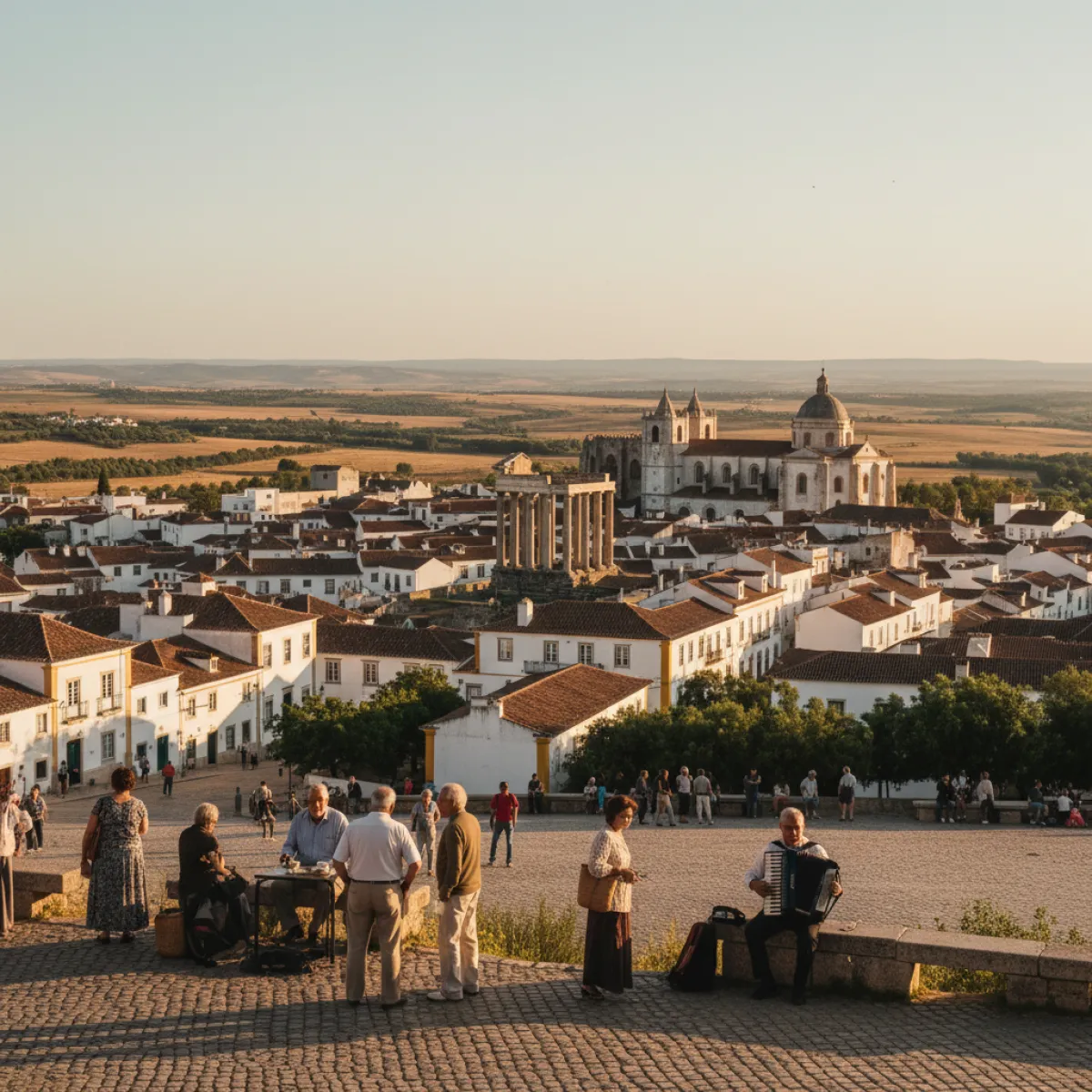
The Geometry of Silence
Évora is not a place to be visited; it is a place to be interpreted. The Alentejo capital, cradled within its 17th-century walls, demands a tempo that the modern traveler, accustomed to the frantic pulse of metropolises, rarely possesses. Here, light has a physical weight, a dense, ochre quality that settles over granite and marble, turning the city into a living museum where chronologies stack in layers. To understand this place, one must accept that time flows differently here, a concept we explore in depth in Évora: The Slow Pulse of the Alentejo.
09:00 – Conventual Awakening
Begin where the city breathes its sweetest heritage. Pastelaria Conventual Pão de Rala (Rua de Cicioso) is the antidote to generic hotel breakfasts. Do not order a croissant; ask for a Pão de Rala or an Encharcada. The obsessive use of egg yolks and almonds is a direct legacy of the convents that once defined the city’s social fabric. The marble counters and blue-and-white tiles provide the necessary solemnity for planning your day. Budget: €10 for coffee and two pastries to share.
10:30 – The Alentejo Acropolis
Ascend to the city's highest point. The Roman Temple, often and erroneously attributed to Diana, is a masterclass in architectural resilience. Its Corinthian columns have survived centuries of shifting utility, serving as everything from a medieval fortress to a municipal slaughterhouse. Steps away, the Sé Catedral de Évora imposes itself with a silhouette that bridges the gap between Romanesque and Gothic. Climbing to the cathedral’s rooftop is mandatory; the view over the surrounding cork-oak plains reveals the true scale of Alentejo’s solitude. It is at this intersection of Roman stone and Christian austerity that one feels the weight of Stone and Silence: A Sentimental Guide to Évora.
13:00 – The Table as Ritual
Alentejo does not do culinary moderation. For a lunch that defines the region, avoid the tourist-trap menus of Praça do Giraldo. Head instead to Botequim da Mouraria. With only nine seats at the counter, the experience here is one of absolute proximity to the ingredients. Order the black pork with asparagus migas or the bread-based açorda with pennyroyal. If you prefer a classic institution, O Fialho remains the benchmark for those seeking partridge escabeche or the purest DOP Évora cheese. Expect to spend between €45 and €70 per person with wine.
15:30 – Memento Mori and Contemporary Spaces
The Chapel of Bones (Capela dos Ossos) in the Church of St. Francis is Évora’s most photographed site, yet rarely its most understood. The walls, lined with the remains of five thousand monks, are not intended to be macabre but rather a Franciscan tool for meditation on the transience of life. After confronting mortality, seek balance at the Évora Museum or the Eugénio de Almeida Foundation. The latter, housed in the former Palace of the Inquisition, now hosts contemporary art exhibitions that challenge the city’s historical stillness.
17:30 – The Aqueduct and Curation
Walk alongside the Silver Water Aqueduct (Aqueduto da Água de Prata). It is a colossal structure that, upon entering the city, merges with the residential fabric, with houses built literally inside its arches. Returning to the center, ignore the mass-produced cork souvenirs. Look for contemporary cork design at Pelcor or artisanal ceramics at Oficina da Terra. Alentejo is currently reinventing its craftsmanship, moving away from obvious folklore toward a rustic minimalism.
20:00 – Twilight and the Vine
Dinner in Évora should be an expansive affair. At Enoteca Cartuxa, the wine list is as vital as the menu. Try the white Pêra-Manca (if the budget allows) or a tinto from the 'colheita selecionada'. Alentejo is a land of full-bodied wines, marked by ripe fruit and parched soil. End the night with a Sericaia with Elvas Plums, the perfect equilibrium between the aerated texture of the cake and the musky sweetness of the preserved fruit.
Practical Information
- When to go: October to May. Avoid July and August, when temperatures regularly exceed 40°C (104°F), turning an urban stroll into an endurance test.
- Getting there: The Intercidades train from Lisbon (Sete Rios or Entrecampos) takes 1h30 and is the most civilized option.
- Budget: €150 for a premium day, including high-end meals and monument entries.
