Évora: The Slow Pulse of the Alentejo
Explore Évora, the beating heart of the Alentejo, where Roman heritage and contemporary luxury converge. An editorial guide to the finest monuments, authentic flavors, and the slow pace of one of Portugal’s most captivating cities.
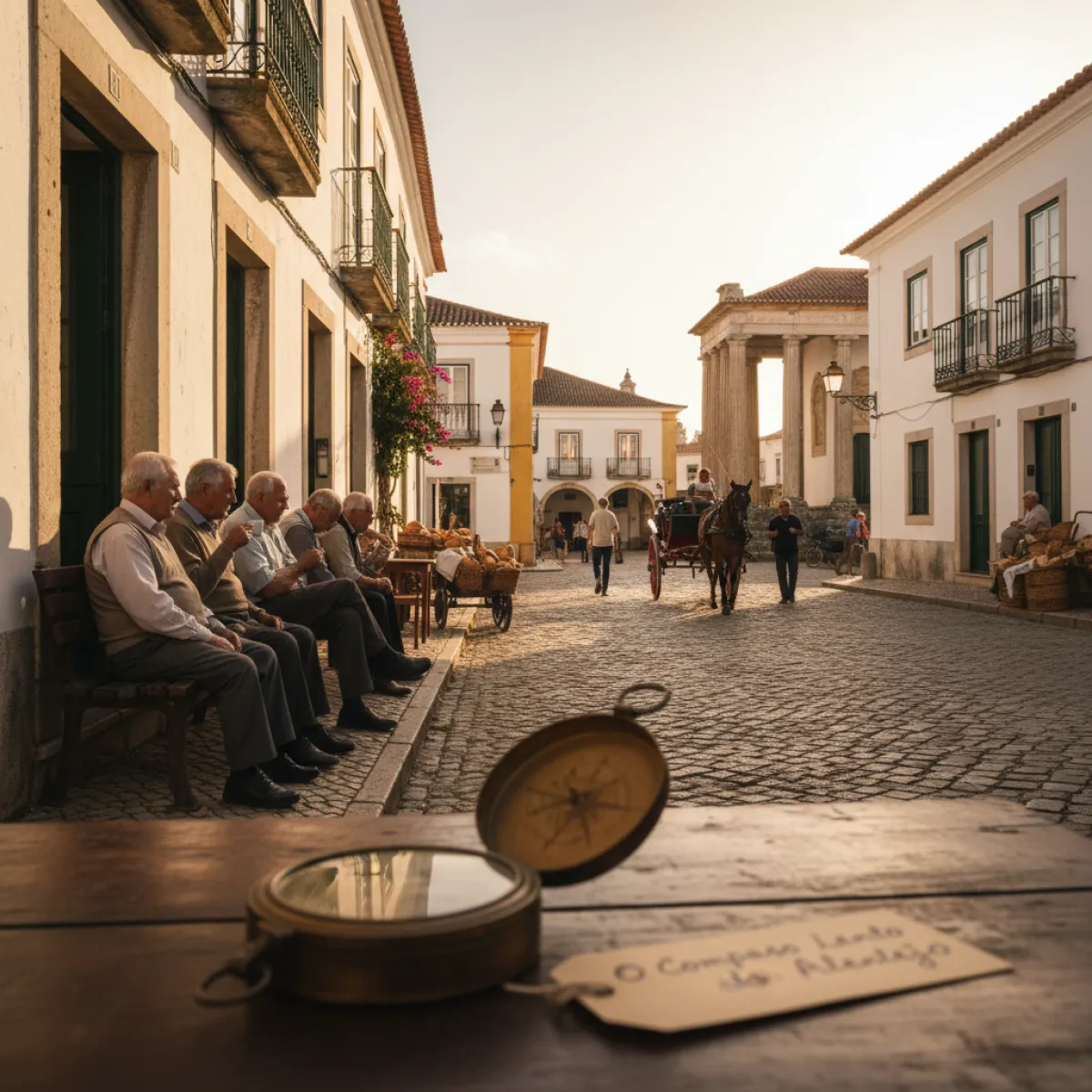
There is a specific cadence to Évora that eludes the hurried visitor. It is not merely the heat that, in the height of summer, immobilizes the whitewashed streets, but rather a deep-seated cultural resistance to contemporary speed. In the heart of the Alentejo, this city-museum does not simply display its layers of history; it compels you to adopt its rhythm. Évora is an exercise in patience and observation, where the worn marble thresholds tell as much of a story as the grandeur of its national monuments.
The Weight of History in the Ancient Core
Walking through Évora is to traverse millennia in a few strides. The Roman Temple of Évora, often and erroneously attributed to Diana, remains the city's most imposing sentinel. Its Corinthian columns, survivors of invasions and earthquakes, are the obvious starting point for any exploration. However, the true character of the city reveals itself in the adjacent alleys, where the stark white facades are interrupted only by yellow or blue trim, a tradition dating back to times when color served to ward off spirits and the oppressive heat.
A few meters from the temple, the Sé (Cathedral) rises like a spiritual fortress. It is the largest medieval cathedral in Portugal and a fascinating example of the transition from Romanesque to Gothic. Ascending to its terrace is mandatory, not for the obvious photo opportunity, but for the geographical understanding it provides: from there, one sees how the city merges organically with the Alentejo plains, an urban footprint contained by walls that still define the boundary between cosmos and chaos.
Meditation on Mortality: The Chapel of Bones
Few places in the world handle the duality between the macabre and the sacred with as much elegance as the Chapel of Bones. Located within the Church of Saint Francis, its famous inscription at the entrance, “We bones that are here, for yours we wait”, should not be read as a threat, but as a Baroque memento mori. Built in the 17th century by three Franciscan friars who wished to convey the fleeting nature of life, the chapel uses the skeletons of approximately five thousand monks to line its walls and columns. It is a space of absolute silence, where filtered light reveals the porous texture of time.
The Alentejo Table: Where Scarcity Becomes Luxury
Gastronomy in Évora is a lesson in how creativity can flourish under austerity. Traditional Alentejo cuisine is built upon bread, olive oil, garlic, and aromatic herbs, pennyroyal, coriander, and mint. Do not look for the technical sophistication of Lisbon or Porto here; look for depth of flavor. At Botequim da Mouraria, the experience is intimate and direct. With only nine seats at the counter, Mr. Domingos serves what the land and the season dictate. Order the eggs with wild asparagus or the black pork (porco preto), and understand why the Alentejo is considered the country's gastronomic larder.
The ritual of the meal here does not tolerate rushing. It invariably begins with Évora cheese, hard-paste and spicy, accompanied by thick-crusted Alentejo bread. Budgeting for a high-quality meal in Évora ranges from 30 to 50 euros per person, including a local wine, representing an excellent balance between cost and authenticity.
The Cult of Wine at Cartuxa
One cannot discuss Évora without mentioning the Eugénio de Almeida Foundation. Cartuxa - Enotourism, housed in the former Jesuit refectory, is the epicenter of local wine culture. Here, wine is not just a product but an extension of the landscape. While Pêra-Manca is the crown jewel, the winery's more accessible labels reveal the same mastery in balancing ripe fruit with the acidity required to stand up to the region's hearty cuisine. A visit to the cellars is a dive into the history of the Carthusian order and the patience required to produce nectars that only reach their peak after years of aging in oak.
Where to Stay: Silence and Heritage
For those seeking total immersion in the city's atmosphere, accommodation must be chosen with discernment. Convento do Espinheiro, located just a few minutes from the center, offers an experience that transcends luxury hospitality. This former 15th-century convent, where kings and queens once sought refuge, maintains its cloisters intact and features a gilded church that invites contemplation. Sleeping here is to feel the weight of history in the stone walls, but with the contemporary comfort expected by today's travelers in the Alentejo.
Practical Guide and Editorial Tips
- When to go: Avoid July and August, when temperatures frequently exceed 40°C (104°F). Spring (April to June) brings a blooming Alentejo and mild temperatures, ideal for walking. Autumn is the harvest season, a time of celebration and intense activity in the surrounding estates.
- How to get there: From Lisbon, the Intercidades train is the most civilized option, taking about 1 hour and 30 minutes. By car, the A6 motorway is fast, but the national roads offer a richer view of the cork oak forests and olive groves.
- What to bring: Comfortable shoes with good grip are essential, Évora’s cobblestones are beautiful but unforgiving. A hat and sunscreen are indispensable even outside the summer months.
- Budget: Évora is more affordable than the coastal capitals. A long weekend for a couple, with high-quality accommodation and meals at fine restaurants, can be planned with a budget of 400 to 600 euros.
Évora is not defined solely by its postcard views. It is in the casual conversations at the terraces of Praça do Giraldo, in the sound of bells punctuating the day, and in the scent of burning wood that hangs in the air during winter that one finds the true essence of this city. It is a destination for those who understand that modern luxury is, increasingly, the ability to stop time.
