Beja: The High Point of the Lower Alentejo
Explore Beja, the capital of Lower Alentejo, where the towering marble keep and the monastic mysteries of the Convent of Conceição reveal a raw, authentic Portugal. An essential guide to history, gastronomy, and the slow pace of the plains.
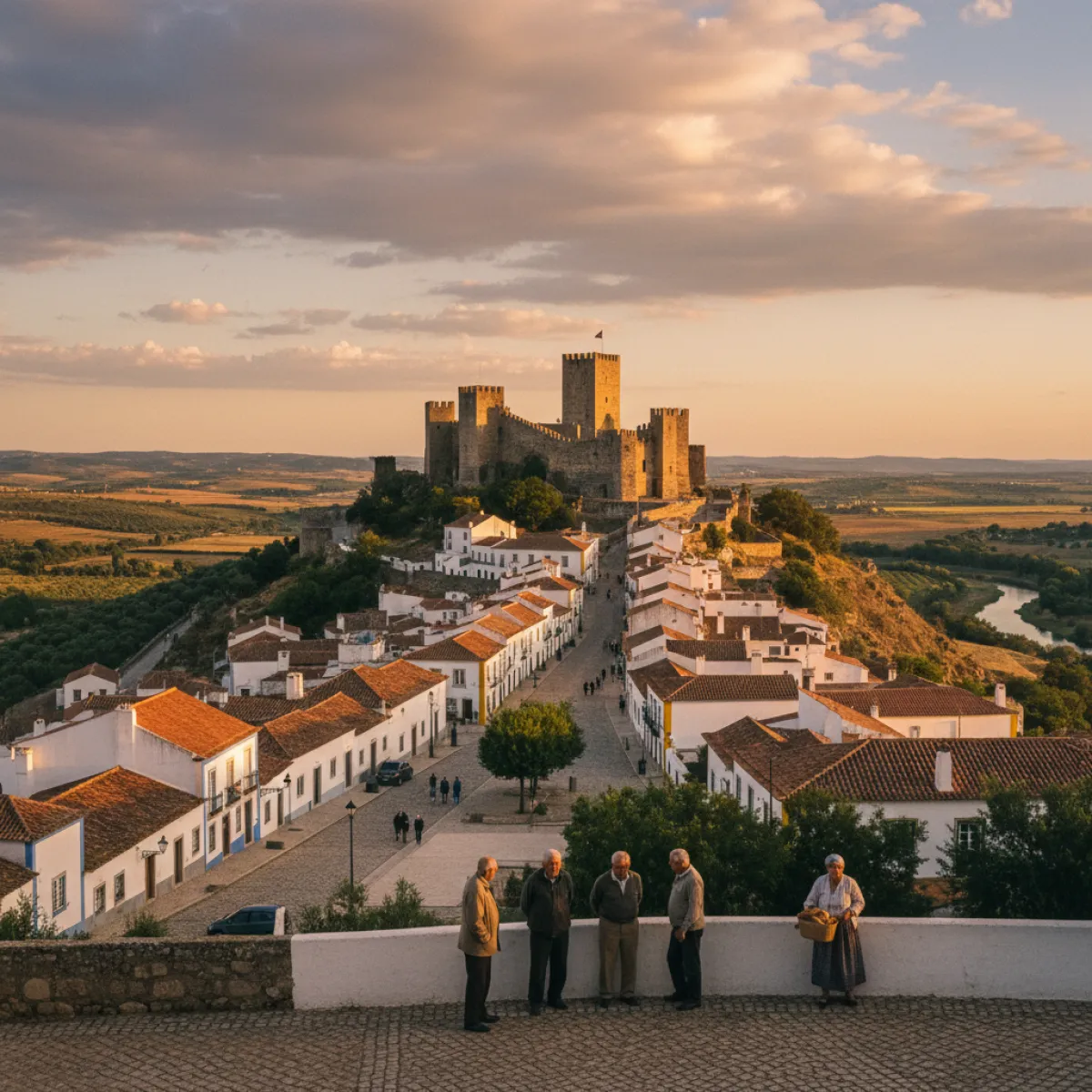
Verticality Amidst the Plains
Beja is a city that imposes itself through height in a territory defined by horizontality. While much of the Alentejo region stretches out in gentle undulations of cork oak forests and cereal fields, the capital of the Baixo Alentejo rises atop a 277-meter hill, offering a perspective that, on clear days, seems to reach the Spanish border. This is not a town to simply pass through; it is a destination that demands a deliberate stop, a recalibration of pace, and a particular tolerance for the intensity of a sun that, in summer, turns these streets into a kiln of lime and silence.
Historically, Beja, or Pax Julia, as the Romans christened it in honor of Julius Caesar and the peace with the Lusitanians, has always been a significant administrative hub. This historical gravity is palpable. Unlike Évora, which has become something of an open-air museum polished by international tourism, Beja retains a raw authenticity. Here, the Alentejo is not a performance for the visitor; it is a reality of labor, of the earth, and of a profound melancholy that manifests in the architecture and the steady gaze of its inhabitants.
Many travelers arrive here after experiencing Évora: The Slow Pulse of the Alentejo, and the comparison is inevitable. If Évora is the Renaissance and bourgeois Alentejo, Beja is the Gothic, military, and monastic Alentejo. It is a city of long shadows and cool interiors, where granite gives way to marble and brick, and where history is told more through stones than through words.
The Keep and the Marble Gaze
The Castle of Beja is, without question, the city’s focal point. Its Torre de Menagem (Keep), standing forty meters tall, is frequently cited as the most beautiful in Portugal. Built using regional marble (from Estremoz and Vila Viçosa) during the reign of King Dinis and completed under King João I, the tower is a prodigy of Gothic engineering and aesthetics. Climbing its narrow steps is an exercise in patience, but the reward is a total view of the chessboard that is the Alentejan plain.
What makes this structure singular is not just its scale, but the detail. The polygonal balconies with corbelled galleries, the decorated friezes, and the elegance of the Manueline windows lend it an air more palatial than strictly military. Inside, the vaulted rooms reveal a technical mastery that defies the rustic simplicity many associate with the region. It is a reminder that Beja was, for centuries, one of the strategic pillars of the kingdom’s southern defense.
The Convent of Conceição and the Letters of Love
If the castle represents military power, the Regional Museum of Beja, housed in the former Convent of Conceição, represents the city’s emotional and artistic soul. Founded in 1459, the convent is a labyrinth of 16th-century Hispano-Moresque tiles, Baroque gilded woodcarvings, and contemplative silence. It is here that the legend, or history, depending on your penchant for romance, of Mariana Alcoforado resides.
The Portuguese nun who, in the 17th century, allegedly wrote the famous "Portuguese Letters" to a French officer, Noel Bouton, made Beja a landmark in European sentimental literature. Although the authorship of the letters has been disputed over the centuries, their cultural impact is undeniable. Visiting the window from which Mariana supposedly caught sight of her lover is an exercise in historical voyeurism that connects us to the idea of an Alentejo of contained passions and severe cloistering. For those seeking to understand the emotional density of this land, this site is as fundamental as Stone and Silence: A Sentimental Guide to Évora.
Pisões: The Heritage of Pax Julia
A few kilometers from the center, the Roman Villa of Pisões offers a rare glimpse into daily life in Antiquity. Discovered almost by accident during agricultural work in the 1960s, this luxury farming estate featured over forty rooms, including a private thermal complex that would be the envy of many contemporary hotels. The preserved mosaics, with geometric patterns and representations of local fauna and flora, display an impressive technical sophistication.
Walking through these ruins is to realize that comfort and aesthetics were not foreign to this arid territory. The Romans knew how to master water, visible in the massive dam that served the villa, and create an oasis of civility. Today, Pisões is an archaeological site that warrants a slow visit, preferably in the early morning or late afternoon, when the low light highlights the texture of the stones and the tesserae of the mosaics.
The Table: Where Lamb is King
Eating in Beja is an act of both resistance and celebration. The local gastronomy is not for those seeking light meals or ephemeral fusion concepts. Here, the product rules: the hard-crusted bread with a dense crumb, olive oil with notes of grass and apple, and, above all, lamb. The lamb stew (ensopado de borrego) of Beja is a dish of deceptive simplicity, where the quality of the meat and the balance of cumin and mint define the success of the experience.
The restaurant Dom Carlos is an institution that personifies this dedication to authentic flavor. Do not expect minimalist decor; instead, expect knowledgeable service and dishes that respect seasonality. Another essential stop is Adega Típica 25 de Abril, where the atmosphere is more informal and the small plates, such as túberas (Alentejan white truffles) in spring or asparagus migas, are elevated to a form of folk art.
For the traveler who has already followed One Day in Évora: A Precision Itinerary for the Alentejo Capital, Beja’s offering will seem more focused on pure tradition. In terms of wine, the Beja sub-region produces red wines of great structure and surprising whites, with the Antão Vaz grape shining in nearby wineries like Herdade do Peso or Herdade da Malhadinha Nova, the latter offering one of the most refined wine tourism experiences in the country.
Logistics and Practical Survival
Beja is not a city to be visited in a hurry. The rhythm here is dictated by the climate. In summer, the city seems to fall asleep between 1:00 PM and 5:00 PM. Follow the example of the locals: retreat, enjoy a long lunch, and save your walks for when the sun begins to dip and the white walls of the houses take on a golden hue.
- Getting there: From Lisbon, the car journey takes about two hours via the A2 and IP2. The train is a romantic alternative, though it frequently requires a change at Casa Branca.
- When to go: Spring (April and May) is the ideal season, when the plains are green and covered in wildflowers. Autumn is perfect for food and wine enthusiasts.
- Budget: Beja remains one of Portugal’s most affordable cities. A high-quality dinner for two rarely exceeds €60-€80, and entry fees for monuments are symbolic.
- Where to stay: The Pousada de São Francisco, housed in a 13th-century convent, offers the perfect balance between history and modern comfort, with its Gothic cloisters and refreshing pool.
Beja is, ultimately, an exercise in patience and observation. It lacks the obvious exuberance of other Portuguese destinations, but it rewards those who take the trouble to seek its beauty beneath the arid surface. It is the Alentejo in its purest, most vertical state.
