Beja Market Crawl: What to Buy, Taste, Skip
This is not an Instagram market. It is where Beja still actually buys its food: buttery Serpa cheese, Alentejano bread that lasts a week, convent sweets at two euros each. An honest guide to what is worth your money, what is not, and when to show up.
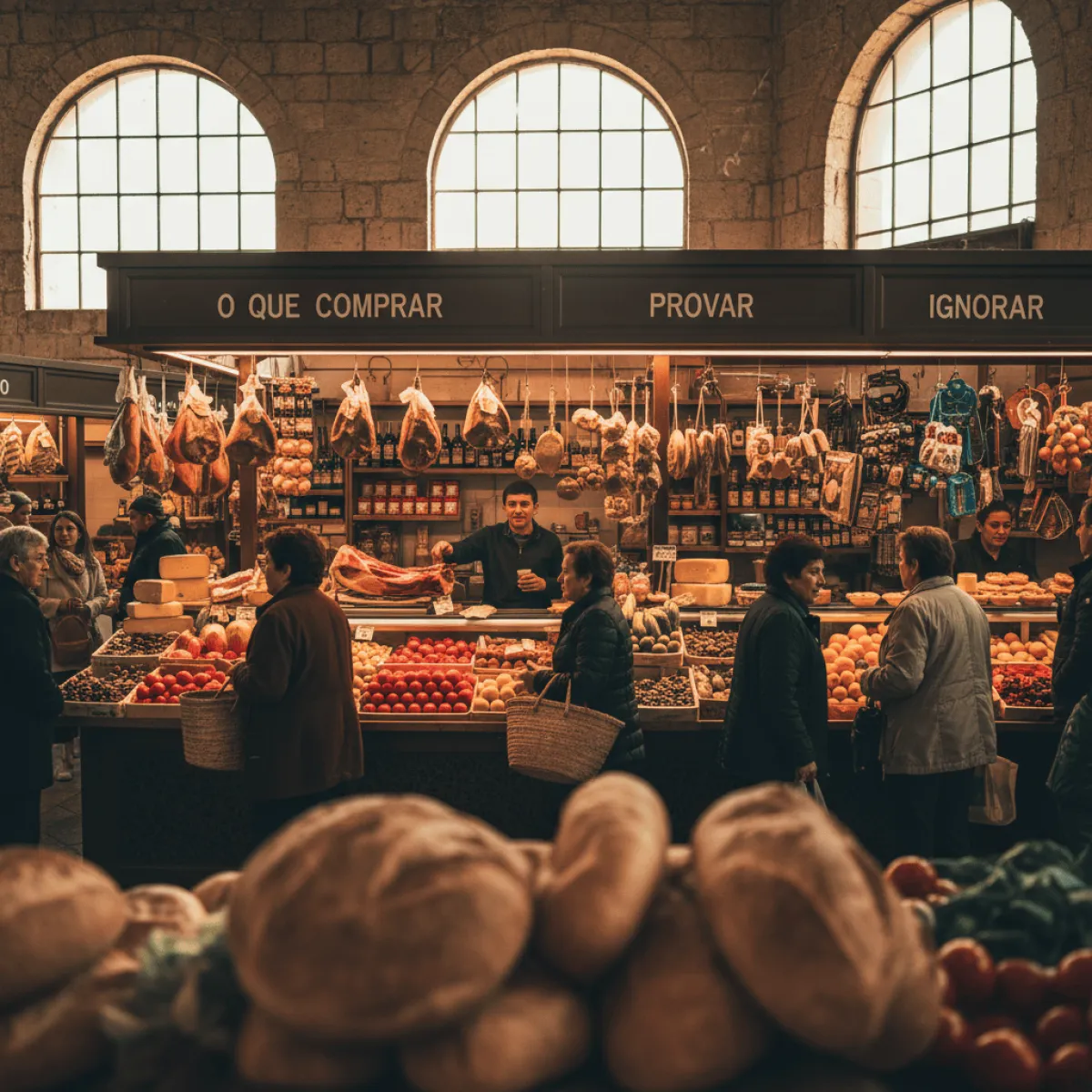
At seven thirty in the morning, the Mercado Municipal de Beja smells more of coffee than fish. The men leaning against the bar by the entrance are drinking espressos and arguing about the weather and the price of lamb, in that order. The stalls open at their own pace, because nobody in Beja does anything in a hurry before eight. If you arrive at seven thirty, you are early. Grab a coffee, wait, and watch. That is the first rule of the market.
Let me be straight with you: Beja's municipal market is not an Instagram destination. It does not have the soaring ceiling of Porto's Mercado do Bolhão or the tiled facade of half a dozen markets in Lisbon. It is functional, low slung, fluorescent lit in places, with an honest smell of sheep's cheese that clings to your jacket. That is precisely why it is worth your morning. In Beja, people still go to the market to buy food, not to take pictures. Anyone who pays attention walks out with a full pantry and a much clearer idea of what the Baixo Alentejo actually tastes like.
What to buy (and take home)
Start with the cheese. The Alentejo is sheep's cheese country, and in Beja you find two schools: Serpa, with its Protected Designation of Origin, coming from the next municipality over, buttery, unctuous, with that strong aroma that divides households; and smaller local cheeses from producers without much marketing, sometimes wrapped in brown paper, which the white aproned vendors will slice in front of you to taste. Ask for a thin wedge before you commit. Nobody is offended, this is how it is done. A whole Serpa wheel can run from twenty to forty euros depending on aging and size, and it travels for three hours in a closed bag without complaint.
Then bread. Pão alentejano is a serious matter. Dense crumb, thick crust, slow fermentation. Look for the big round loaves, almost a kilo each, the kind that lasts a full week without going soft. They are the base of nearly every regional dish, from açorda to migas, and any Alentejano will tell you that fresh bread and bad fresh bread are two different things. In Beja, it is almost always good.
The cured meats are pillar number three. Paio do lombo, chouriço de carne, farinheira, morcela. Buy a little of many, that is the strategy. Producers in the market usually sell whole pieces, but most will slice if you ask. A personal suggestion: take a paio do lombo, slice it paper thin at home with a sharp knife, and serve it next to that Serpa you bought. You will not need anything else to understand why this region is what it is.
Olive oil, same logic. Producers from the Baixo Alentejo sell bottles and tins, some with handmade labels, some with no label at all, sold on trust. Taste before you buy. A good Alentejo olive oil has that peppery finish at the back of your throat, a sign of polyphenols, a sign of quality. If it comes across sweet and flat, walk on.
What to taste right there
Beja's market is not a food court, do not expect prepared food stalls like in some modern markets. But there is almost always a woman selling conventual sweets wrapped in cellophane: trouxas de ovos, queijinhos do céu, encharcadas. Beja has a serious tradition of convent pastry, inherited from the city's various religious houses, and tasting one of these on the spot where they have been made for centuries is the kind of detail that changes a trip. They cost between one and three euros each. Do not ask about calories.
For a proper meal, leave the market and walk over to one of the cafés or tascas near Praça da República. I am not going to pretend I know every one of them by name, but the principle is simple: look at the chalkboard, ignore the menus with photographs, and go for the daily special written by hand. That is where the real food is. Açorda à alentejana, ensopado de borrego, gaspacho alentejano in summer, sopa de cação in winter. You rarely pay more than fifteen euros per person with house wine, and the house wine, somehow, tends to be perfectly drinkable.
What to skip
I will be blunt. There are things in the market that are not worth your money, and I would rather tell you here than have you find out after spending fifty euros.
- Fruits and vegetables out of season. In May you want wild asparagus, peas, broad beans. In October you want pumpkin, mushrooms, quince. Anything outside that logic came from far away and is cheaper at the supermarket.
- Tourist shaped cork souvenirs. Wallets, hats, miniature boats. Alentejo cork is genuinely fantastic, but what you see on these stalls is rarely careful local craft, and the prices do not reflect quality. If you want good cork, find ateliers in Évora or São Brás de Alportel.
- Bottled wine without a clear producer. Generic labeled bottles at ten euros are usually a worse deal than buying a proper bottle at a city wine shop for the same price. Vinho de talha sold in a five liter demijohn from an identified producer is a different story, take it without hesitation, but plan to drink it within two weeks.
- Fish on a hot day. Beja is inland, far from the coast. The fish that arrives is fine, but it is not the strong suit. If you really want fish, drive to Praia da Zambujeira do Mar or Vila Nova de Milfontes and eat it by the sea, where it makes sense.
When to go and how to move
The market runs in the mornings, Tuesday through Saturday, with Saturday being the busiest and most lively. If you want to see the market alive, go on a Saturday between nine and eleven. If you want to talk to producers without elbows in your ribs and hear actual stories, go on a Wednesday morning, around ten. The stalls are open, producers have time, and nobody pushes you.
Beja is small. The market is a ten minute walk from the historic center and the Church of Santa Maria. Park outside the walls, near the train station or the public park, and walk up. The center is essentially flat and you can cover it in half an hour. For those arriving by train, the station is fifteen minutes on foot from the market, and CP trains from Lisbon take roughly two and a half hours.
Where to stay so this works
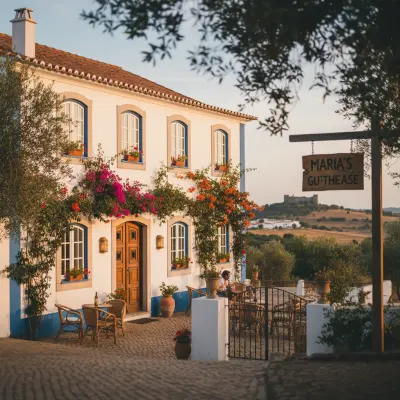
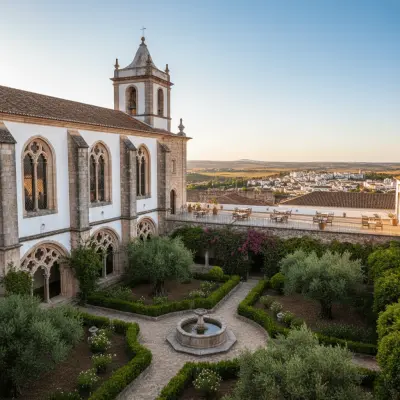
A decent market crawl means waking up early and dropping bags back at home base. So staying central is half the battle. The Pousada Convento de Beja, set inside the former Convento de São Francisco, is the romantic, historical option, and it has the bonus of serving breakfast early, which helps if you want to be at the market by eight. It is more expensive, sure, but it is the kind of night you remember. For a quieter alternative with a familial style and better value per night, book Maria's Guesthouse, where the hosts usually know more about the market than any printed guide.
The day after the market
You bought cheese, bread, cured meat, sweets. Your car is loaded with food that needs to be eaten. What next? Ideally, you take all of this out of town for a picnic. The Alentejo plain is engineered for this. If you like nature, give your afternoon to a bird watching session in the countryside around Beja, with local guides who know every holm oak in the area. It is one of the few activities that justifies spending four or five hours on a full stomach.
If you are extending the trip north into upper Alentejo, it is worth pairing this Beja weekend with a few days in Portalegre, which is, in many ways, the cultural opposite: more mountainous, cooler, with a sierra cuisine. To prep that leg, read our weekend guide to Portalegre without the tourist traps, then continue with walking the neighborhoods of Portalegre, and finish with where locals in Portalegre actually eat. It is a sharp counterpoint to Beja's lower Alentejo.
The honest summary
A market is not a show. It is the supply system of a city that still operates at human scale. In Beja, that system still works, and it deserves your humility on entry: buy little, taste a lot, talk to producers, leave with heavy bags and an almost empty wallet. It costs less than fifty euros to fill a basket with two or three days of serious food, and that, in 2026, is still a rarity worth celebrating before it changes.
Go on a Wednesday around nine. Buy half a Serpa, a big loaf, two hundred grams of paio, a bottle of olive oil, and two convent sweets. Have an açorda for lunch at any tasca on Praça da República. Go back to your room, rest for an hour. In the afternoon, head out into the plain. That is how you do Beja without overthinking it.