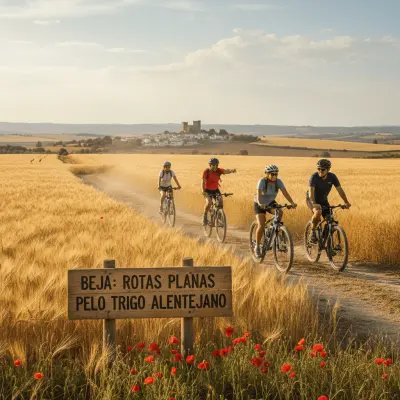
Bird Watching in Beja with Salva Fauna
Salva Fauna runs private birding day trips around Beja, guided by naturalist Jonathan. Eight hours on the Alentejo steppe, with chances to spot Great Bustards, Spanish Eagles, and Cinereous Vultures in a single day.
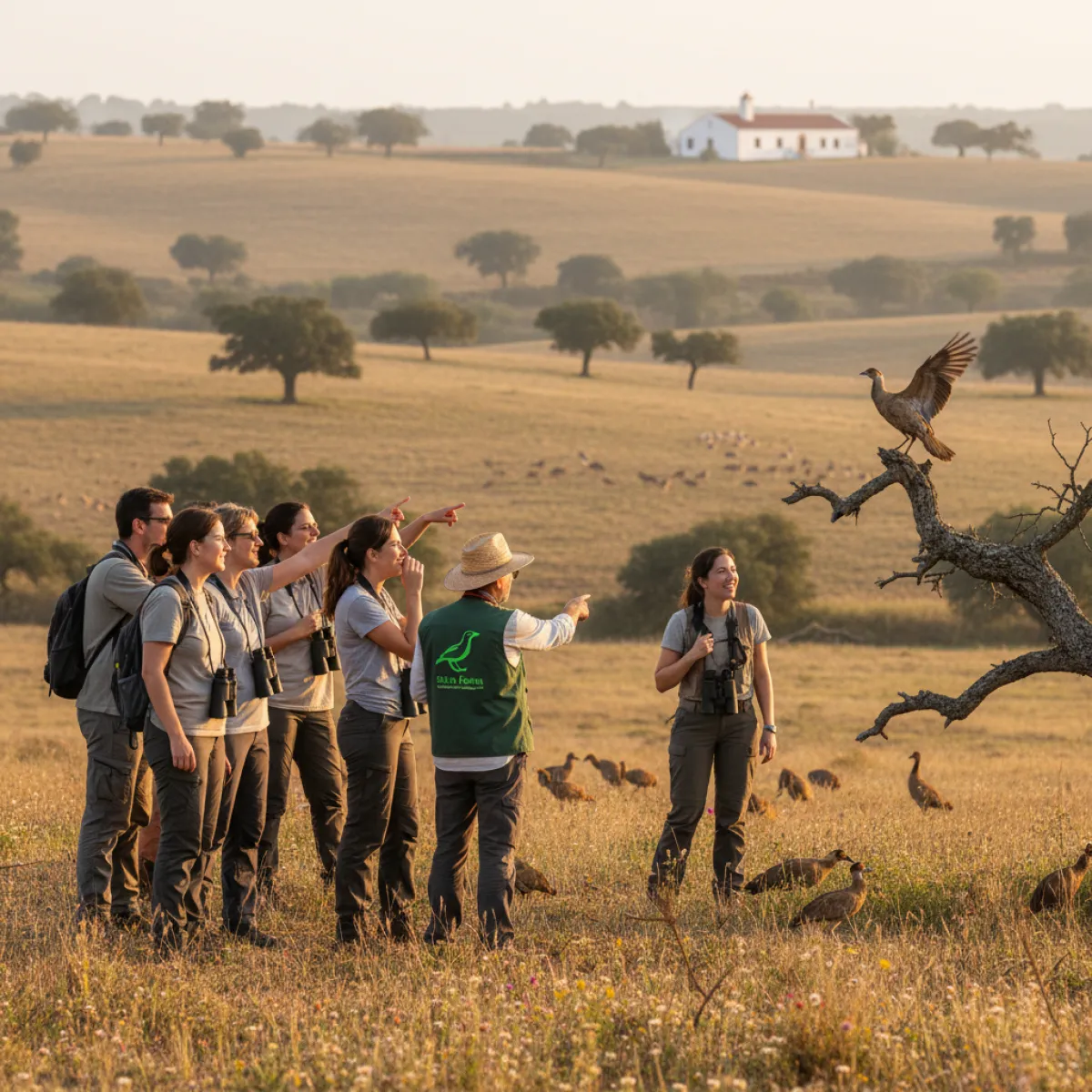
The plains around Beja look empty at first. Wheat, dry earth, blue sky, repeat. But spend a morning here with binoculars and someone who knows what to look for, and the landscape opens up. Great Bustards displaying in spring wildflowers. A Spanish Eagle circling above the scrubland near Serpa. Black-bellied Sandgrouse taking off before you can even raise your camera. This is one of the richest steppe birdwatching areas in Western Europe, and almost nobody talks about it.
Who Is Salva Fauna
Salva Fauna is an ethical wildlife tour operator run by Jonathan, a naturalist and photographer who guides private birding trips across southern Portugal. The company has a strict no-baiting, no-calling policy: animals are never lured, and no species sighting is guaranteed. What you get instead is a guide who knows the habitats intimately, reads the conditions, and adjusts the route based on what's happening that specific day. That matters more than any scripted itinerary.
Their Beja day trip costs €240 for one person, €300 for two, or €360 for three. That includes lunch at a local restaurant, transport throughout the day, and a 10% donation to Salva Fauna's conservation fund. The tour lasts about 8 hours. Difficulty is easy, suitable for anyone regardless of birding experience.
How the Day Works
You meet Jonathan in Beja early in the morning. Early means early. The first hours are when birds are most active, the light is best for observation and photography, and the Alentejo heat hasn't set in yet. Jonathan selects the day's locations based on season, weather, and recent sightings. There's no fixed route. If Great Bustards have been spotted further north, you head north. If there's raptor activity near Mértola, the plan shifts.
The day alternates between short stops along rural roads, where you observe through binoculars and a telescope, and easy walks on flat terrain. The pace is slow and deliberate. When something interesting appears, you stop. When it doesn't, you move on. Throughout, Jonathan explains what you're seeing: behaviour, ecology, how the steppe ecosystem works and why it matters.
What You Might See
The Beja area is particularly strong for steppe birds, species adapted to open, low-vegetation plains. This habitat is rare in Europe and under pressure. Key species include:
- Great Bustard: The second heaviest flying bird in the world. Males can weigh up to 16 kg. In spring, their display among wildflower fields is extraordinary.
- Little Bustard: Shy and often heard before seen. The male's call is distinctive.
- Black-bellied Sandgrouse: Extremely elusive. Flies away at the slightest human presence. A close sighting is rare and memorable.
- European Roller: Stunning colours, concentrated around the Castro Verde area.
- European Bee-eater: The rainbow bird, common near small rivers in the warmer months.
- Eurasian Hoopoe: Resident and relatively easy to find. Shows up on nearly every tour.
- Spanish Eagle: Rare, feeds mainly on rabbits. Most sightings between Mértola and Serpa.
- Eurasian Griffon: The most common vulture in the Alentejo, seen regularly.
- Cinereous Vulture: Nearly 3-metre wingspan. You'll know when you see one.
Spring and early summer also bring Montagu's Harrier, an elegant raptor that breeds in the Castro Verde area from late February through October.
When to Go
Spring, from March to June, is the sweet spot. Migratory birds have arrived, steppe species are breeding and displaying, and the plains are covered in wildflowers. Winter has its own appeal: wintering species like Greater Flamingos sometimes appear on inland lakes.
If you have to pick one month, pick May. Peak diversity, manageable heat.
Practical Tips
- What to wear: Neutral-coloured clothing: beige, green, brown. Nothing white or bright. Comfortable shoes for walking on dry, flat ground.
- What to bring: Binoculars (Jonathan has gear, but your own are better). Sunscreen, hat, water. Camera with a telephoto lens if you have one.
- Getting to Beja: By car, about 1 hour 45 minutes from Lisbon via the A2 motorway. There's no fast direct train. If you don't have transport, Salva Fauna can arrange a transfer for a supplement.
- Booking: Contact directly via salvafauna.com or email contact@salvafauna.com. Private tours at dates of your choice. 50% deposit by bank transfer to confirm.
Is It Worth It?
Absolutely. There are very few places in Portugal where you can realistically see Great Bustards, Spanish Eagles, and Cinereous Vultures in the same day. The ethical approach is genuine, not marketing. Because nothing is forced, the sightings feel earned. Jonathan is the kind of guide who points at a speck in the sky and tells you exactly what it is, how far away it is, and why it's there. It's not a checklist exercise. It's learning to read a landscape.
If you're planning time in Beja and the Lower Alentejo, pair the tour with a night at Maria's Guesthouse and a next-day trip to Praia da Zambujeira do Mar. Steppe, countryside, coast: it's the perfect combination. For anyone wanting to understand what makes Beja special, birding is one of the most honest ways to do it.