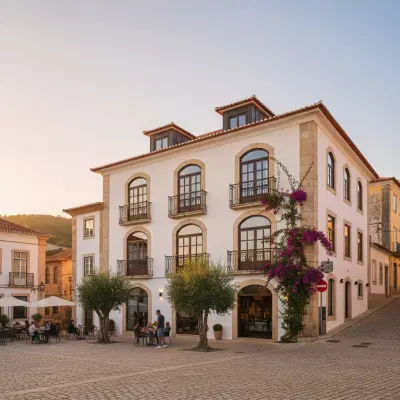
Portalegre's Real Food: Where Locals Actually Eat
In Portalegre, the daily set menu costs under €12 and includes black pork migas made by people who still raise their own animals. In an Alentejo without too many tourists, the table is honest, and that makes all the difference.
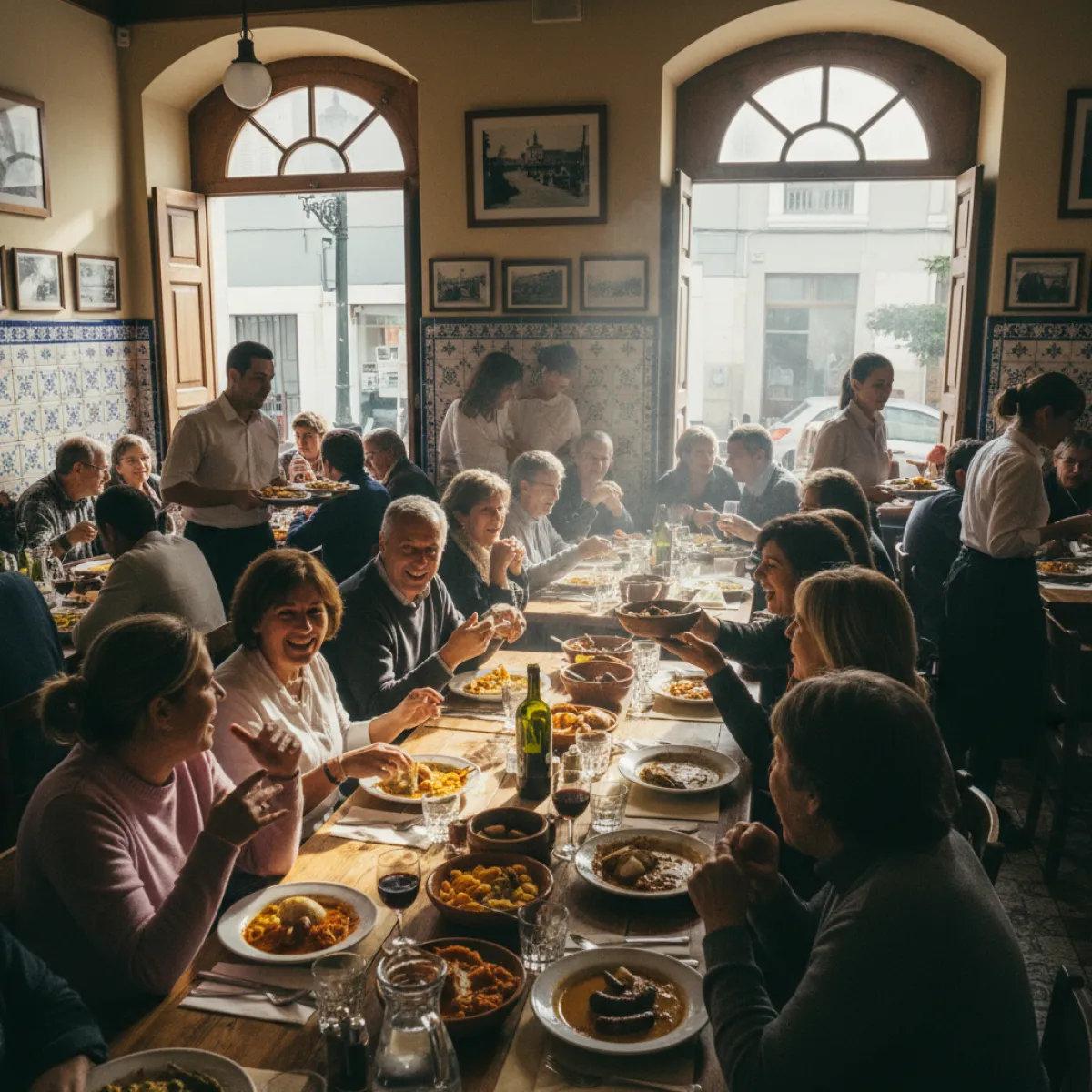
Portalegre doesn't sell itself on food. It has no Michelin-starred restaurants, no Instagram-famous brunch spots, no chefs doing tasting menus with foraged herbs and liquid nitrogen. And that's precisely why eating here is so good. When nobody's performing for an audience, the cooking tends to be honest.
Breakfast at the Counter
Before we talk lunch and dinner, let's start with the morning. In Portalegre, breakfast is quick and non-negotiable, a properly pulled espresso and a warm pastry, standing at the counter, the day's newspaper folded beside you. Look for the pastelarias near Praça da República. Ask for a bola de Portalegre, a lard-enriched sweet bread that's more subtle than it sounds, or a slice of sericaia if they've made it that day. Sericaia is an egg-and-cinnamon pudding from the Alentejo, traditionally served with preserved plums from nearby Elvas. In Portalegre, people eat it for dessert but also at breakfast, because the Alentejo doesn't believe in strict meal rules.
If you're exploring the old town on foot, and you should, because the historic neighborhoods have far more going on than you'd expect, you'll find at least two or three pastelarias where the same old men sit every morning, at the same table, at the same time. Sit next to them. Order what they order. It's the best food guide you'll find.
Lunch: The Meal That Still Rules
The Alentejo is perhaps the last region in Portugal where lunch is unapologetically the main event. In Lisbon, people eat a sandwich at their desk. In Portalegre, at 12:30, restaurants fill up, paper tablecloths go down, and nobody's in a rush. Lunch takes as long as it takes.
What to look for: restaurants with a daily menu, handwritten on a board or recited by the owner. These are where you eat properly. The daily set, soup, main course, drink, and coffee, runs between €8 and €12, depending on the place. This is pot-cooked food, no garnishes, with portions sized for someone who'll be working the fields all afternoon.
The Dishes That Define the Table
If this is your first time in Portalegre, there are dishes you simply cannot skip:
- Migas alentejanas with black pork: Bread soaked in pork fat, garlic, and coriander, served alongside chunks of fried meat. Sounds simple. Is simple. And devastatingly good when made by someone who knows what they're doing. The difference is the pork, the Alentejo black pig, raised on acorns in oak groves, has a fat that melts in your mouth in a completely different way from industrial pork.
- Açorda alentejana: Bread soup with a poached egg, olive oil, and coriander. Every house makes its own version. Some thick as porridge, others more brothy. Both are legitimate. The only wrong version is one that's stingy with olive oil, and in Portalegre, that rarely happens.
- Ensopado de borrego: Lamb stewed slowly with bread soaking up the sauce. It's a winter dish in theory, but in the Alto Alentejo they serve it year-round, because the cool evenings up by the Serra de São Mamede justify it even in June.
- Sopa de cação: Dogfish cooked with bread, coriander, and vinegar. It's not photogenic. It's probably the most comforting soup you'll eat in inland Alentejo.
A note on cheese: Portalegre sits just a stone's throw from Nisa, and queijo de Nisa, buttery, semi-hard rind, flavour ranging from mild to sharp depending on ageing, appears on almost every table as a starter. Always order it. And ask for Alentejo bread alongside, dense, thick-crusted, built to hold sauces and oils without falling apart.
Dinner: Quieter, More Deliberate
At dinner, Portalegre slows down. Many daytime restaurants close, they only do lunch. The ones that stay open tend to have fixed menus with a broader selection: grilled meats, black pork secretos, and fish brought up from the Alentejo coast.
Dinner is when it's worth exploring the centre more slowly. The streets near the Sé cathedral are nearly deserted, and the handful of open restaurants have that intimacy that only exists in small cities where everyone knows each other. If you're staying at Rossio Hotel, you're within easy walking distance of several dinner spots, no small advantage in the Alentejo, where driving after dinner can mean dark, narrow roads through the hills.
For dinner, seek out the secreto de porco preto, a thin, marbled cut grilled quickly over charcoal. When done right, it's arguably the finest meat dish Portugal produces. Pair it with batatas a murro (smashed potatoes) and an Alentejo tomato salad, which between June and September has a flavour that makes any supermarket tomato taste like coloured water.
Wine: Keep It Simple
Forget elaborate wine lists. In Portalegre, wine is serious business treated with casual ease. The Portalegre sub-region, within the broader Alentejo, has been gaining recognition in recent years, wines here differ from the rest of the Alentejo, fresher and with more acidity thanks to the altitude of the Serra de São Mamede. But in local restaurants, the house wine, served in a clay jug, is often the best choice. It costs between €2 and €5, it's made by someone from the area, and it pairs with migas and ensopado better than any bottle with a slick label.
If you want to take bottles home, look for wines from local producers like Tapada do Chaves or the Adega Cooperativa de Portalegre. The altitude reds from this area, made with varieties like Aragonez and Trincadeira but with an unusual freshness, are among Portuguese wine's best-kept secrets.
The Market and Local Shopping
Don't leave Portalegre without visiting the municipal market. This is where you understand what the region actually eats: piles of fresh coriander (the Alentejo uses coriander the way the North uses parsley), local cheeses, homemade cured meats, new-season olive oil in unlabelled plastic jugs, which is, without fail, better than what you buy in Lisbon.
The market runs mornings, usually until lunchtime. Go early, when the stalls are fully stocked. If you're lucky, you'll find someone selling homemade sericaia or honey cakes to take away.
What to Skip
Portalegre doesn't have many tourist traps, there aren't enough tourists to justify them. But there's one simple rule: be wary of any restaurant with photos of its dishes in the window or menus in five languages. In Portalegre, these warning signs are rare, but they exist. The best places have the menu in Portuguese, full stop. If you can't understand it, ask. The owners will explain, sometimes with more enthusiasm than you bargained for.
Another thing: don't be tempted to eat dinner too late. Portalegre isn't Lisbon. Many kitchens close at 9:30pm or 10pm. Arrive before 8:30pm and you'll be fine.
The Dessert Worth Travelling For
I've mentioned sericaia already, but it deserves more space. It's a pudding of eggs, flour, milk, cinnamon, and sugar, baked in clay dishes. Served with ameixas de Elvas, pale green plums in syrup, sweet but with an acidity that cuts through the pudding's richness, it's one of the Alentejo's finest desserts. Don't let anyone call it "simple." It's simple in the way a good carbonara is simple: few ingredients, zero room for error.
If you liked this no-nonsense approach to Portalegre, our weekend guide without the tourist traps gives you the full itinerary for two or three days in the city, with suggestions on where to sleep and what to see beyond the table.
Portalegre in the Alentejo Context
The Alto Alentejo eats differently from the Baixo Alentejo and the coast. Up here, the mountains change everything: the climate is cooler, the pastures greener, lamb more present than fish. If Évora is the flat, sun-baked heart of the Alentejo, with its own rhythm and its own grandeur, Portalegre is the mountain cousin, less polished but with an equally generous table.
The practical difference? In Portalegre, you eat just as well, often better, for half the price. Restaurants don't inflate for tourists because tourists are few. The olive oil is local, the bread is baked down the road, the pork grazed on acorns twenty kilometres away. There's an honesty on the plate that's hard to find in more visited cities.
And that's what makes Portalegre a serious food destination, not despite being unfashionable, but precisely because of it. When nobody else is watching, the kitchen doesn't need to reinvent itself. It just needs to be good. And in Portalegre, it is.