Nazaré With Kids: The Honest Family Guide
Forget the giant waves: with kids, Nazaré is the funicular over and over, mackerel drying in the sun and a cone of walnuts at the viewpoint. An honest guide to eating without drama, when to go and what to do when the wind ruins the beach.
There are two Nazarés, and any parent who shows up here in August figures this out in about ten minutes. There's the Nazaré of giant waves, of surfers dropping off cliffs behind twenty metre walls of water, of the photographs that travelled the world. And then there's the real Nazaré, the one that matters when you're travelling with a six year old whose only ambition is to ride the funicular again. This guide is about the second one. The first can wait until your kids are teenagers and no longer want to be seen with you.
Let me be direct: Nazaré with children is easier than it looks, as long as you abandon the fantasy of relaxing on a terrace while they play quietly nearby. That is not going to happen. What will happen is a string of small victories, and the town, mercifully, is built to make most of them possible.
The funicular is your best friend
Start with the obvious, because the obvious works here. The Nazaré funicular, running up the cliff from the beach to the Sítio since 1889, is the kind of thing adults find charming and children find genuinely magical. It climbs the cliff in a few minutes with that mechanical shudder that makes kids grip the handrail like astronauts. It costs a few euros a ride and, honestly, you'll be doing it more than once. Make your peace with that now.
At the top, in the Sítio, you'll find the Suberco viewpoint. The view over the shell shaped beach is genuinely spectacular, and there's a railing, which for anyone travelling with small children is no small detail. Fair warning: this is where the women in the round skirts sell walnuts, dried fruit and figs. Buy a paper cone. It works as fuel and as a distraction for at least fifteen minutes.
The lighthouse and the fort: where giant Nazaré makes sense
If you want to show your kids where the famous waves happen, walk or drive to the Fort of São Miguel Arcanjo, in the Sítio, next to the lighthouse. Inside there's an exhibition dedicated to big wave surfing, with real boards that look like boats and photographs that impress children and adults alike. Even off season, with a calm sea, you can tell the story. And even if they understand nothing about underwater canyons, they'll love seeing boards bigger than they are.
A word from one parent to another: the cliff area at Praia do Norte is breathtaking and genuinely dangerous. The waves that made Nazaré famous reach places that look safe. Do not let go of children's hands near the water there. On big sea days, stay at the marked viewpoints and that's the end of it.
The beach, no illusions
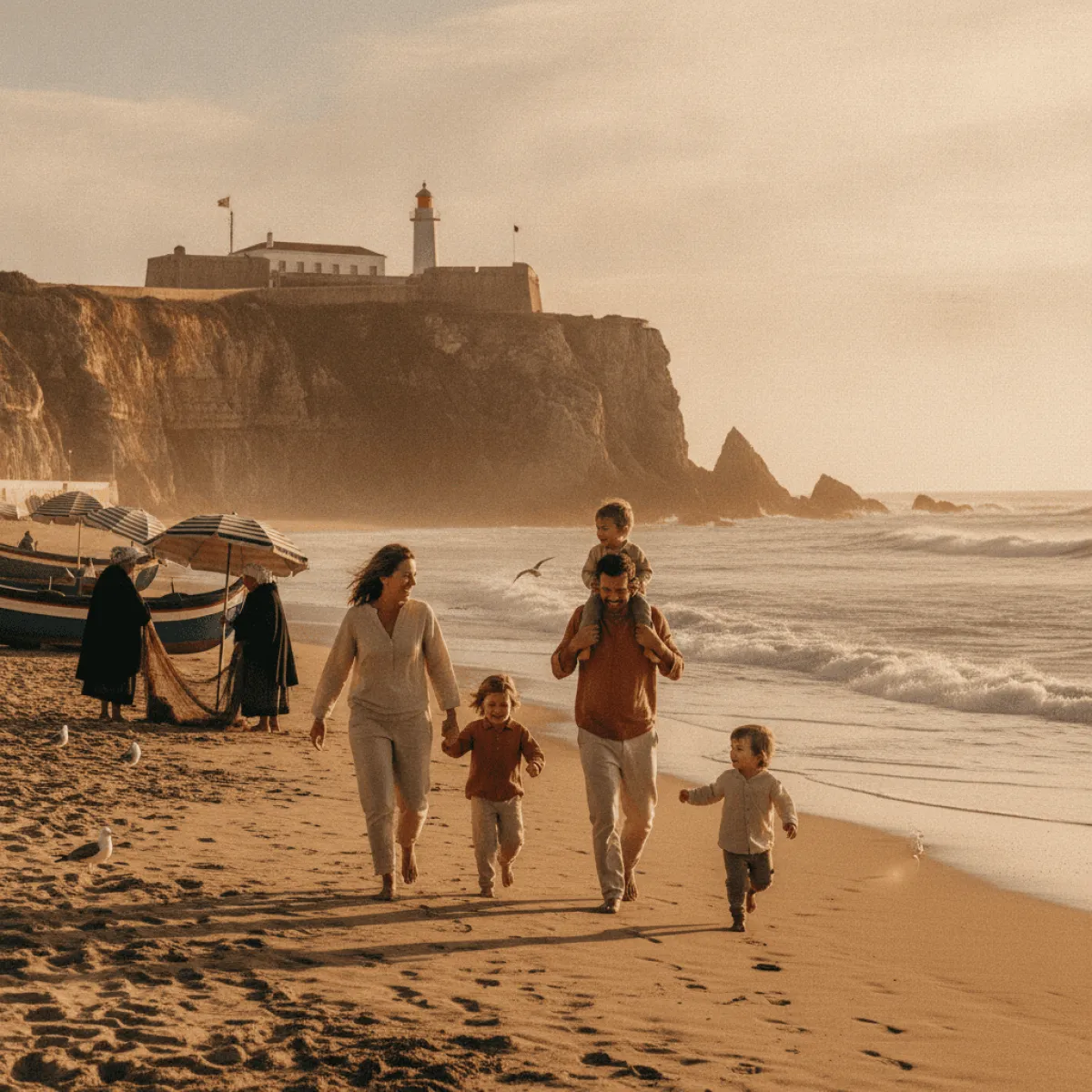
The Nazaré town beach is wide, with fine sand, and despite everything the words "giant waves" suggest, at the right tide it's perfectly civilised for children. In summer there are lifeguards and the traditional striped beach tents for hire, a local institution that provides serious shade, something every parent learns to value around two in the afternoon.
What entertains the kids most isn't necessarily the water: it's watching the fish dry in the sun on nets, the old fashioned way, right there on the sand. Split horse mackerel, laid out, catching rays like any tourist. It's a free, living history lesson. Explain that this is how fish was preserved before refrigerators and watch them wrinkle their noses with delight.
Where to eat without drama
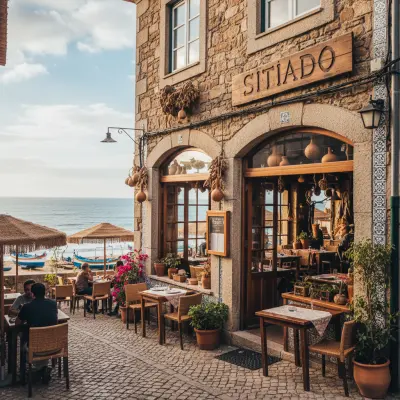
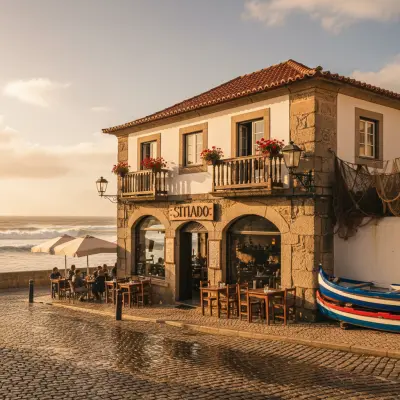
Eating out with children is a permanent negotiation, and Nazaré has options that make the task less hostile. Up in the Sítio, near the viewpoint, the Sitiado restaurant has the geographic advantage of being right where you already are after the funicular. It's handy for lunch without having to descend and climb back up, and the view compensates for the inevitable wait for a child who has decided they aren't hungry after all.
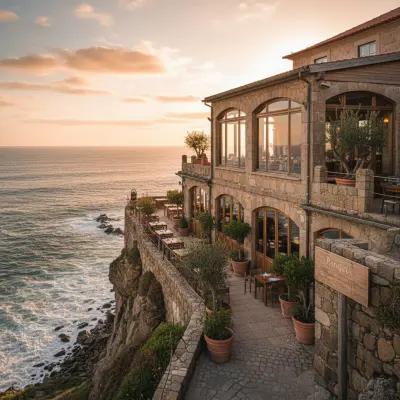
For a calmer meal, it's worth booking a table at Pangeia Restaurante, where the kitchen has more ambition and where, with luck, you might achieve the rare experience of eating a hot dish from start to finish. If you'd rather something more central and relaxed, the second Sitiado spot handles a family lunch well.
As for what to order: fish stew and grilled fish are the local gospel, but let's be honest about children. Most of them will want rice, chips and maybe some little fried whiting, which happen to be delicious and typically Nazaré, served curled with the tail in the mouth. Order those to share. For the adults, the grilled catch of the day almost never disappoints in a fishing town. Resist the temptation to order expensive shellfish at a place you don't know just because you're by the sea.
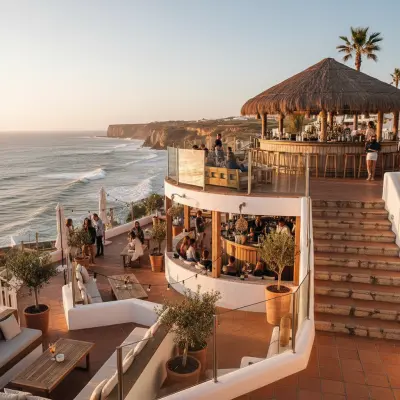
At the end of the day, when the children are running on fumes and you need a cold drink, Zulla Terrace Bar is the kind of place where you can have something while they burn off their last reserves of energy. It's not a children's bar, but in the late afternoon, with the sun dropping, nobody minds them milling about.
When the weather won't cooperate: tantrum proof culture
Sooner or later, on a weekend in Nazaré, it will rain or the wind will be too much for the beach. This is where the town's location saves the day, because it's ringed by monuments half an hour's drive away.
The obvious move is the monastery tour of Alcobaça and Batalha from Nazaré. I know what you're thinking: monasteries with kids, really? But hear me out. The Monastery of Alcobaça holds the tragic story of Pedro and Inês, which is basically a medieval soap opera with carved tombs facing each other, and children are fascinated by the macabre part. The monastic kitchen, with the river running through it so the monks could fish, is usually the high point for the younger ones. At Batalha, the unfinished vault of the Imperfect Chapels, open to the sky, looks like something from a video game. It works better than you'd expect.
The seven skirts tradition
If there's an appetite to understand Nazaré beyond the waves, the seven skirts tradition experience with Alma Nazaré Tours tells the story of that costume you see all over town. The women of Nazaré wore seven layered skirts, and there are several explanations, some practical, some symbolic, tied to the seven days of the week or the tides. For a curious child, it's a good way to turn "that lady has so many skirts" into a story that sticks. It's also a way to support the people keeping these traditions alive rather than reducing them to a photo opportunity.
Bases for stretching the trip
Nazaré works well as a base camp for the region, and if you're here for several days there are stops worth the detour. Caldas da Rainha, right next door, is surprisingly good for families, with its enormous park and daily fruit market; our honest guide to walks around Caldas da Rainha has ideas for stretching small legs without major drama.
For anyone travelling in May with a religious or historical curiosity, Fátima is less than an hour away, and the pilgrimage on the 13th is an intense experience that our honest pilgrimage guide to Fátima helps you prepare for, crowds and all. And if you happen to have older kids, fifteen or sixteen: a hop over to Coimbra during the Queima das Fitas shows them what a university town in full celebration looks like, though that's a completely different kind of trip.
Logistics, no waffle
Some practical truths. Nazaré is steep: the lower part, the Praia, and the upper part, the Sítio, are separated by a cliff. With a pushchair, forget walking down the stairs; use the funicular or drive around. The streets of the Praia are fairly flat and easy to push; so are those of the Sítio, once you're up there.
- When to go: June and September are the sweet spot, with a usable beach and none of August's chaos. In August the town fills up and the queues for everything, including the funicular, test anyone's patience.
- Parking: forget parking near the beach in peak summer. Leave the car in the outer areas and walk down, or use the marked car parks at the edge of town.
- What it costs: a family meal at a decent restaurant stays reasonable if you stick to the catch of the day and dishes to share; the funicular and a beach tent add little to the daily budget. Confirm prices and hours locally, as they vary by season.
- Water safety: respect the flags. The town beach is one thing; Praia do Norte is something else entirely and is no place for swimming for anyone, let alone children.
In the end, Nazaré with children isn't about the giant waves that sparked your curiosity. It's about your kid's face when the funicular jolts into motion, about the cone of walnuts shared at the viewpoint, about the mackerel drying in the sun that they'll tell their friends about. The big wave can wait. For now, there's a little fried fish with its tail in its mouth waiting for you, and that, believe me, is more than enough.