Nazaré's Seven Skirts Tradition with Alma Nazaré Tours
A guided heritage walk along Nazaré’s promenade, where the scent of drying fish and the vibrant seven skirts reveal the town's true maritime identity. Meet the legendary 'Nazarenas' and learn the ancient techniques of the open-air fish market.
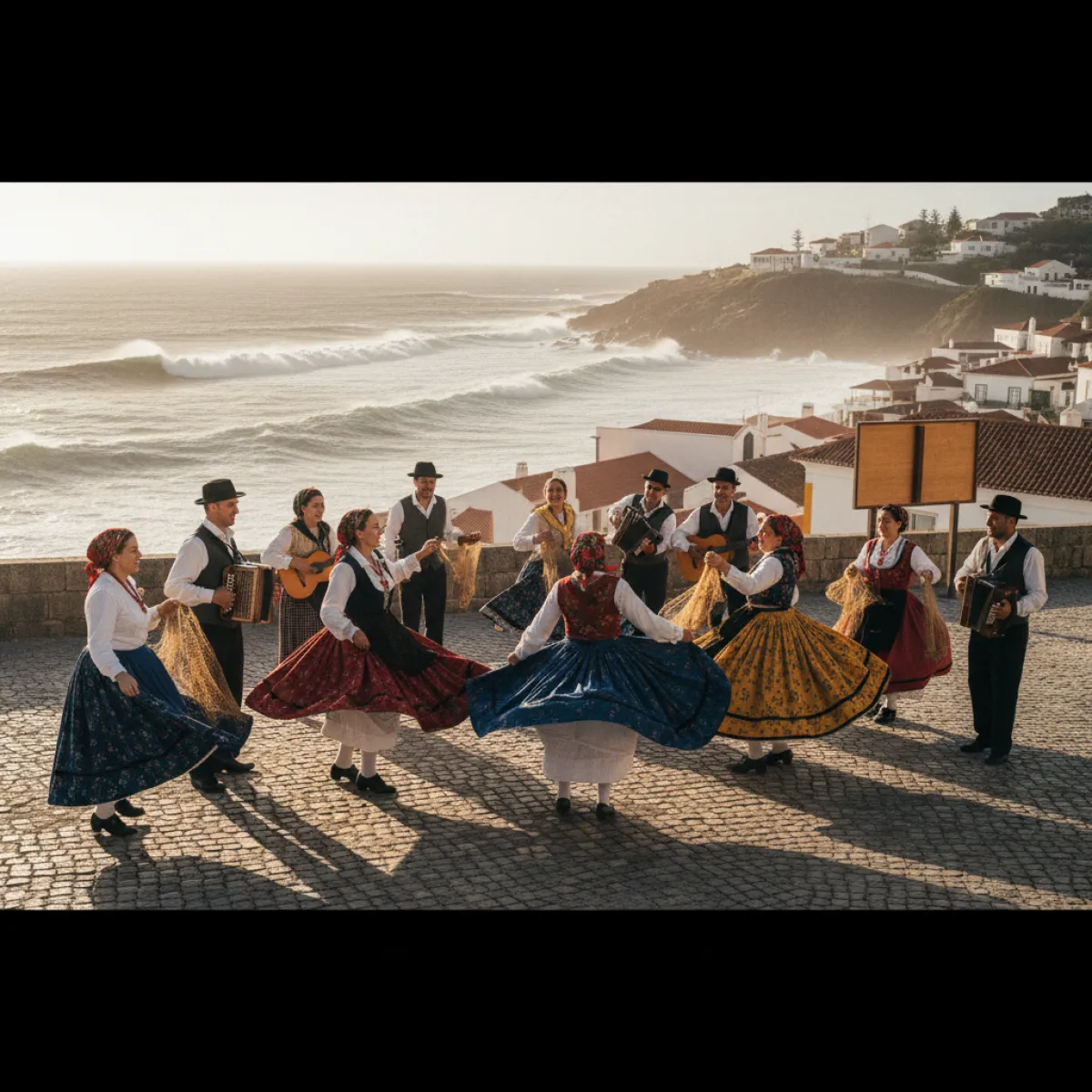
Beyond the Big Waves: Encountering the Women of Nazaré
The Nazaré that makes international headlines is a land of titans, surfboards, and a submarine canyon that spits out mountains of water. But if you turn your gaze away from the lighthouse and head down to the sands of Praia da Vila, you’ll find the true backbone of this land: the women. These aren't just folklore characters in a living museum; they are the guardians of an economy and an aesthetic that has survived centuries of isolation and maritime tragedy. To truly understand what it means to be a "Nazareno," I highly recommend the heritage walking tour led by Alma Nazaré Tours, usually guided by locals who know every alleyway and family secret in town.
The meeting point is the iconic Dried Fish Museum (Museu do Peixe Seco) on Avenida Manuel Remígio. Forget the scent of convenience stores; here, the air is thick, salty, and smells of fish curing under the sun. It’s a sensory assault that might be strong for the uninitiated, but for locals, it’s the smell of survival. This is where our journey into the tradition of the seven skirts begins.
The Fish Drying Racks: An Open-Air History
Walking among the "paneiros", the wooden racks where the fish are laid out, is like entering strictly female territory. The guide explains the "esquira" and salting process, but what really captures your attention is the agility of these women's hands. While the world outside accelerates, time here is dictated by the sun and the wind. If it’s a humid day, the fish won’t dry; if the sun is too fierce, they must be covered. It is an empirical science passed down from mothers to daughters.
My favorite part of this tour is observing the social dynamics between them. They speak loudly, gesture with authority, and have zero patience for silly questions. These are the "widows of the sea" or the daughters of those who stayed behind to manage the domestic economy while their husbands faced the Atlantic. In Nazaré, the woman has always been the central figure of the home and the market. She is the one who negotiates, who sells, and who decides the price of the "carapau enraizado" or the dried "petinga."
The Mystery and Function of the Seven Skirts
Many generic travel guides will tell you that the seven skirts represent the seven days of the week or the colors of the rainbow. The reality, like almost everything in Nazaré, is far more practical. During the tour, we learn that women wore multiple skirts to protect themselves from the cold and humidity while waiting for the boats on the sand. When the boat arrived, they would wade into the water to help pull in the nets, and the top skirts were lifted to form a sort of basket to carry the fish. The bottom skirts, made of heavy flannel, kept their bodies warm.
Today, the seven skirts are a badge of honor. Look closely at the details: the hand-embroidery, the lace, and the "cachené" (headscarf) tied with geometric precision. Watching these women walk along the promenade, their wide hips accentuated by the volume of the skirts, is to realize that fashion here was never about trends, it was about resilience. While the world watches the Chasing the Liquid Giants spectacle at Praia do Norte, life continues to be dry and salty here at the main beach.
The Climb to Sítio and the Social Perspective
The tour continues toward the ascensor, the funicular that connects the beach to the Sítio. The ascent is mandatory, not just for the stunning view over the bay, but to understand the town's social division. The Sítio was the place of the aristocracy and religious fervor, where the Sanctuary of Our Lady of Nazaré dominates the square. Here, the women of the seven skirts are still present, often selling dried fruits, the famous "tremoços and amêndoas", with a persuasive technique that is an art form in itself.
One detail that often escapes tourists is the color of mourning. You will see many women dressed entirely in black from head to toe, including all seven skirts. In Nazaré, mourning is strict and, unfortunately, frequent, given the dangers of the fishing profession. It is a constant visual reminder of the umbilical and sometimes cruel relationship this community has with the ocean.
Practical Tips for the Experience
The best time to take this tour is early morning, around 10:00 AM. The light over the sea is softer, and the activity at the fish drying racks is at its peak. Wear comfortable shoes; although the promenade is flat, the tour involves climbing steps in the Sítio. And please, ask for permission before photographing the women up close. They are not exhibits; they are professionals at their place of work. Most will gladly accept if you buy a pack of dried fish or a handful of almonds in exchange.
- Booking: The Alma Nazaré Tours heritage walk can be booked online or via the local tourism office.
- What to bring: Sunscreen (the sun's reflection on the white sand is ruthless) and cash for small purchases at the market.
- What to avoid: Don't try to haggle at the Dried Fish Museum. The value of the manual labor there is non-negotiable.
Ending the tour with a "bifana" or a plate of seafood rice in one of the restaurants in the Pederneira area is the ideal way to close the loop. You leave this experience with the certainty that no matter how high the waves at Praia do Norte may get, the true strength of Nazaré lies in those flannel skirts that refuse to disappear.