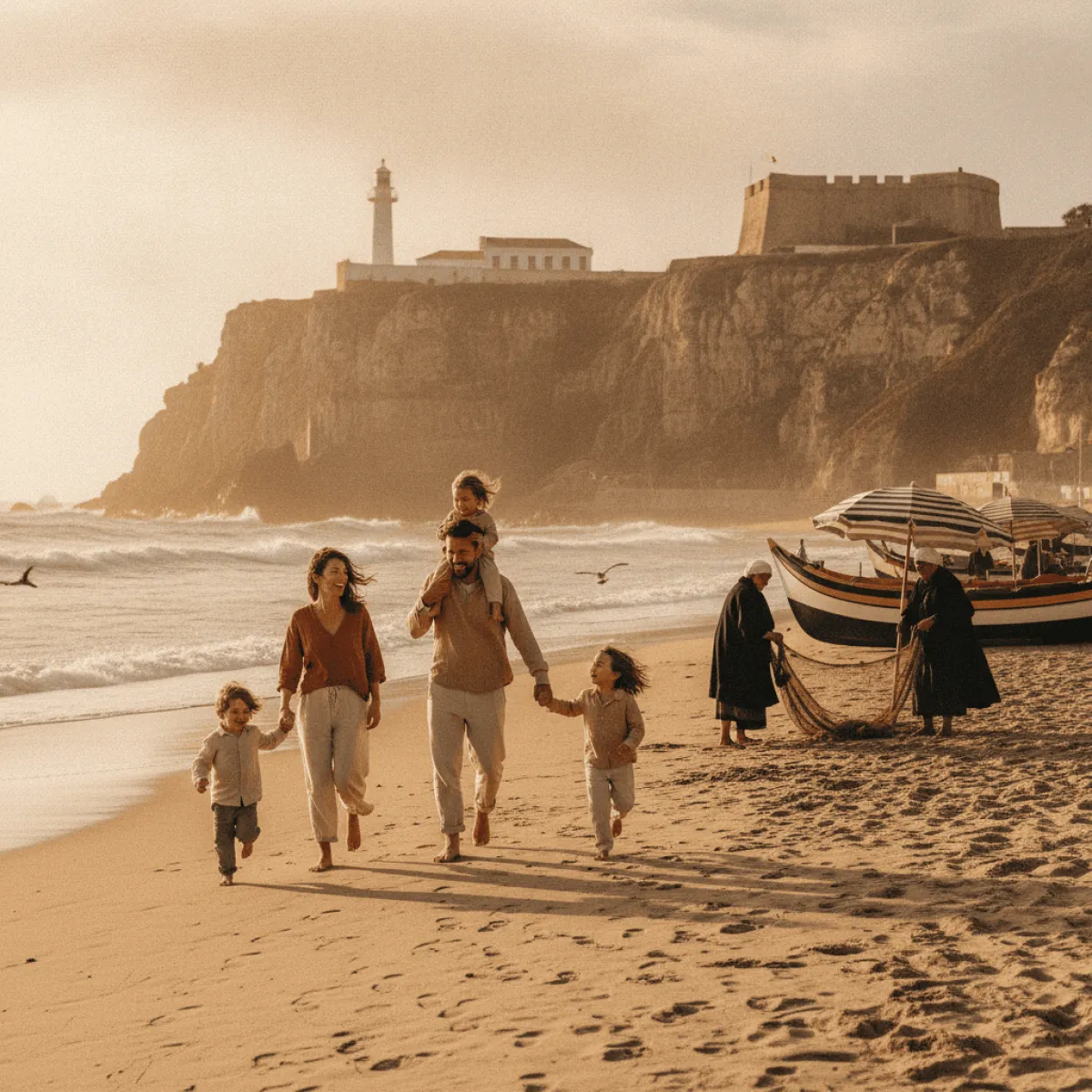
Nazaré with Kids: The Honest Family Guide
The giant waves are for Instagram. With kids, the real Nazaré is the 1889 funicular up the cliff, fish drying on nets and ice cream on the Avenida at dusk. An honest family guide, no fairy tales.
There is one photograph everyone knows of Nazaré: a wave the size of a ten-storey building with a tiny surfer sliding down it like a panicking ant. It fills documentaries and sells fridge magnets. And I promise you it is the single least relevant thing about this town if you arrive with children in tow. The giant waves only show up in winter, you watch them from far away behind a railing, and the only possible interaction is an adult repeating "don't lean on the wall." Kids want something else entirely: sand, ice cream, and a lift that climbs a near-vertical cliff. The good news is that Nazaré has all three, in industrial quantities.
The funicular is the best toy in town
Start here, because it is the fastest way to buy family peace for pocket change. The Nazaré Funicular opened in 1889, designed by the same engineer behind the Bom Jesus lift in Braga, and climbs 318 metres of cliff in a little over three minutes. To an adult it is "charming." To a six-year-old it is a rocket. It leaves roughly every fifteen minutes from the lower station near the beach and deposits you up top in Sítio, the old quarter perched on the headland.
Practical tip: sit on the right going up. That is the sea side, and halfway up the whole town opens beneath you like a model railway, the striped tents lined up neatly on the sand. Check the ticket price at the booth, as single and return differ, but it is one of the cheapest outings you will pay for in Portugal. Skip the queue between 11am and 1pm in summer when the coaches arrive; go at 9.30am or late afternoon, when you skip the wait and catch the good light too.
Up top: Sítio, the lighthouse and the viewpoint that scares parents
Sítio is the old heart of Nazaré and, for anyone travelling with children, it has the rare virtue of packing everything into one walkable block. The Miradouro do Suberco is the first compulsory stop: it leans directly out over the beach from about a hundred metres up, and kids will want to peer over the balustrade while parents quietly have a small cardiac event. There are railings, it is safe, but keep the small hand firmly in yours.
A few steps away sits the Ermida da Memória, a tiny chapel tied to the legend that gave the town its name: the knight Dom Fuas Roupinho who, chasing a deer through morning fog, felt his horse skid to a halt at the very edge of the precipice in the last second. Children love this tale of horses and cliffs; tell it before you reach the viewpoint and you buy ten minutes of genuine attention.
Then walk to the Forte de São Miguel Arcanjo, the sixteenth-century fort with the red lighthouse that appears in every big-wave photo. It holds a small exhibition on giant-wave surfing, with snapped boards hung on the walls that impress kids far more than any information panel. From here you see Praia do Norte, the monster-wave beach, which is glorious to look at and absolutely off-limits for swimming. Make that crystal clear to the troops before anyone heads down any steps.
If the deeper story of Nazaré interests you beyond the lighthouse, it is worth understanding where the town's costumes and superstitions come from. The guided experience on Nazaré's seven skirts tradition with Alma Nazaré Tours explains why the older women still wear seven overlapping skirts, and does it in a way that holds children from about seven or eight upward, provided they are rested and fed. With toddlers, skip it; with curious pre-teens, it is gold.
The beach: which one is safe and which is only for looking
Here is the part nobody tells you plainly. Nazaré essentially has two beaches and they could not be more different. Praia da Nazaré, the town beach in front of the Avenida, is the family one: wide sand, gentle slope, lifeguards in summer. This is where you pitch the towel and build castles. The famous striped tents, rentable by the day, give shade and a landmark so you don't lose anyone. Confirm rental prices on site, as they shift with the season.
Praia do Norte, on the far side of the cliff, is the giant-wave beach. Even in summer, when it looks calm, it has treacherous currents and shifting sandbanks. Look at it, photograph it, and stay on dry land. I'll repeat it because it matters: nobody swims at Praia do Norte with children. Full stop.
Another detail that fascinates kids without costing a cent: the fish drying in the sun on nets, on the sand beside the Avenida. It is Nazaré's living dried-fish tradition, and the women in full skirts who tend it are used to explaining it to the curious. It is one of those moments of accidental ethnography worth more than many a museum.
Where to eat without drama (or spending a fortune)
Eating with kids in Nazaré is easy because the town runs on fish and rice, and few things please a child more than rice with fish or a soupy seafood massada. The trick is to escape the front-row terraces along the Avenida, where you pay rent on the view, and step back a street or two.
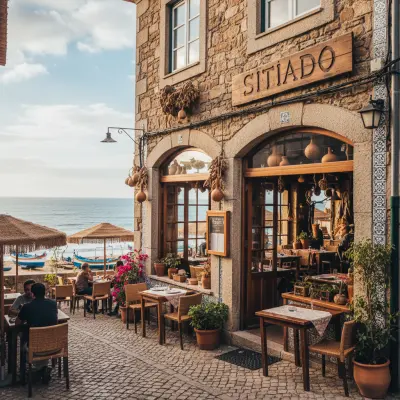
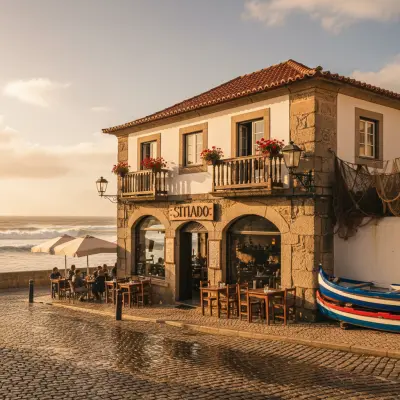
For a proper family lunch, the Sitiado restaurant is a solid bet: unpretentious fish cooking, generous portions and enough room for a pushchair or a high chair. Order the grilled catch of the day and a seafood rice to share; kids who won't touch fish survive perfectly well on boiled potato, salad and bread, which here comes in abundance. There is, for the record, a second address under the same name, the other Sitiado, handy when the first is packed in August.
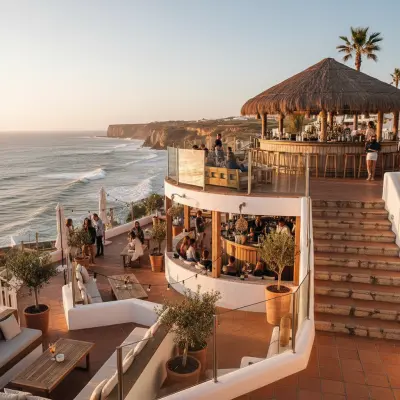
If you want a change from the traditional register, Pangeia Restaurante offers a slightly broader menu and a relaxed room, good for the evening when one of the kids has decided, today, that fish is entirely off the table. And for the end of the day, when the children are wiped out from the beach and the adults need a drink on equal terms, the Zulla Terrace Bar has a sea-facing terrace: a fresh juice for them, a cold beer for you, and the sunset doing the work of children's entertainment. Go before 8pm with small kids, as the crowd skews to adults after that.
When the weather turns (or there's been quite enough sand)
Even in summer Nazaré gets days of biting north wind, and in any season comes the moment when the children have seen enough sand for one lifetime. This is where the town's location pays off: it sits half an hour by car from two of the most spectacular monuments in Portugal.
The monastery tour of Alcobaça and Batalha from Nazaré solves half a rainy day with transport included, which with children is half the battle won. Batalha, with its lace-like stone facade and cloister, tends to impress even the youngest; and in Alcobaça it is worth buying one of the convent pastries from the square out front after the church, because nothing reconciles a child with culture quite like an egg-custard sweet. If you prefer to go it alone, both monasteries have fairly cheap entry and under-12s are often free; check the day's conditions locally.
For families staying several days in the region and wanting to stretch the trips, there is more Portugal within easy reach. If you happen to be here in May, it is worth understanding the pilgrimage phenomenon in our honest guide to Fátima on May 13th, half an hour away. And anyone who likes walking with the troop will find ideas in our guide to walks around Caldas da Rainha, a spa town full of gardens and painted ceramics that amuse curious kids.
The one-day plan that actually works
Put it all together and the ideal day with children almost draws itself. In the morning, while the light is still cool, ride the funicular up at 9.30am and walk Sítio: Suberco, the Ermida da Memória, the lighthouse and the broken board. Around 11.30 come back down and plant yourself on Praia da Nazaré, tent rented and castle under construction, until lunch. Eat grilled fish well back from the front row, take the compulsory two-o'clock nap, and return to the beach late in the day, when the sand cools and the crowd thins.
The secret to Nazaré with kids is not doing more; it is doing less, and doing it slowly. This is a small, walkable town where the biggest attraction costs the price of a coffee and lasts three minutes. Resist the urge to fill the schedule. Let them watch the fish dry, let them feel the good kind of fear at the edge of the Suberco, let them eat ice cream dripping down a wrist on the Avenida at dusk. The giant wave that fills the documentaries they can watch online when they're grown. The Nazaré they will remember is this one, the lift and the sand.