Nazaré on Foot: Trails from Sítio to Pederneira
Everyone comes to Nazaré to stare at the giant waves. But there's a town you do on foot, from the Sítio to the Pederneira, with three levels of difficulty and a cliff that punishes anyone who forgets a windbreaker.
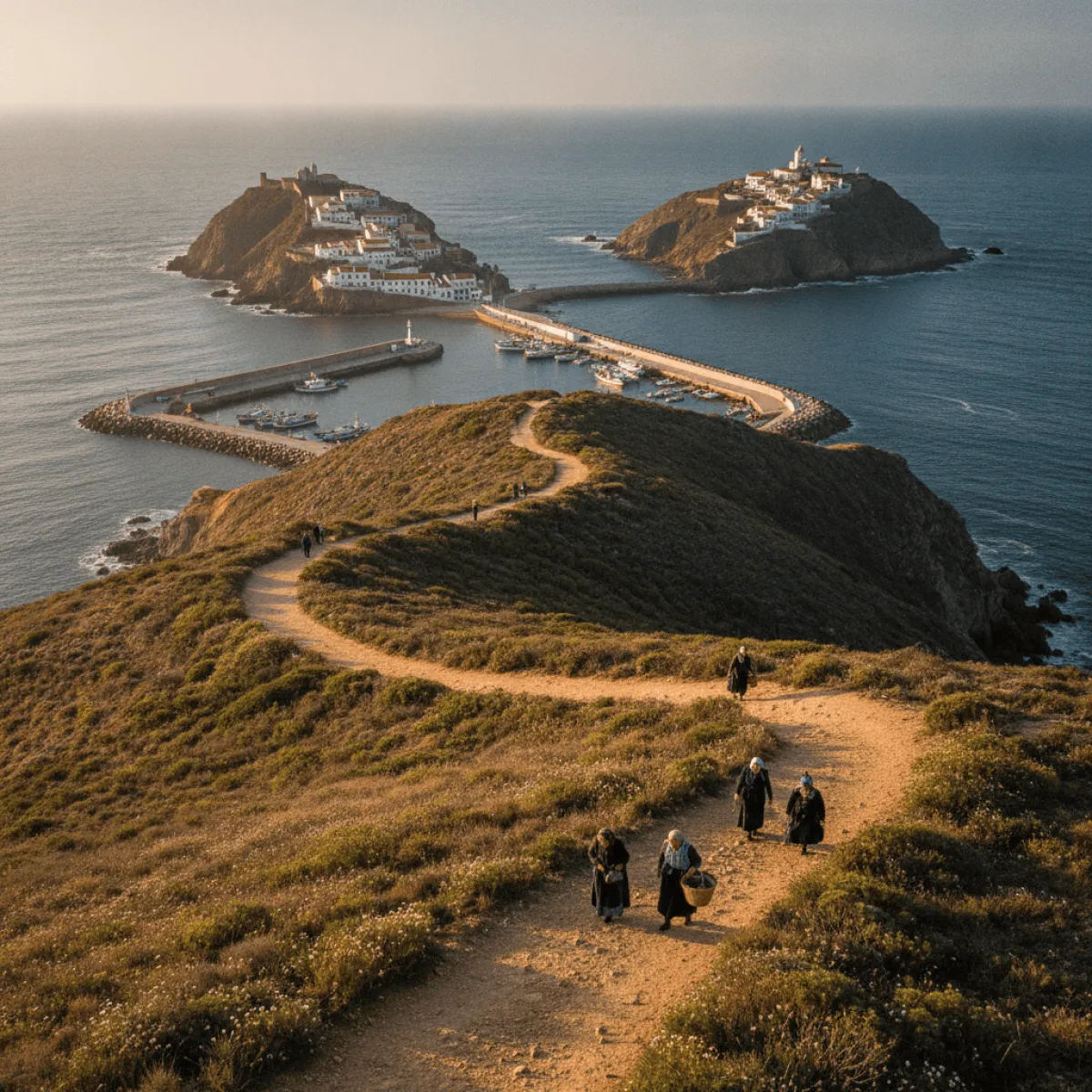
Everybody comes to Nazaré to stare at the water. In winter, with the right swell, the tripods line up at the Forte de São Miguel Arcanjo like it's a championship final, all waiting for a sixty-foot wall. But come the rest of the year, or if you simply want to turn your back on the surf circus for a few hours, there's a Nazaré you do on foot, in boots instead of on a board. Forget the idea of dramatic mountains: here the challenge is the cliff, the pine forest, and the gap between the beach and the Sítio up top. I've ranked the walks by difficulty and by what you'll actually see, with no inflated distances and no invented viewpoints.
Before you lace up
Nazaré has three floors. Down low sits the Praia, the long town glued to the sand. On the cliff top sits the Sítio, with the sanctuary, the viewpoints and the lighthouse. And on a spur to the east, ignored by most, sits the Pederneira, the old quarter. Almost every trail plays with these three levels, and the lead actor is the wind. The Sítio cliff catches a serious northerly: pack a light windbreaker even in August, because the breeze that feels pleasant on the beach will rip the cap off your head up there.
Footwear matters more than you'd think. The Sítio paths are Portuguese cobblestone polished by decades of feet, slippery when there's damp or sea spray. For the dirt trails in the pine forest a trainer with some grip is enough. Carry water: there are cafés up in the Sítio and down in the Praia, but between them, on the cliff, there's nothing but gulls.
Easy: the Sítio cliff circuit
This is the walk everyone should do, and it's almost flat. The honest way to start is to ride up from beach level to the Sítio on the Nazaré funicular, which has been climbing the cliff since 1889. It costs a few euros per trip (check the current price locally, it changes), and the ride itself is half the show: the town shrinks beneath your feet while the carriage creaks up the rail.
Up top, begin at the Miradouro do Suberco, the balcony over the Praia. It's the postcard shot: the half-moon of sand, the boats, the rooftops. Then walk west toward the Forte de São Miguel Arcanjo, the small stone fort on the point. This is where the giant waves of Praia do Norte break, and even on a calm summer day the underwater canyon makes the water churn strangely below. The fort has an exhibition about the phenomenon and the surf records; entry is small.
The full loop, from the funicular to the fort and back, runs about three kilometres with no effort and takes ninety minutes with stops. The best time is late afternoon, when the sun drops over Praia do Norte and the light turns brick-coloured. Before you head down, it's nearly compulsory to face the row of women in seven skirts selling dried fruit and sun-dried sardines. If you'd rather understand where that outfit comes from instead of just photographing it, the guided seven skirts tradition with Alma Nazaré Tours turns a tourist cliché into something that makes sense.
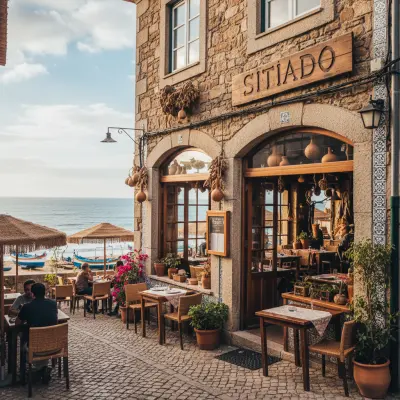
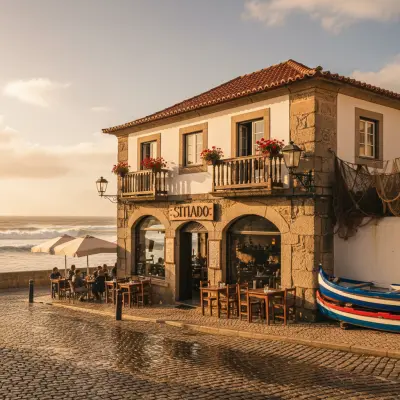
For lunch or dinner at the end of the circuit, up in the Sítio, Sitiado plays the fresh-fish-with-a-view card, and there's a second Sitiado spot if the first is full, which it will be in August. Order the grilled fish of the day and an octopus salad, and resist piling on starters, because they keep arriving unasked and the bill climbs fast.
Moderate: Sítio to Pederneira via the quiet viewpoint
If the cliff circuit is the coach-tour trail, this is the one that takes you off the map. From the sanctuary area, instead of riding the funicular down, walk east on foot toward the Pederneira. The route passes residential streets and stretches with a view, dipping and rising enough to earn the moderate label: nothing technical, but your legs will notice.
The reward is the Miradouro da Pederneira, above the ruins of the old church, with the lagoon and fields on one side and the rooftops on the other. It's one of the quietest spots in Nazaré, no vendors, no queues, with benches where nobody hurries you. At weekends locals bring a picnic and stay for the sunset. The full stretch, from the Sítio to the Pederneira and back down to the Praia, runs around five to six kilometres depending on your route, and takes half a morning.
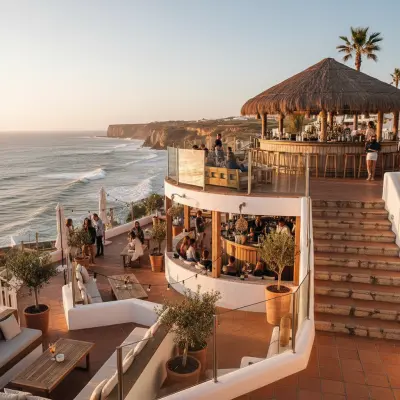
Do it early, before eleven, for two reasons: the light is cleaner and the heat hasn't arrived. Back down in the Praia, to rehydrate in style, the Zulla Terrace Bar has a sea-facing terrace built for tired legs and a cold beer. It isn't cheap, but you're paying for the view and the right to sit for an hour without anyone moving you off the chair.
Where to eat afterwards
For a more serious lunch after the walk, Pangeia Restaurante steps off the grilled-beach-fish script and cooks with more ambition. It's the place to go when you've had enough sardines and want a plate that was actually thought about. Book for dinner in high season.
Hard: the pine forest and the coast north
For burning legs and real distance, the terrain is in the Pinhal de Nazaré, the maritime pine belt stretching north of Praia do Norte. Dirt tracks wind between the trees and pop out at the cliff edge, with the bonus that the pines block the wind that hammers the open headland. Here the difficulty isn't the gradient but the distance and the sand: some stretches are soft and tire you twice as much.
I won't invent waymarks or exact figures for signposted routes; bring a trail app on your phone and don't count on constant shade or water along the way. The rule is simple: fill your bottle first, put on sunscreen, and always plan the return, because by kilometre eight the pine forest starts to look the same everywhere. The landscape here is rougher and less postcard than the Sítio, but it has something the tourist viewpoints don't: real silence, broken only by the surf far below.
If you have the legs and the time, you can push the coast south to São Martinho do Porto, the shell-shaped bay where the sea enters through a narrow mouth and stays as tame as a swimming pool. It's another town, another rhythm, and the contrast with the fury of Praia do Norte explains half of the Portuguese Atlantic in one afternoon.
When the weather turns: swap boots for culture
The northerly, when it bites, ruins any cliff trail. Rather than stubbornly pushing on, change the plan. Nazaré is ringed by history half an hour by car. The monasteries of Alcobaça and Batalha, both World Heritage, fit into one day, and if you'd rather not drive you can take the monastery tour of Alcobaça and Batalha from Nazaré, which handles the logistics and the tickets. Batalha's carved stone on a rainy day is worth as much as any viewpoint.
If your trip lands on May 13th, there's a detour that changes everything: Fátima, just up the road, receives hundreds of thousands of pilgrims and the roads fill with people on foot. Before you decide whether to be there or flee that day, read our honest guide to the Fátima pilgrimage on May 13th, which says what nobody else says about crowds, traffic, and where to sleep.
Stretching the region on foot
If you've caught the walking bug and have more days, the area gives you more. Half an hour south, Caldas da Rainha has walking routes of a different nature, more countryside and park than cliff, and we cover them in our honest guide to April walks around Caldas da Rainha, ideal for spring. And if the trip stretches as far as Coimbra in May, brace for another kind of crowd: Coimbra's Queima das Fitas and student praxe have nothing to do with pine forests, but they're part of the same central Portugal you discover slowly.
The practical summary
- Easy: Sítio cliff circuit, about 3 km, ride up by funicular, best at late afternoon.
- Moderate: Sítio to Pederneira and back to the Praia, 5 to 6 km, do it early morning.
- Hard: Pinhal de Nazaré and the coast north, distance as you like, bring water and a trail app.
- Bad-weather days: the monasteries of Alcobaça and Batalha, or São Martinho do Porto.
Nazaré doesn't need a mountain to be worth a walk. It just needs you to look down, at the trails and the cliff, instead of always staring at the horizon waiting for the next giant wave. Lace up the boots in the morning, leave the surf circus for the afternoon, and you'll find the best view of the town is the one you earn on foot.