Monsaraz in May: Crosses, Maypoles and Folk Traditions
In May, Monsaraz still functions as a village, not a tourist set piece. Crosses decorated with wildflowers, Maios at front doors, and nights under Europe's first Dark Sky Reserve: this is the Alentejo before the crowds.
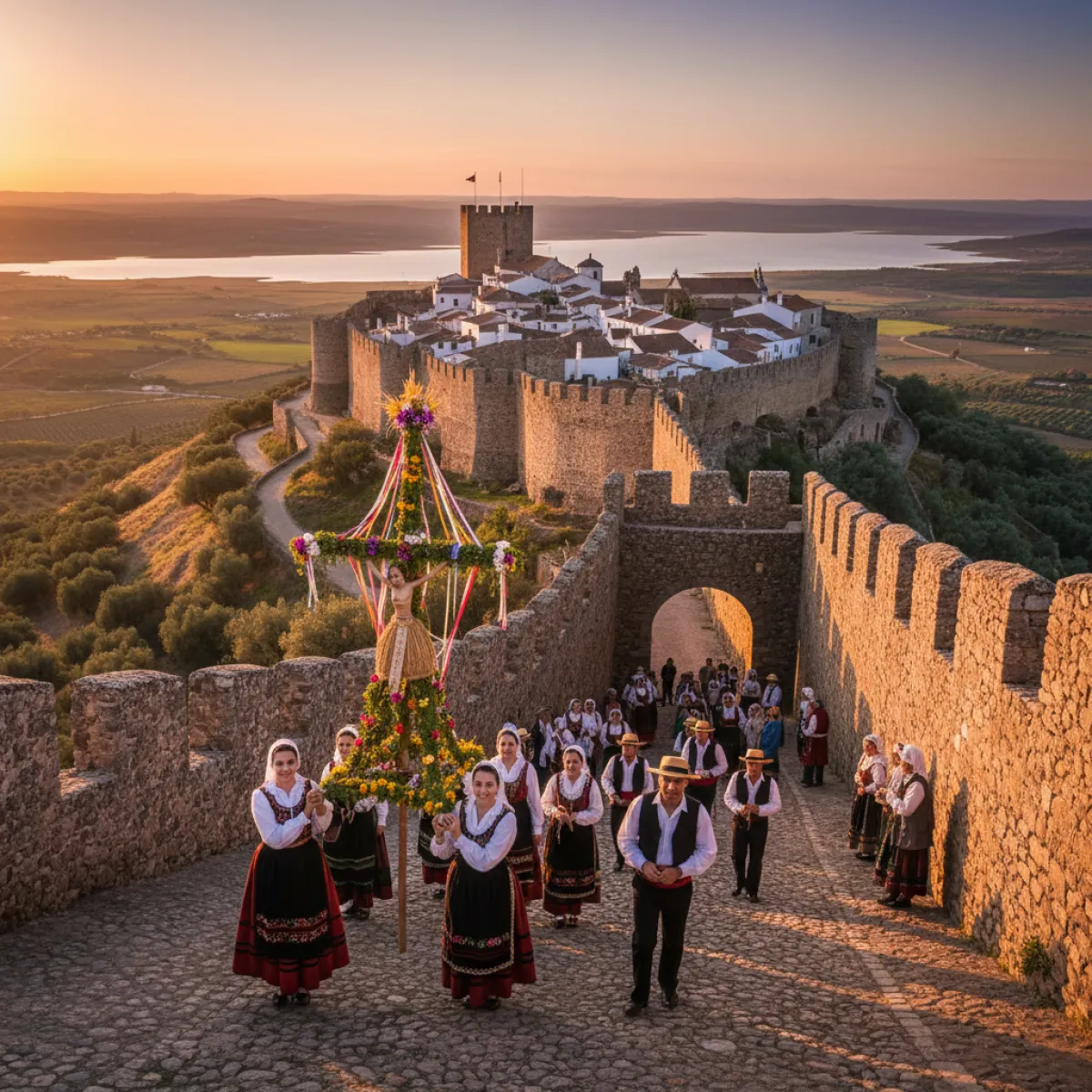
May in Portugal is when the whole country smells of flowers and cold bonfires. It's the month of decorated Crosses, of Maios at front doors, of processions that block traffic in villages and nobody complains. In Monsaraz, where medieval walls look out over Lake Alqueva like it's a giant mirror, these traditions get a backdrop no set designer could invent.
But let's get to what matters. What actually happens in May in the Alentejo? And why should you go to Monsaraz now instead of August like everyone else?
The Day of the Crosses: May 3rd
The Dia das Cruzes tradition predates tourism, travel guides, and almost everything else. Celebrated on May 3rd in dozens of Portuguese towns, in the Alentejo it carries a different weight. Crosses are decorated with flowers, mainly daisies, roses, and carnations, and placed at chapels, stone crosses, and crossroads. In many Alentejo villages, women start preparing the crosses days in advance, picking wildflowers from the fields.
In Monsaraz, the stone cross near the walls is one of the focal points. Don't expect fireworks: this is a discreet, community celebration, made by and for the people who live there. If you're lucky, you'll catch the blessing of the crosses at the Igreja Matriz de Nossa Senhora da Lagoa. If not, you've at least seen a medieval village decorated with wildflowers at sunset, which is frankly not bad consolation.
What are the Maios?
The Maios are figures made of straw, rags, and flowers, placed at doorways or in public squares. It's a pagan tradition celebrating fertility and the arrival of warm weather, older than Christianity in Portugal. In the Alentejo, Maios are usually anthropomorphic dolls, sometimes satirical, sometimes purely decorative. In some towns, neighbours compete to see who builds the most elaborate one.
It's one of those traditions halfway between living folklore and cultural revival. In smaller villages, people still do it out of habit. In larger towns, the parish council often organizes things. In Monsaraz, the village's small scale makes everything more intimate: a Maio by a door on Rua Direita might be the work of a neighbour who's done the same thing for forty years.
Why Monsaraz in May?
The honest answer: because in May, Monsaraz isn't packed yet. In July and August, Rua Direita feels like a pedestrian motorway. In May, at nine in the morning, you'll likely be alone on the walls, looking out at the Alqueva with nothing but birdsong for company.
There are practical reasons too: temperatures hover around 20-25°C, perfect for walking. The countryside is green, flowers are at their peak, and the late afternoon light in the Alentejo in May is something photographers chase all year.
But there's a less obvious reason. In May, Monsaraz still functions as a village, not a set piece. Residents go about their routines, festivals are made for the community, and visitors fall into that rhythm instead of imposing their own. It's the difference between watching and participating.
What to do beyond the festivals
May's folk celebrations are brief by nature. A procession here, a blessing there, a street party at night. The rest of the time, Monsaraz has plenty to offer, and I don't just mean sitting on the walls contemplating existence (though that works too).
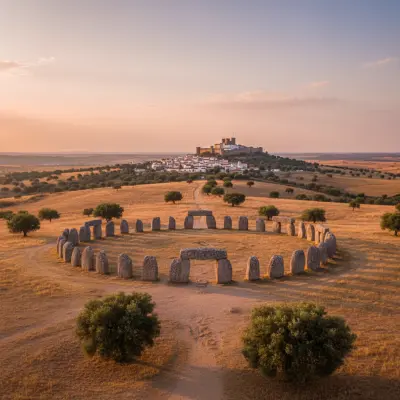
The Cromeleque do Xerez is one of the strongest reasons to come to this area. This megalithic monument, relocated when the Alqueva dam raised the water level, predates Stonehenge. It's a few kilometres from Monsaraz and free to visit. Go in the late afternoon: the low-angle light between the stones is spectacular, and you'll probably share the place with no more than half a dozen people.
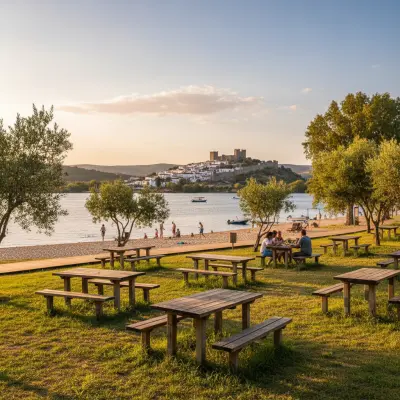
For families, or anyone who just wants somewhere to stop and breathe, the Parque de Merendas at the Monsaraz river beach is a required stop. In May, the water's still brisk for swimming (unless you're brave), but the picnic area by the lake is excellent. Bring Alentejo bread, Serpa cheese, and a bottle of regional wine. You don't need more.
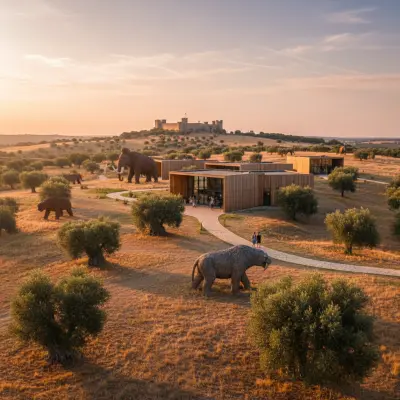
If you're with kids, Parque Megafauna Monsaraz is an unexpected surprise. Life-size replicas of prehistoric animals in an outdoor space. It's not Hollywood Jurassic, it's better: an educational park where kids run between mastodons and adults learn things they didn't know. Check opening times locally before you go.
May nights in Monsaraz
Here's something many people don't know: Monsaraz sits within Europe's first Dark Sky Reserve. Light pollution is controlled, and clear nights here are extraordinary. In May, with mild evenings but without summer's suffocating heat, conditions for stargazing are ideal.
Stargazing at Monsaraz's Dark Sky Reserve is one of the most impressive experiences you can have in the Alentejo. For something more structured, astronomical observation at the Alqueva Lake Observatory offers sessions with telescopes and expert guides. Book ahead, especially on May weekends.
Combining a night at a popular street festival, with music and snacks in the square, followed by a stargazing session is the kind of programme that only happens in a place like this.
What to eat
We're in the Alentejo, so the short answer is: everything. The more useful answer: look for açorda alentejana, migas with pork, and lamb stew. In May, gaspacho alentejano (not the Spanish version, mind you) starts appearing on menus, served cold with bread and tomato chunks.
In Monsaraz, dining options are limited but generally honest. Don't expect tasting menus with coriander foam. Expect generous plates, well-seasoned, with good bread and proper olive oil. The sopa de cação (dogfish soup with coriander), when it appears, is one of the best things you'll ever eat, and costs what a coffee costs in Lisbon.
If you want to expand your food itinerary beyond the central Alentejo, the upper Alentejo deserves attention too. The guide to where locals eat in Portalegre is a good starting point for anyone combining this trip with a stop in the northern Alentejo.
Practical information
Monsaraz is about two hours from Lisbon and just over an hour from Évora. There's no meaningful public transport, so you'll need a car. Parking outside the walls is free and reasonably easy in May (August is another story).
For accommodation, book ahead if you're coming on a weekend. Monsaraz has rural houses and small boutique hotels, but capacity is limited. Reguengos de Monsaraz, a few kilometres away, has more options and lower prices.
May's folk festivals don't have rigid schedules or tickets. They're community events. Check with the Monsaraz parish council or the Reguengos de Monsaraz tourist office for exact dates, which can vary year to year. The Day of the Crosses is fixed on May 3rd, but associated street parties and activities may happen on the nearest weekend.
Combining with more Alentejo
If you have more than a day, Monsaraz pairs well with Évora (half an hour away), the Reguengos wine route, or a drive up to the Portalegre area. If you choose the latter, the guide to a real weekend in Portalegre gives you an itinerary without the usual traps.
May is, of all months, the most honest time to visit the Alentejo. It's not the postcard summer version, with golden fields and 40-degree heat. It's the green, blooming version, with cool nights and traditions that have existed for centuries. Monsaraz, with its walls framing all of this, is simply the best place to see it.