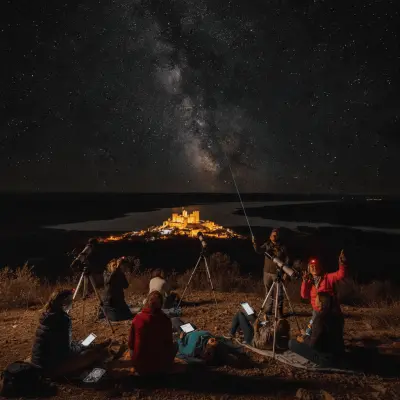
Celestial Precision: Astronomical Observation at the Alqueva Lake Observatory
Explore the deep cosmos at the Alqueva Lake Observatory, the scientific heart of the world's first Starlight Reserve near Monsaraz. Experience a professional stargazing session with large-aperture telescopes under one of Europe's clearest night skies.
Scientific Immersion in the Dark Sky Alqueva Reserve
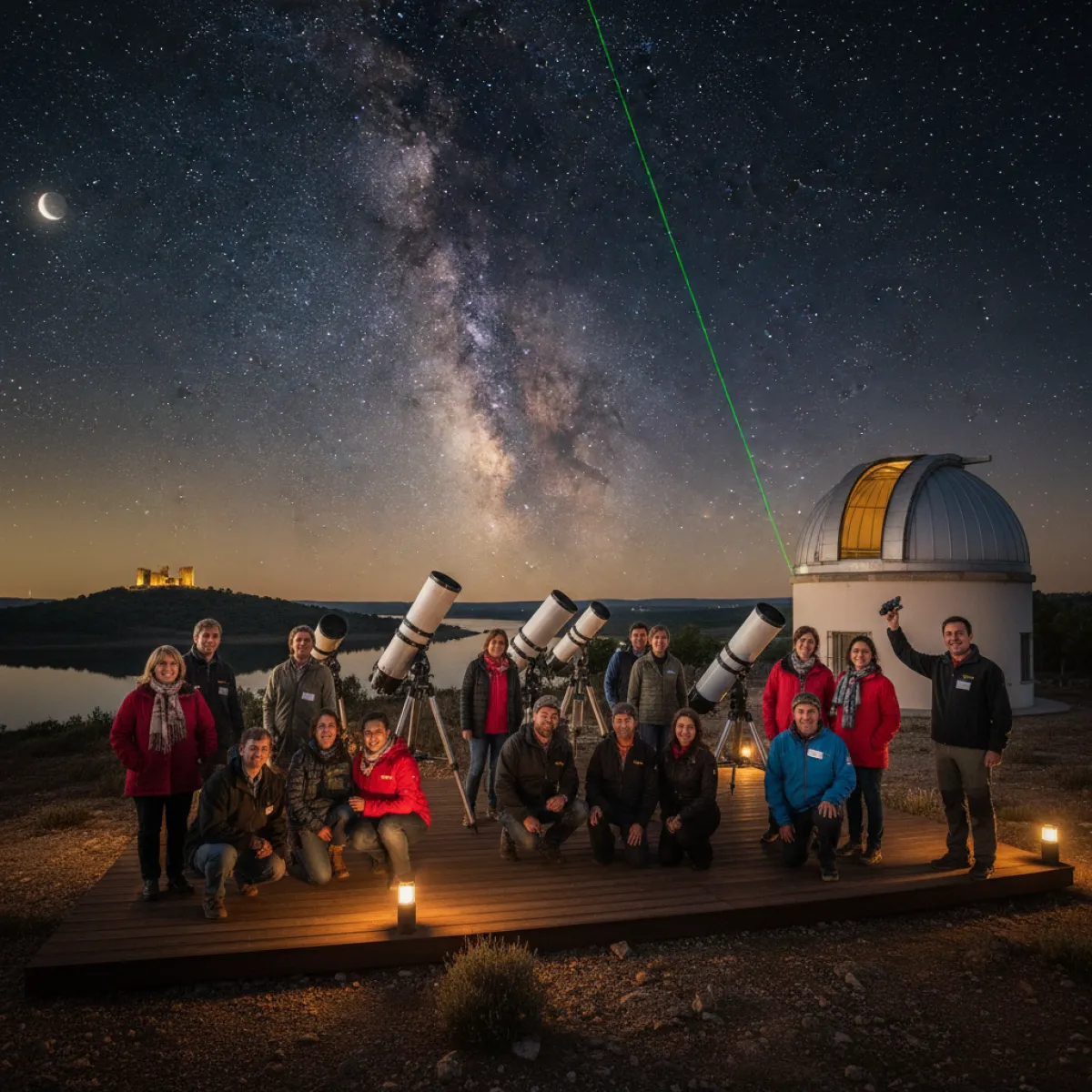
In the expansive plains of the Alentejo, the medieval silhouette of Monsaraz stands as a sentinel over one of the world’s most pristine nocturnal environments. The Alqueva Lake Observatory (OLA) provides a professional gateway to this celestial heritage. As the primary astronomical hub within the Dark Sky Alqueva Reserve, the first to receive the Starlight Tourism Destination certification, OLA offers a rigorous yet accessible exploration of the cosmos, far removed from the light pollution that obscures the skies of modern urban centers.
The Architecture of the Night Sky
The Dark Sky Alqueva is characterized by its exceptional atmospheric stability and darkness. In an era where true darkness is becoming a rare resource, this region maintains a Bortle scale rating that allows for the observation of celestial phenomena invisible to most of the world’s population. The experience at OLA is designed to leverage these conditions, providing visitors with high-quality optical instruments and expert guidance from astronomers who prioritize scientific accuracy over generic narratives.
Step-by-Step Astronomical Observation
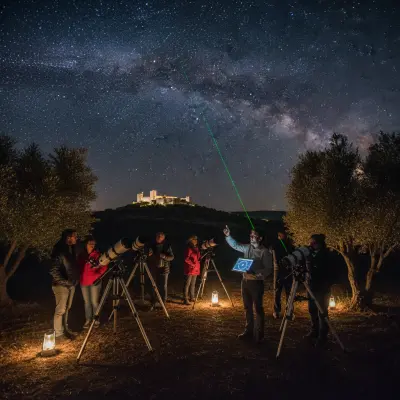
A typical session at the observatory begins with an orientation to the celestial sphere. Utilizing high-powered astronomical lasers, guides map out the current position of the stars, explaining the shift of the ecliptic and the orientation of the Earth relative to the galactic center. This stage is crucial for understanding the movement of the sky throughout the night and across the seasons. Visitors learn to navigate the firmamento using 'pointer stars' to find Polaris or to trace the arc of the zodiacal constellations.
Transitioning to the telescope terrace, the focus shifts to solar system objects. Through large-aperture telescopes, usually ranging from 12 to 16 inches, planetary details emerge with startling clarity. Depending on the orbital positions, participants may view the hexagonal storms at Saturn's poles, the intricate cloud belts of Jupiter, or the phases of Venus. The direct optical experience, seeing light reflected from these distant worlds without the mediation of a screen, creates a tangible connection to the scale of our planetary neighborhood.
The final phase of the evening delves into Deep Sky Objects (DSOs). This is where the observatory’s location near Monsaraz truly excels. Under the guidance of OLA’s specialists, guests observe globular clusters containing hundreds of thousands of stars, glowing emission nebulae like the Lagoon Nebula (M8), and external galaxies such as the Whirlpool Galaxy (M51). The astronomers provide detailed context regarding the distance, composition, and lifecycle of these objects, explaining the stellar evolution from protostars to supernovae remnants.
Practical Considerations for Astronomers and Visitors
Successful stargazing requires more than just a clear sky; it requires physical preparation. The Alentejo landscape, while warm by day, undergoes significant cooling at night due to the lack of cloud cover and the proximity to the Alqueva reservoir. Thermal layering is essential. Visitors are advised to wear a base layer, a fleece or wool mid-layer, and a windproof outer jacket, regardless of the daytime temperature in Reguengos de Monsaraz.
To protect the dark adaptation of the human eye, the observatory enforces a strict lighting policy. White light from smartphones or cameras is discouraged. If navigation light is required, the use of red-filtered flashlights is mandatory, as red light has a lower impact on the retina’s night-vision chemicals. This technical discipline ensures that everyone on the terrace can perceive the faintest details of the nebulae being observed.
Timing and Lunar Phases
Potential visitors must consult the lunar calendar before booking. Stargazing is a dynamic activity dictated by the Moon's cycle. The 'New Moon' period (the week before and after the New Moon) is the optimal time for observing the Milky Way and deep-space objects, as the sky is at its darkest. Conversely, the 'First Quarter' phase is the best time for those interested in lunar topography, as the long shadows cast by the sun along the lunar terminator highlight the depth of craters and the height of lunar mountains.
Booking and Technical Information
The Observatório do Lago Alqueva is situated on the outskirts of the village of Monsaraz. Sessions are conducted in multiple languages, including English and Portuguese, and require advance reservation as participant numbers are strictly capped to ensure a high-quality experience with the equipment.
- Provider: Observatório do Lago Alqueva (OLA)
- Website: https://olagoalqueva.pt/
- Contact: +351 962 431 601
- Email: info@olagoalqueva.pt
- Price: €17.00 for adults (standard observation session)