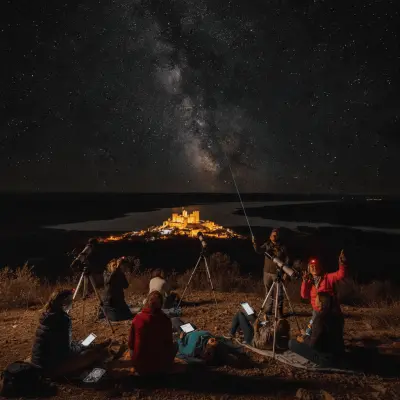
Monsaraz After Dark: Stargazing from Europe's First Dark Sky Reserve Village
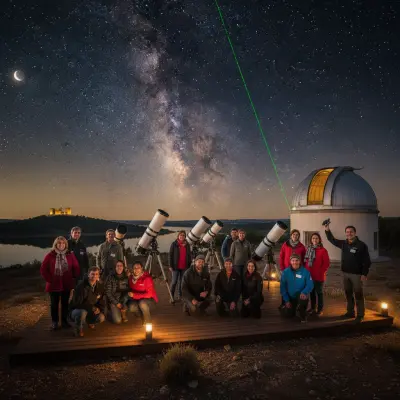
The Observatório do Lago Alqueva (OLA) runs 2.5-hour astronomical sessions in the world's first certified Starlight Tourism Destination, beside the medieval village of Monsaraz. Learn naked-eye star navigation and observe nebulae, galaxies, and planets through high-resolution telescopes under some of Europe's darkest skies.
The Sky That Defined a Region
In December 2011, the Alqueva region became the first place on Earth certified as a Starlight Tourism Destination by the Starlight Foundation, backed by UNESCO, the World Tourism Organization, and the Canary Islands Astrophysics Institute. The certification covers over 10,000 square kilometres across eleven Alentejo municipalities that deliberately dimmed their public street lighting to protect the natural darkness above the Great Lake Alqueva, the largest artificial lake in Europe. At the centre of this protected darkness, perched between a medieval castle and a river beach, sits the Observatório do Lago Alqueva, known as OLA.
OLA is the largest astronomical observatory in Portugal dedicated to public science outreach, and its placement is deliberate. Monsaraz, a village of fewer than 200 inhabitants balanced on a ridge above the lake, offers a near-360-degree horizon with negligible light interference. On clear nights, the Milky Way arches across the Alentejo sky with a clarity that most Europeans will never have witnessed from their home cities.
What Happens During an Astronomical Session
Sessions at OLA last approximately two and a half hours and unfold in distinct phases, each designed to progressively deepen your understanding of the night sky.
Indoor Introduction
The evening begins inside the observatory building, where guides set the context for that particular night's sky. They cover fundamental celestial mechanics, why constellations shift through the seasons, how Earth's rotation determines what's visible, and how to distinguish a planet from a star with the naked eye. During this portion, you can browse the permanent astrophotography exhibition by Miguel Claro, an internationally recognised astrophotographer whose work captures deep-sky objects visible from this exact location.
Naked-Eye Star Navigation
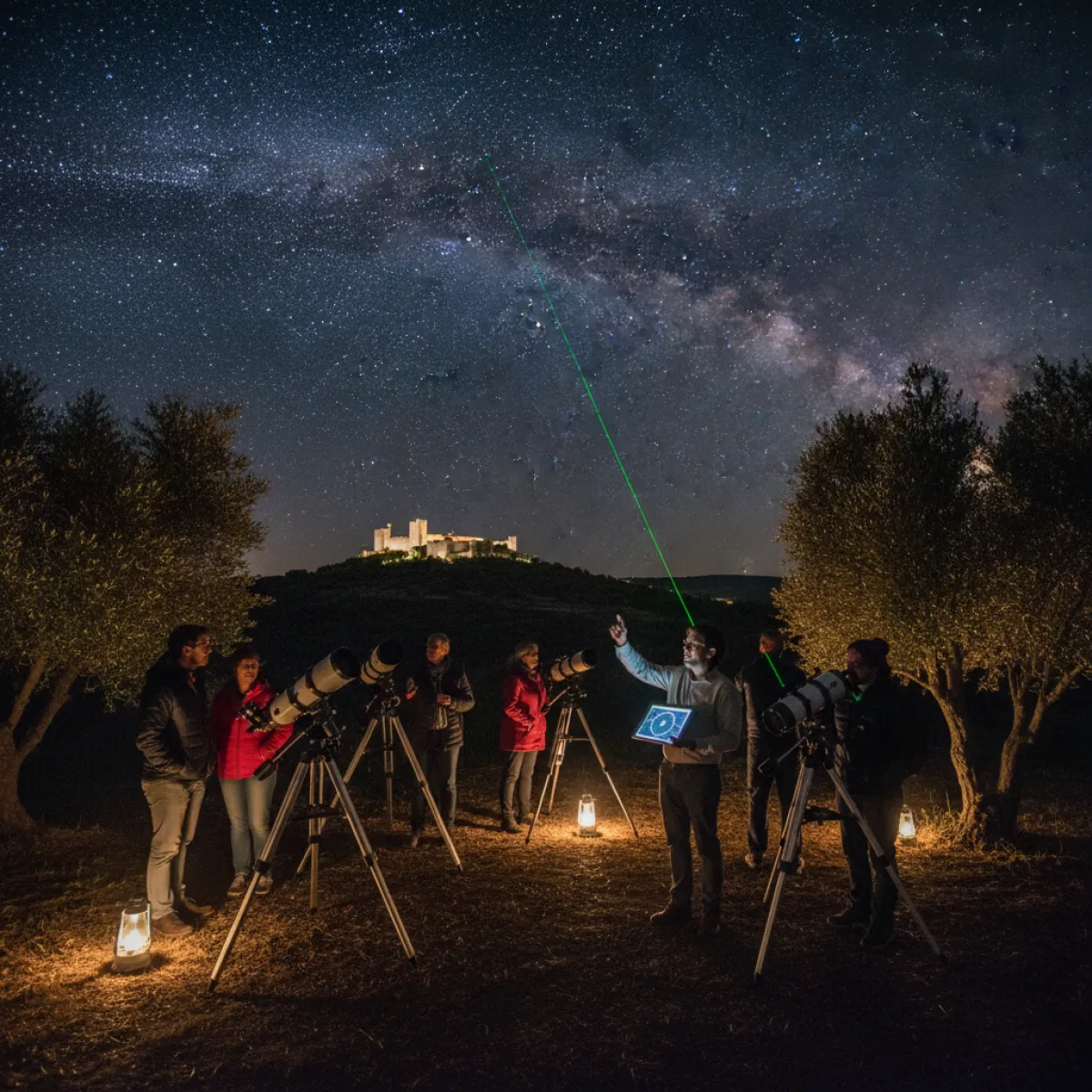
Outside, away from screens and artificial light, guides teach you to locate Polaris and use constellations as a navigational map. Using a green laser pointer, they trace the mythological figures drawn between the stars, Ursa Major, Cassiopeia, Orion in winter, Scorpius in summer. You learn the Arabic origins of the brightest stars' names and the relationship between a star's colour and its age: blue-white stars are young and hot, red stars are old and expanded.
Telescopic Observation
The final phase brings out OLA's high-resolution telescopes. Depending on the time of year and atmospheric conditions, expect to observe:
- Lunar craters and maria in startling detail (when the Moon is present)
- Saturn's rings and its brightest moons
- Jupiter's cloud bands and all four Galilean moons
- Star clusters such as the Pleiades and the Perseus Double Cluster
- Nebulae, stellar nurseries where gas and dust clouds collapse under their own gravity to form new stars
- The Andromeda Galaxy, 2.5 million light-years away, visible as a faint smudge that represents a trillion stars
The session also includes a walk through the scale model solar system built in the observatory's surroundings, a physical installation that makes the immense distances between planets tangible rather than abstract.
Practical Information and Booking
Pricing
- Adult: €15
- Youth (10-17 years): €9
- Family pack (maximum 2 adults + up to 4 members): €35
- Children under 4: free admission
- Saturday afternoon children's activities (ages 6-14): €4 per child
Schedule
Night sessions begin at 21:30 from March to October and at 18:30 from November to February. Advance booking is mandatory.
Contact and Reservations
Phone: +351 960 361 906
Email: geral@olagoalqueva.pt
Website: olagoalqueva.pt
Free cancellation up to 72 hours before your session. Subject to availability, tickets can also be purchased at the observatory reception on the day before or day of the session.
Getting There
The observatory is located between Monsaraz castle and the river beach, approximately two hours by car from Lisbon. Free parking is available on site. A rental car is strongly recommended, there is no reliable public transport to Monsaraz after dark, and the return journey on unlit Alentejo roads requires your own vehicle.
What to Wear and Bring
The Alentejo is a land of thermal extremes. Even after a day where temperatures exceeded 40°C in summer, nights cool dramatically, particularly near the lake. Plan accordingly:
- A warm jacket even in summer (temperatures can drop 15°C after sunset)
- Comfortable, closed-toe shoes for walking outdoors on uneven ground
- Personal binoculars, if you own them, useful for independently scanning the Milky Way between telescope turns
- Insect repellent during warmer months
- Avoid white-light torches; if you need a light source, use one with a red filter to preserve your night vision adaptation
When to Go
The Dark Sky Alqueva reserve enjoys roughly 280 cloudless nights per year, but not all nights are equal for observation:
- New moon phase: The best sessions fall around the new moon, when total darkness reveals fainter objects like distant nebulae and galaxies
- Summer (June-September): The Milky Way's galactic centre is visible, creating the most dramatic panorama. Shorter nights mean later session start times
- Winter (December-February): Orion commands the sky, and long nights allow earlier sessions. Dress warmly, Alentejo winters are damp and cold after dark
- Spring and autumn: The ideal balance, mild temperatures, sufficiently long nights, and good atmospheric transparency
Always check the weather forecast before confirming your booking. Clear Alentejo skies are frequent but not guaranteed, and the observatory will advise rescheduling if cloud cover is expected.
Beyond the Session
Monsaraz repays a visit before nightfall. The medieval village, whitewashed walls, schist streets, a castle with panoramic lake views, and a bullring built inside the town walls, deserves at least an hour's exploration. Several restaurants within the village serve Alentejo cooking: açordas, migas, slow-cooked lamb stews, paired with wines from the surrounding estates. For those who want to extend the experience, rural accommodation in the area frequently offers packages that combine lodging with astronomical observation at OLA.