Guarda: Best Viewpoints and When Light Behaves
In the highest city in Portugal, light keeps strict office hours, and anyone who shows up at two in the afternoon goes home unimpressed. This is the honest guide to Guarda's viewpoints, the right hours, and the only way to photograph it properly.
Here is the thing nobody tells you about photographing Guarda: at eleven in the morning, the light is a betrayal. It hammers down onto the granite of the Sé and flattens everything. Relief disappears, joints vanish, the cathedral turns into something out of a 1990s school textbook. If you came all the way up here, to the highest city in Portugal at 1056 metres, where it is fifteen degrees cooler than Lisbon, you came for an image worth the trip. This is a city you photograph early or late. Never in the middle.
I have been coming here for years, and the rule I learned is simple: arrive the night before, sleep inside the walls, wake up at half past six. The rest of this article is just the practical explanation of that sentence. Where to stand, when, in what weather, and what to do between the two windows of good light so you do not die of boredom. Guarda rewards anyone who understands its rhythm and punishes anyone who steps off a tour bus at two in the afternoon.
Sunrise at the Adro da Sé: the photograph everyone should have
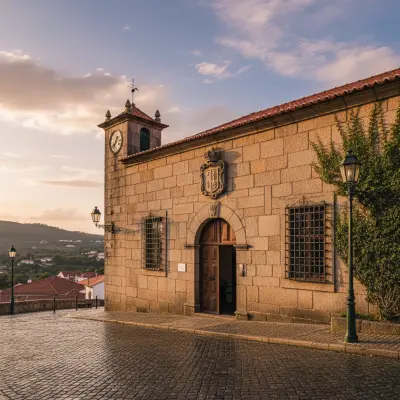
Start here. Always here. The Adro da Sé, the square in front of the cathedral, is the most obvious spot in the city, but most visitors see it at the wrong time. In the afternoon it is full of people, backpacks and harsh shadows. At sunrise, in winter between 7:45 and 8:15, in summer between 6:15 and 7:00, it is yours alone.
Here is what you need to know. The main facade of the Sé faces southwest. That means at sunrise it gets no direct light, sitting in soft shadow with that cool tone that makes granite look blue-grey. It is the best light this stone will ever receive. Stand at the southeast corner of the square, near the bronze statue of King Sancho I, and shoot the facade with a sliver of sky above. If there is fog, and Guarda has fog more often than you would expect, all the better. Mist softens the towers and adds depth.
Right after, cross to the opposite side and shoot the south door with the sun grazing across it. Now you want direct light, because the gothic relief on the side facade only comes alive when shadow draws it. This window lasts fifteen minutes. After that, it is too bright.
Torre de Menagem: the view that justifies the climb
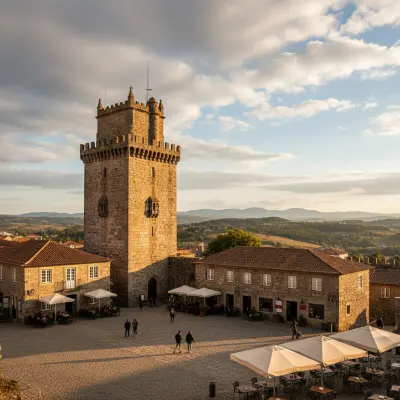
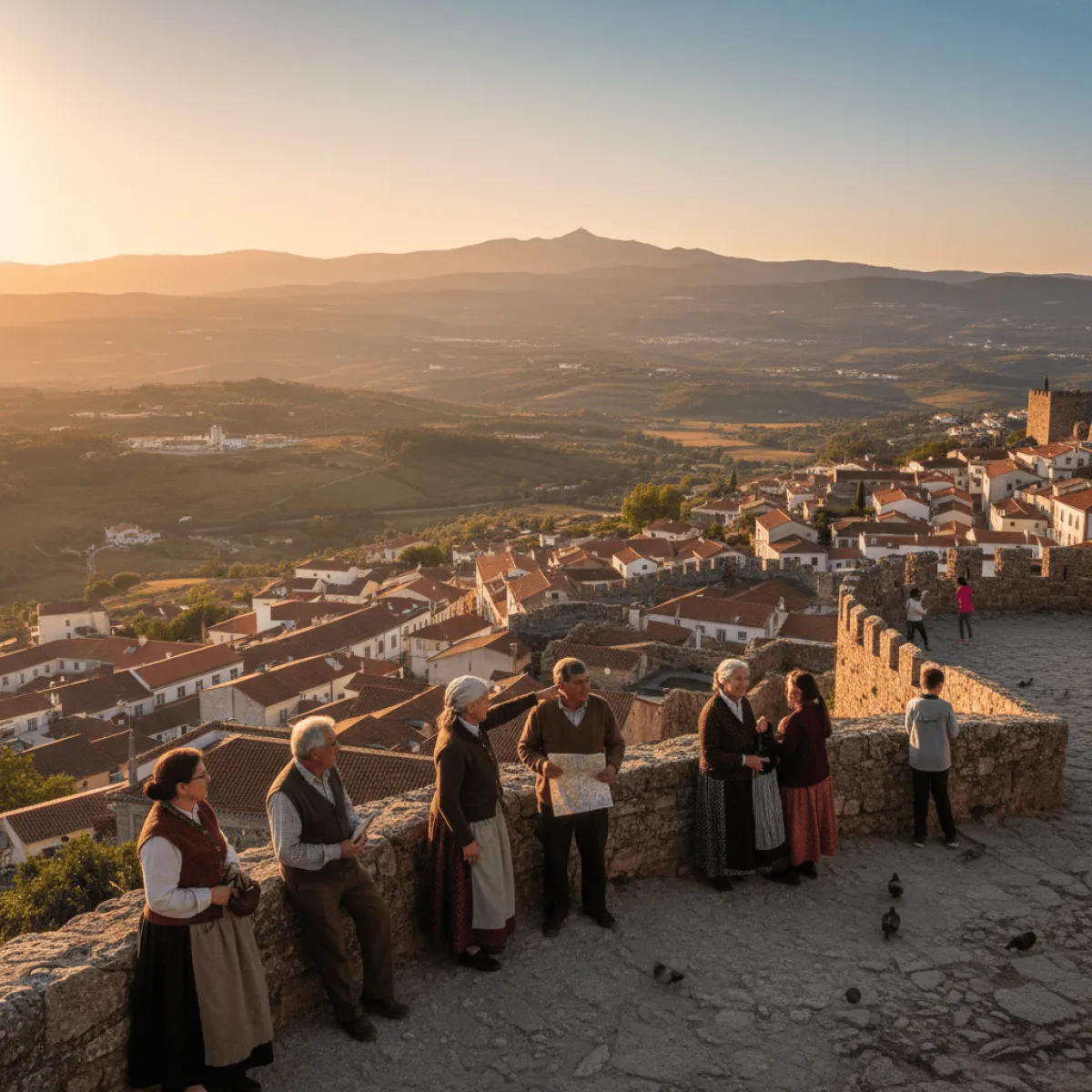
By mid morning, when the square is full of people eating croissants, climb the Torre de Menagem da Guarda. It is the highest point inside the walls, and the view is the honest postcard of the city: red tile roofs, the Sé framed on the left, and on a clear day the blue line of the Serra da Estrela in the distance.
Practical advice: check opening hours locally, the tower usually closes for lunch. Bring something between 24 and 50mm if you want city and mountain in the same frame. A 70-200 will isolate roof details and far ridges. The view works best looking northeast and north, which means in the early morning you get gentle backlight, while late afternoon flattens the scene from behind you and only serves for documentation. For pictures with character, go in the morning.
If you climb on a windy day, and you will, hold your phone tight. I have seen more than one go skydiving from up there.
Where to park and where to sleep so you wake up well
Boring logistics, necessary all the same. Park on Avenida Cidade de Salamanca, near Jardim José de Lemos, or in the paid lot facing the cathedral. Inside the walls, forget it. The streets are narrow and the residents are not amused.
For sleeping, there are three or four small hotels and guesthouses inside the old town. Doubles run between 60 and 90 euros outside high season. Refuse anywhere that is far from the centre. Getting up in the dark and driving twenty minutes to catch sunrise is the surest way to arrive at the Adro da Sé after the good light has gone.
Mid morning: filling time without losing energy
Between nine and eleven, the light is no longer good for landscapes, but it is excellent for interiors. This is the moment for the Museu da Guarda, housed in the former Bishop's Palace. Ignore anyone who tells you it is a minor museum. It is an honest place, with archaeology, sacred art, ethnography and arms collections, and it has the kind of natural light that makes detail shots look like a magazine spread. The stone corridors, the south windows, the dimly lit paintings that gain dignity when you photograph them from the side, it is all there.
If you want something more specific, walk across town to the Museu de Tecelagem dos Meios. This is the kind of place no one visits and everyone should. It shows how the cobertores de papa were and still are made: those thick blankets of pure wool that mountain shepherds used to sleep outdoors. For a photographer, it is a goldmine. Wooden looms, raw threads, hands at work, the contrast between white wool and dark timber. The light is dim, bring a camera that handles high ISO well.
If weaving genuinely interested you, you can extend the story and do it with your own hands. A few kilometres outside Guarda, in Maçainhas, there is The Art of Wool: Cobertor de Papa Weaving Workshop in Maçainhas, a half-day hands-on experience. It is the kind of thing that changes how you look at an old blanket. You will think twice before throwing one in a charity bag.
Lunch and the dead hour of light
Between 1pm and 4pm, photographically, forget about it. The light is vertical, hard, merciless. This is the hour to eat and to rest.
For lunch, be pragmatic. The tourist restaurants in the historic centre charge a lot for what they put on the plate. Locals eat in the small tascas on the side streets off Avenida Alfredo Nobre, outside the walls. Order whatever is on the handwritten daily menu. If you see bacalhau à Brás, bean and cabbage soup, or roast kid, you are fine. Expect to pay between 9 and 14 euros for soup, main course and a drink. If a weekday lunch menu costs more than 18, walk out and try the next door.
Drink the house wine. In this region it is almost always Beira Interior, and almost always better than you would expect. The queijo da Serra, the proper Serra da Estrela DOP, is at home here. Order it as a starter, at room temperature, with rye bread. You will understand why the entire mountain revolves around this object.
Leaving the city: the viewpoint nobody tells you about
If you have a car, and you should, do something most visitors do not. Drive out of town along the road to Póvoa do Mileu and continue south for about five kilometres. Halfway along there is a small turn to the right, with no clear sign, that climbs to a hill with a telecommunications tower. The spot itself is not pretty. The view is. From there you have the whole of Guarda set into the slope, seen from outside, with the Serra da Estrela as a backdrop.
Go in late afternoon, an hour before sunset. The light comes from the west, gilds the walls, cuts the cathedral tower against the sky. This is where you finally understand the shape of the city: how the buildings cling to the rock, how the walls trace its edge, why this place exists exactly where it does and not five kilometres further on.
Bring a tripod. At this hour you will want to close the aperture to keep the urban structure sharp, and shutter speeds will be slow.
Sunset on the walls
Get back into town in time for the actual sunset. The best position is the western wall, near Porta d'El Rei. The stone turns red, literally red, for about seven minutes. Then it fades fast. Stand with your back to the west and shoot the cathedral with the last light, or turn around and shoot south across the plain as it dissolves into haze.
Blue hour, the thirty minutes after sunset, is probably the most underrated moment to photograph Guarda. Streetlights come on, windows light up, the sky settles into that cobalt that makes any photograph look painted. Go back to the Adro da Sé. The lit cathedral against a cobalt sky is the photo everyone tries to take with a phone and ruins, but with a tripod and a two-second exposure it becomes memorable.
The next day: extending the trip into the mountains
If you have more than one day, and you should, head into the Serra. Do not drive up to the Torre at midday. That is everyone's mistake. Go south instead, to Folgosinho, a granite village about forty minutes from Guarda. Mindful Walking in the Serra da Estrela: Finding Stillness in Folgosinho is a good way to do it with a guide, but even on your own you can simply walk the marked trails leaving the village. The advantage is that you are at 1100 metres and the light here changes faster than anywhere on the coast. Fog rises from nothing, lifts, closes back in. For photography, it is a dream, provided you have warm clothing and patience.
For photographers travelling Portugal on a tight schedule, it is worth crossing this with the other honest pieces we have published. If you are planning a series through the centre and west, there are calm short walks in the honest guide to April walks around Caldas da Rainha. If you want a contrast with urban and human photography, in May Coimbra delivers it all at once in the Queima das Fitas guide. And if you combine photography with religious moment, the honest guide to Fátima on May 13th is where we explain what to look at and what not to photograph.
Gear: what to bring, what to leave at home
- A camera, any camera, even your phone, as long as you know what you are doing.
- A light tripod for blue hour and museum interiors, where allowed. Always ask before setting up.
- Two lenses: a 24-70 or equivalent, and a 70-200 for distant ridges.
- A serious jacket. Even in May, Guarda at six in the morning can be eight degrees.
- Decent shoes. The streets are granite polished by centuries, and when it rains they turn into a skating rink.
The short version, for those who only want the summary
- Sleep inside the walls, or at most a five-minute walk away.
- Sunrise at the Adro da Sé. Non-negotiable.
- Mid morning: Torre de Menagem or museums.
- Cheap lunch in local tascas, Serra da Estrela DOP cheese is mandatory.
- Leave town in the afternoon, viewpoint to the south to catch all of Guarda at sunset.
- Blue hour on the western walls, then the lit Adro da Sé.
Guarda is a small city, and anyone who knocks it off in two hours at midday goes home convinced it is not worth the trip. Whoever arrives the night before, sleeps well, wakes early and respects the rhythm of the light, walks away with images nobody else has. This city is not photogenic by accident. It is photogenic at very specific times. Honour them.