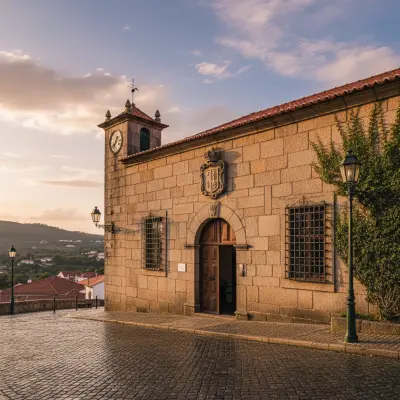
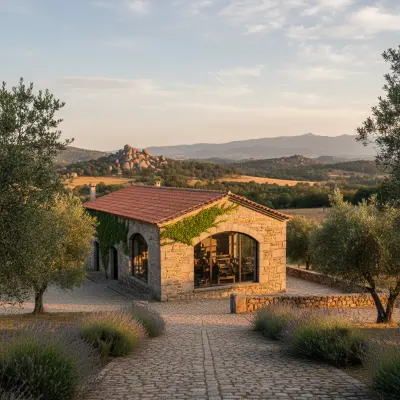
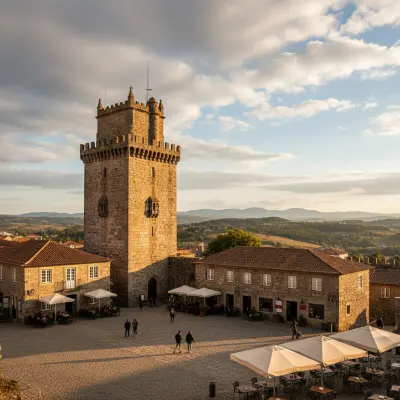
Guarda at the Table: Regional Dishes and Where to Find Them
In Portugal's highest city, eating is taken seriously: bucho recheado on Saturdays, runny Estrela cheese in January, and wood-oven kid goat that justifies a 24-hour order. An honest guide to what to order, what to skip, and how to leave Guarda without indigestion.
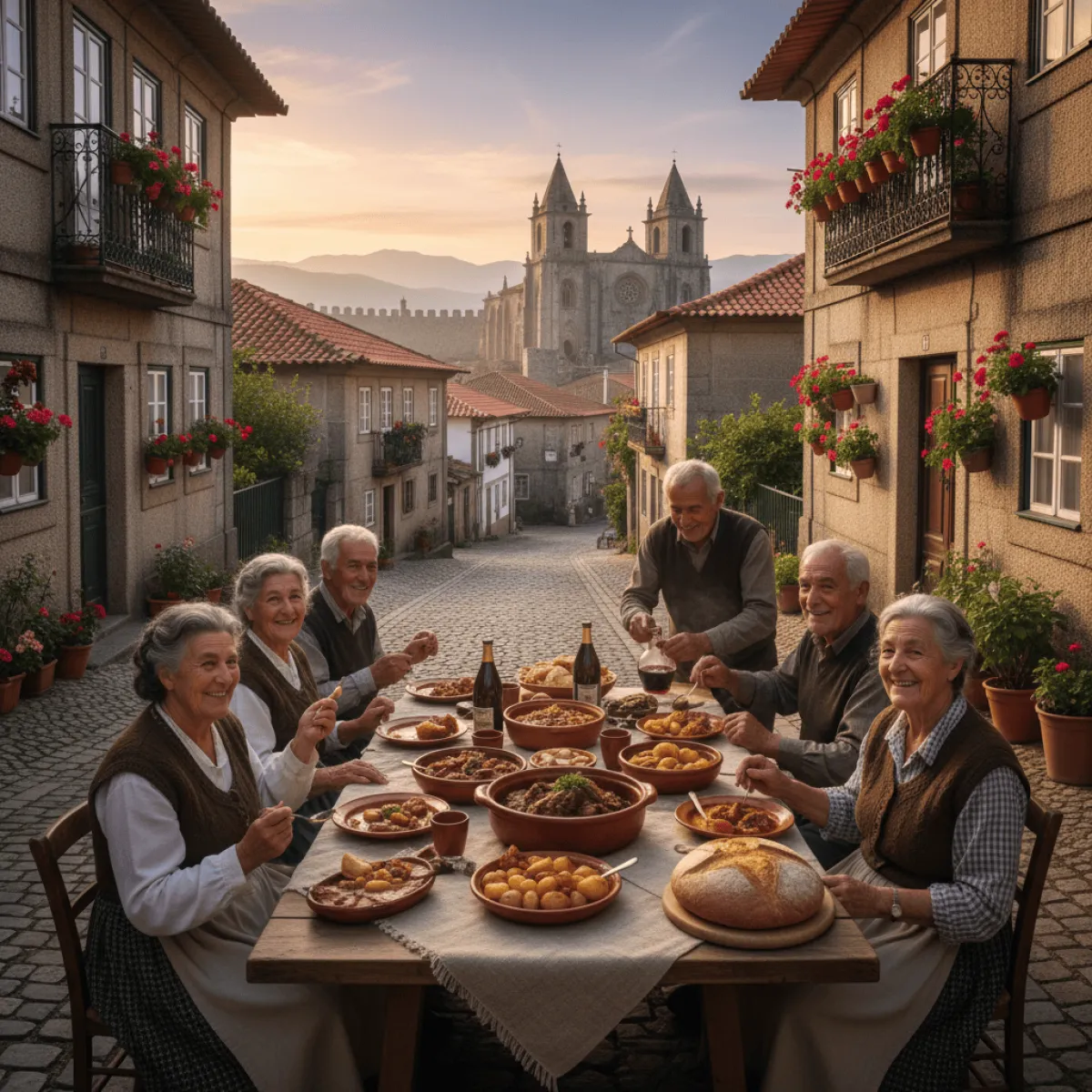
Guarda has a reputation for being cold, high, and austere. All three are true, and none of them explains why you eat so well up here. The altitude (1056 metres, the highest city in Portugal) does two things to food: it slows the curing of sausages and forces cooks to think about calories before they think about presentation. The result is an honest table, fatty when it needs to be, and entirely uninterested in pleasing visitors arriving from Lisbon in search of fusion.
This is not a list of award-winning restaurants. It is a route through the dishes that justify the trip up to the plateau, with concrete advice about what to order, what to ignore, and how to plan a day of eating in Guarda without leaving with indigestion or an empty wallet.
Starting point: what is Guarda food, anyway?
Guarda's cooking lives on a frontier. To the north it kisses the deep Beira Alta, to the east it pushes against Spain (Salamanca is closer than Porto), to the south it leans into the Serra da Estrela. Each direction left a mark. From the Estrela come the cheese and the butter. From Spain comes the tradition of well-done pig slaughter and the habit of reusing stale bread. From Beira come the beans, the cabbage, and the conviction that soup is a full meal, not a starter.
What sets Guarda's table apart from the Trás-os-Montes or the Alentejo tables is restraint with seasoning. There is no heavy red of Trás-os-Montes peppers, no Alentejan coriander. The cooking is quieter, more focused on the product: kid goat, lamb, salt cod, cured meats, cheese. Salt, garlic, bay, olive oil. Full stop.
Five dishes you have to try
1. Bucho recheado (or maranho, depending on who is cooking)
This is the most serious dish in the region and the one that most divides visitors. Lamb or kid stomach stuffed with the animal's own minced meat, rice, presunto, mint, and egg. Slow boiled, sliced at the table, eaten with bread and local red wine. It is not elegant. It is superb.
In some villages around Guarda it is called maranho, with variations in the filling. The rule: order it for Saturday lunch, which is when local restaurants tend to make it fresh. Asking for bucho on a Wednesday night is asking for yesterday's bucho.
2. Wood-oven roast kid goat
Beira kid is different from the Minho version. Here it is leaner, firmer, with a stronger flavour from high-altitude pasture. Order it roasted, with smashed potato and turnip greens. Expect to pay 22 to 28 euros per portion depending on the house, and whenever possible, order 24 hours in advance. Improvised kid is rarely good kid.
3. Bean soup with cabbage and cured sausage
It looks simple and it is the decisive test of any local kitchen. White beans, galega cabbage, chouriço, farinheira, the end-piece of presunto. If the soup is too thin, the place is not worth your time. If it is dense, fragrant, and the sausage falls apart at the first touch of the spoon, you are in the right room. It is the best possible opener before a serious lunch, and in many homes it replaces the main course altogether.
4. Bacalhau à Lagareiro
Yes, you can find this all over Portugal. But Guarda's version has a particular asset: the olive oil. The region receives oil from the lower slopes of the Beira Interior, usually galega or cordovil varieties, with medium bitterness and a present pepperiness. Poured over a thick loin of cod, with smashed potatoes and confit garlic, it is a dish that looks heavy and is not. Order a half portion at lunch, a full one at dinner.
5. Serra da Estrela DOP cheese, in the runny stage
Not a dish, a religion. Genuine Estrela cheese, made with raw milk from bordaleira or churra mondegueira sheep, curdled with cardoon flower (no industrial rennet), is one of the great cheeses of Europe. In Guarda, ask for it amanteigado, runny: cut the top with a spoon, scoop, serve over warm rye bread. Expect to pay 18 to 25 euros for a quality whole cheese, depending on the season. The cheeses from January to March are usually the best.
Honesty warning: many cheeses sold as "Estrela" are not. Look for the DOP seal, the numbered counter-label, and ask to taste before buying. Anyone who refuses to let you taste is hiding something.
Where to eat, in practice
I will not list specific restaurants with invented opening hours, because restaurants change hands, close, open, and there is nothing worse than an outdated guide. What I offer instead are principles:
- Avoid the tourist centre at lunch. The cathedral area has decent places, but tourist menus are expensive and average. Walk five minutes outside the walls, especially toward the train station or south, and prices drop 30% with no loss in quality.
- Sunday lunch is sacred. Book two days in advance. The best family-run places fill up with locals taking their parents out, and tourists who turn up without a reservation get the corner table and indifferent service.
- Tasca before restaurant. If you see a door with five tables, a cloth tablecloth, and a slate board with the day's dishes in chalk, walk in. You will almost always eat better for half the price.
- House wine, no apologies. The Beira Interior produces powerful reds (rufete, marufo, touriga nacional) that cost less per bottle than other DOC wines do per glass. Ask for the house red before asking for the wine list.
A day of eating in Guarda: a practical itinerary
Breakfast (until 9.30am)
Coffee with milk and a bola de berlim or pastel de feijão in a traditional café in the centre. Expect to pay 2.50 to 3.50 euros. If the bakery has a queue of pensioners at 8am, you have found the right one.
Mid-morning: culture before hunger sets in
Use the digestion window to visit the Museu da Guarda, which gives an honest framing to the city's and the region's history, including the pastoral tradition that sustains all of this cooking. Then climb the Torre de Menagem to understand, from above, why this has always been a frontier city, a city of soldiers, shepherds, people who needed to eat well to resist the cold.
Lunch (1pm to 3pm)
This is the main meal of the day, anywhere in the interior. Book ahead. Start with soup, order a meat dish (kid on Sundays, veal on Wednesdays, bucho on Saturdays), finish with runny cheese and a glass of juniper liqueur or aged aguardente. Expect to pay 25 to 35 euros per person, with house wine.
Afternoon: weaving and digestion
Walk. Seriously. After a lunch like that, sitting down is a mistake. The Museu de Tecelagem dos Meios shows a side of local culture that few visitors know, and one closely connected to the table: the same hands that wove the cobertor de papa to survive winter also seasoned the cured sausages to last the year. If you want to dig deeper, the cobertor de papa weaving workshop in Maçainhas is worth the detour: you learn more about the local rural economy in two hours at a loom than in any book.
Late afternoon: clean air
Guarda has the privilege of being on the doorstep of the Serra da Estrela. If the weather allows, take a short walk before dinner. The mindful walk in Folgosinho is a way to digest the kid goat without stress, and Folgosinho, being one of the best-preserved villages in the range, is itself a place where you can eat well if you time it right.
Dinner (from 8pm)
Here an unpopular tip: eat light. If you had bucho or kid for lunch, a serious dinner is technically impossible. Have cheese, presunto, broa bread, soup, and go to bed early. You will need your stomach for tomorrow's breakfast.
Cured meats: what to take home
If you go home from Guarda without cured meats, you have wasted half the trip. What to look for:
- Beira chouriço: leaner and spicier than the Trás-os-Montes version, excellent for grilling.
- Farinheira: the local version is denser, with more bread and less fat, perfect for soup.
- Rice morcela: different from the Alentejo version, darker, with a discreet hint of clove.
- Beira Alta presunto: it does not have the prestige of Barrancos or Chaves, but it costs half the price and, in well-cured pieces, sits at the same level. Ask for the end-piece (a ponta), which is the most flavourful part.
Buy in old grocery shops or at village markets on Saturday mornings, not in supermarkets. Expect to pay 18 to 30 euros per kilo of presunto, 8 to 12 euros per kilo of chouriço.
When to go, and why it changes everything
Guarda has a real gastronomic calendar, and ignoring it is wasting the trip.
- January to March: Estrela cheese at its peak. Cold weather. Kid goat. Wine that demands warming. My favourite season.
- April to June: Easter lamb, wild asparagus, the first cherries from nearby Fundão. Clean air, long days, ideal for combining table and walking.
- July and August: avoid the centre at lunch. Eat at night, outside the city, in serra villages.
- October and November: traditional pig slaughters in some villages, chestnuts, mushrooms, new wine. Another excellent season.
If you are planning a longer trip through central Portugal, Guarda pairs well with other destinations in the region. Anyone wanting to balance the interior with the coast can read our honest guide to April walks around Caldas da Rainha. If the trip falls in May and Coimbra is on the route, do not skip Queima das Fitas, which has a street food culture of its own. And for those combining pilgrimage and the table, our honest guide to the May 13th Fátima pilgrimage has practical tips for eating among millions of people without starving.
What NOT to eat in Guarda
To be honest to the end:
- Seafood. We are 200km from the sea. If you order garlic prawns, you deserve what you get.
- Sushi. It exists, but why?
- "Daily specials" in tourist zones with laminated photos. A universal rule, particularly valid here.
- Out-of-season Estrela cheese without tasting first. In July and August, plenty of "Estrela" cheese is frozen and thawed. Always taste before you buy.
The price of honesty
Eating well in Guarda for 24 hours, with a serious lunch and cheese and cured meats to take home, costs between 60 and 90 euros per person. That is cheap for the quality. It is expensive if you start factoring in the cost of eating one kid goat per week for the rest of your life, which, after tasting the Beira version, is not a ridiculous idea.
Guarda is not a city for weekend gastronomes hunting Michelin stars. It is a city for people who understand that eating is part of the trip, not a separate event. Climb up to the plateau with time, with hunger, and with the patience of someone who knows that the best kid goat of the year is probably being slowly cooked somewhere right now, waiting for someone to know it is coming.