Batalha by the Hour: Viewpoints and the Right Light
Everyone photographs the Monastery of Batalha at noon and ends up with a forgettable postcard. This guide tells you when to climb to the viewpoints, where to catch the honey-coloured light, and where to eat between shots.
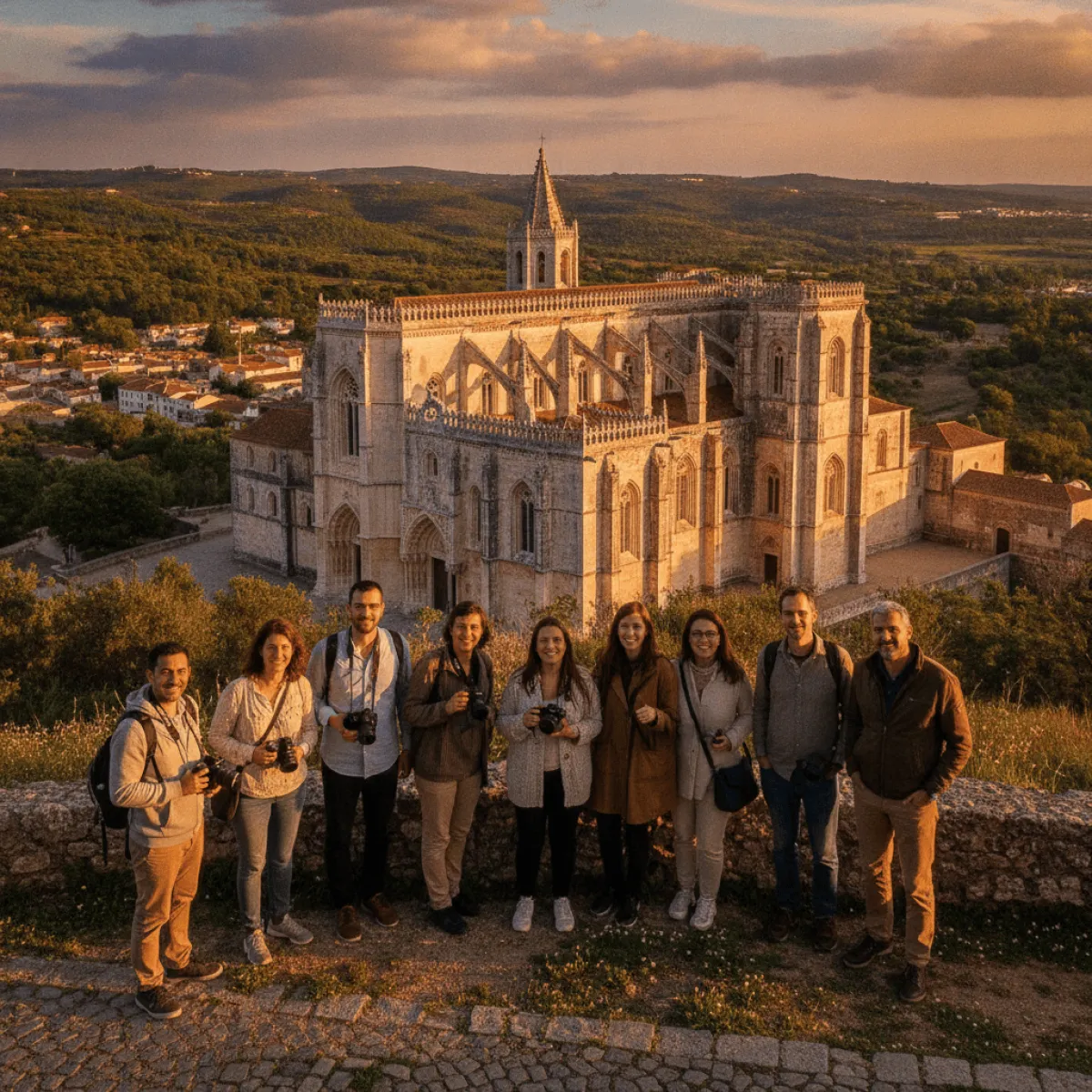
Everyone photographs the Monastery of Batalha the same way: head-on, mid-afternoon, sun blasting the facade like a stadium floodlight. The result is a correct, completely forgettable postcard, identical to ten thousand others. The problem isn't the monument, which is one of the most spectacular Gothic cathedrals in Europe and earns every bit of praise. The problem is the hour. Batalha's limestone changes colour with the light, and anyone who only shows up at noon has never really seen it.
This guide is for people who want more than the noon shot. I'll tell you where to climb, at what hour, and what to eat between photographs, because nobody chases light well on an empty stomach.
The golden rule: limestone loves low light
Before the spots, a quick bit of theory. It lasts two paragraphs and then we go outside. The Monastery of Batalha is built from local limestone, a pale stone that turns almost golden when the light is raking and low. At noon, with the sun overhead, that stone goes flat and white, with no relief. The pinnacles, the gargoyles, the stone lacework of the Unfinished Chapels: all of it vanishes into a washed-out glare.
The light that matters is at the very start and very end of the day. Early morning, the sun rises in the east and lights the main facade and the front portal, throwing long shadows that draw out every Gothic detail. Late afternoon, the light comes from the west and sets the Unfinished Chapels alight from behind, turning the limestone somewhere between honey and copper. If you can only pick one hour, pick the golden hour, those forty minutes before sunset when everything looks good.
Morning: the monastery all to yourself
There's a bonus to rising early in Batalha that has nothing to do with light: at eight in the morning, the square in front of the monastery is empty. No tour coaches, no flag-led groups, nobody wandering into your frame. You have the whole monument to yourself and your tripod. In June the sun rises around half past six, so between seven and half past eight the facade glows with perfect side light. Bring a takeaway coffee, because at this hour the town's pastry shops have barely opened their doors.
Miradouro da Portela das Cruzes: the wide shot
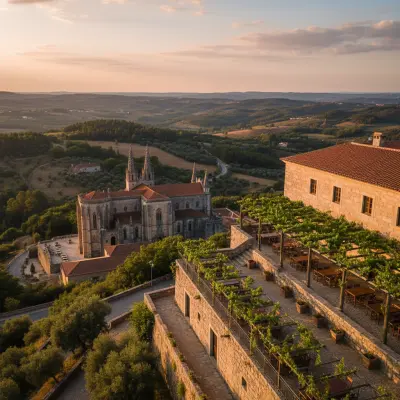
Photographing the monastery up close is mandatory, but the shot nobody has is the whole composition: the monastery sitting in the town, the town sitting in the valley, the hills behind. For that, you climb. The Miradouro da Portela das Cruzes gives you that broad framing, with the rooftops sliding down towards the monument and the fields opening up to the horizon.
The best hour here is late afternoon, when the sun is behind you and lights the whole town from the front. The raking light gives texture to the roofs, separates the planes, and removes that flat effect panoramic shots usually suffer. Bring a longer lens, anything from 50mm on full frame upwards, to compress the monastery against the background and make it look bigger than it appears from a distance. With a wide angle, the monument shrinks to a stamp lost in the landscape.
If you're a sunrise photographer, this viewpoint works in reverse: in the morning the town falls into backlight, often with a low mist common in the valleys of central Portugal from autumn to spring. It isn't the descriptive shot, it's the atmospheric one, silhouettes and bands of haze. Both scenes are worth it, at opposite hours.
Baloiço da Torre (Barrozinha): the shot with a person in it
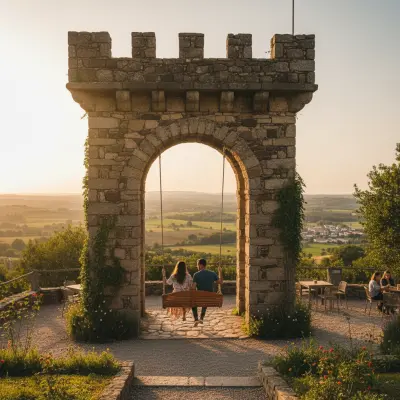
Not every photograph is of old stone. The Baloiço da Torre, in Barrozinha, is the Instagram version of the thing, and I say that with no contempt at all. It's a wooden swing planted on a high point, facing the landscape, built precisely for the picture where someone swings out over the valley below. There's a certain laziness to the swings that have sprouted all over Portugal, but this one has the location to justify it.
The hour here is clearly late afternoon, with the western sunset cutting the figure on the swing against an orange sky. This is the backlit photograph par excellence: expose for the sky, let the person fall into silhouette, and no one needs to worry about their hair. If you want the face lit, bring a small reflector or have someone hold a phone with the torch on, but honestly the silhouette is prettier.
Practical warning: these spots have no opening hours and no ticket office, but they also have very little parking. Arrive early on a fine weekend, because the swing only holds one person at a time and the queue of people wanting the same shot can wear your patience thin. And take your rubbish with you, which sounds obvious and apparently isn't.
The weather trick
The worst thing that can happen to a light chaser is a completely clear sky. It sounds odd, but perfect blue gives a dull, colourless sunset: the sun drops, vanishes, and that's that. The best skies have a few high clouds for the sun to set on fire. Learn to read the forecast: days with scattered cloud, especially after a front passes through, are the ones that deliver that explosion of pink and orange. A sky choked with thick fog gives you nothing. Check the forecast the night before and keep a plan B.
Plan B is called lunch (and dinner)
Chasing light has one flaw: it leaves you with dead hours in the middle of the day, exactly when nothing is worth photographing. That's when you eat well. For lunch, book a table at Restaurante Dom Duarte, a short walk from the monastery. It's honest Portuguese cooking, the kind that fills you up without trickery, perfect for recharging between the morning session and the late-afternoon one. Order a meat dish or the bacalhau, eat slowly, and use the time to review the morning's frames on a laptop screen if you brought one.
Batalha sits in the heart of central Portugal, so the table tends to be generous and unfussy. Don't come looking for haute cuisine plated with tweezers. Come for the soup, the bread, the plate that arrives piled high. It's exactly the right fuel for a day spent on your feet staring at the sky.
When the light is gone: other things to do
Between the morning session and the late-afternoon one you've got six or seven hours to fill. Eating takes two. For the rest, Batalha offers more than the monument. If photography brought you here for the stone, it makes sense to understand how that stone was worked. The stonemason marks workshop at the MCCB shows you the symbols medieval masons carved into the blocks to mark their work, and once you've done it you'll start spotting them all over the monastery facade. It's the kind of detail that changes how you shoot: you stop capturing walls and start capturing the signatures of the people who raised them.
If the day has been long and your feet are heavy, the spa retreat at Hotel Villa Batalha is the obvious reward. A session of water and heat between lunch and sunset puts you back in shape for the golden hour. Shooting well takes patience, and patience takes a body that isn't complaining.
Stretching the trip: the light doesn't end in Batalha
Batalha doesn't sit alone in a field. It's half an hour from Fátima, and if your visit coincides with the great pilgrimages, the light and the crowd create a photographic scene of another scale entirely. It's worth reading our honest guide to the Fátima pilgrimage on May 13th before you point a camera there, because photographing faith comes with its own common-sense rules.
Further south, in the same region, Caldas da Rainha offers walking trails that make for lovely spring photographs, with green hills and the soft light of April. Our guide to April walks around Caldas da Rainha maps the routes and the right hours. And if you want a dose of human colour and energy instead of stone and landscape, Coimbra's Queima das Fitas is the exact opposite of Batalha's serenity: black capes, coloured ribbons, and the light of a night-time festival. Three hours by car separate the silence of the monastery from the festive chaos of Coimbra, and the contrast makes a whole photo essay.
The summary, for those who only read the headings
- Monastery facade: between 7am and 8.30am in summer, side light and an empty square.
- Unfinished Chapels: late afternoon, when the western sun lights the stone from behind.
- Miradouro da Portela das Cruzes: late afternoon for the descriptive town shot, or dawn for silhouettes in the mist.
- Barrozinha swing: sunset, backlit shot, arrive early on weekends.
- Lunch: Restaurante Dom Duarte, hearty Portuguese cooking, near the monastery.
- Dead hours: the stonemason workshop at the MCCB or the spa at Hotel Villa Batalha.
Batalha rewards anyone patient enough to wait for the right light. Anybody can get the noon shot. The shot worth having asks you to rise early, eat well at midday, and return to the monastery once the coaches have left and the stone turns the colour of honey. Bring a tripod, bring a jacket for the cool morning, and don't rush. The limestone has been there for six centuries. It can wait another forty minutes for you.