Batalha and the Sea: Watch, Learn, or Surf
You do not surf in Batalha, and thank goodness for that. Twenty minutes from Nazaré's monster and half an hour from the gentle waves of São Pedro de Moel, the town is the perfect base camp for a week of sea: sleep in silence, pay less, and choose each morning between learning or just watching giants break on the cliff.
Let us be honest from the first sentence: you do not surf in Batalha. The town sits a good twenty kilometres from the Atlantic, built around a Gothic monastery that has never seen a wave in its life. Looking for a board here is like looking for snow in Lisbon. And yet there is a very concrete reason to make Batalha your base camp for a week of sea: it sits almost dead centre of everything that matters on the Leiria coast, you pay less to sleep, you sleep in silence, and you are half an hour from some of the most serious waves on the planet.
So this is a guide for people who want the sea but refuse to pay seafront prices. For those who would rather wake to the monastery bell than to a noisy promenade, drink their coffee on a quiet terrace, and only then get in the car and point it at the cliffs. I will tell you where to watch the big waves, where to learn without hurting yourself, and where to come back at the end of the day with salt on your skin and a real appetite.
Nazaré: going to see the monster (and when)
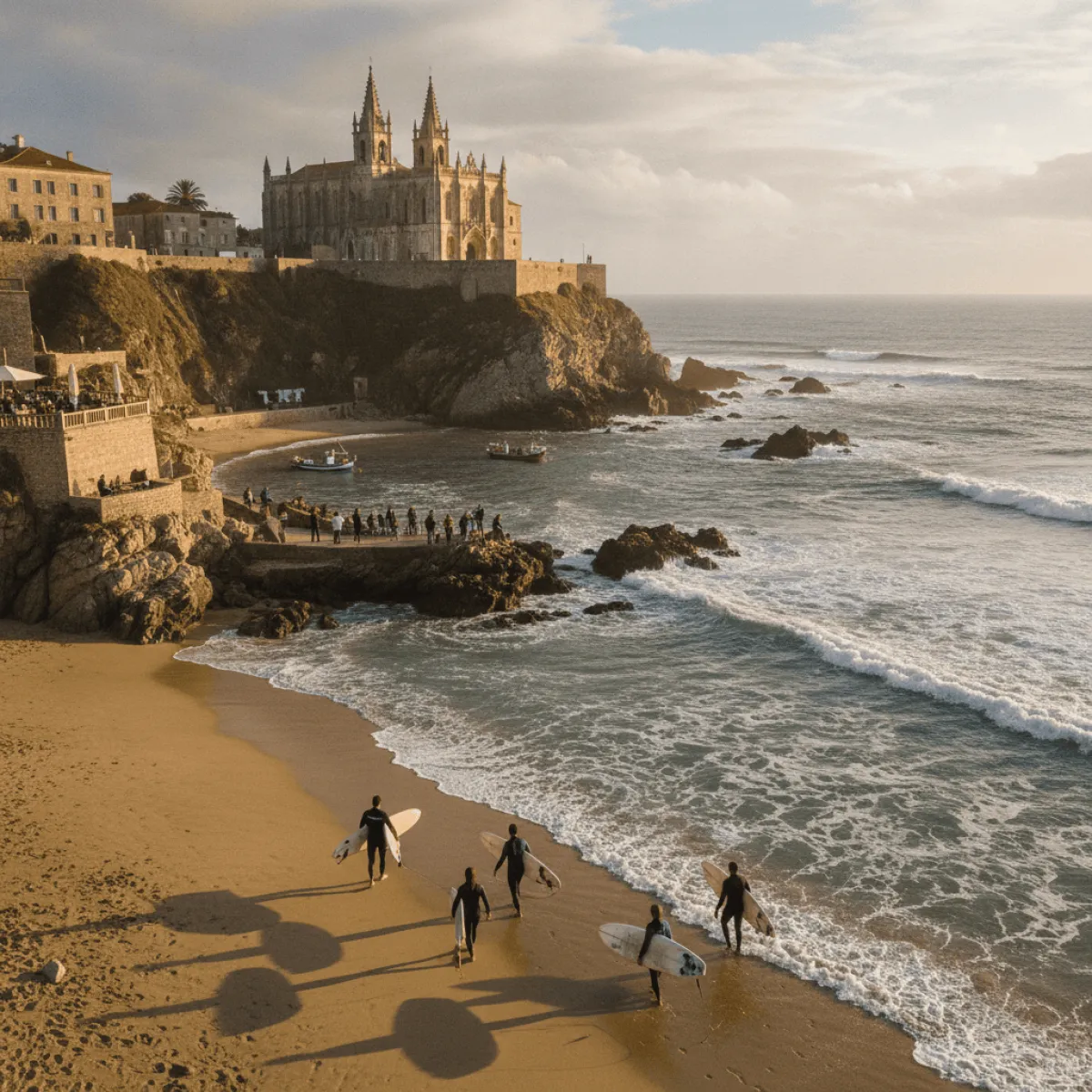
Start with the obvious, because the obvious here is genuinely extraordinary. Praia do Norte, in Nazaré, is where Garrett McNamara entered the history books in 2011 with a wave of roughly 23 metres and changed Portugal's relationship with the ocean forever. The trick is not magic, it is geology. The Nazaré Canyon, an underwater fault more than five kilometres deep, funnels the energy of North Atlantic swells and spits it against the beach as walls of water that look like apartment blocks.
The viewing point is the Forte de São Miguel Arcanjo, the red lighthouse perched on the cliff, now home to a small surf museum. Entry is cheap, a few euros, but check opening hours locally out of season. And here is the advice nobody puts in the brochures: the giant waves are a winter phenomenon. Between October and March, with the right swell, you get the spectacle. In July, with a flat sea and tourists in flip-flops, you get a handsome cliff and a photogenic lighthouse, but the monster is asleep. If you come in summer chasing adrenaline, adjust your expectations.
From Nazaré back to Batalha is about twenty minutes by car on the A8, or on the national roads, which are prettier. Ride up to Sítio da Nazaré on the historic funicular, an inclined tram that has been climbing the cliff since 1889, before walking down to the fort. It is the best way to grasp the vertical scale of the place.
Where to learn without breaking anything
Praia do Norte is for professionals and lunatics. It is not for you in your first week, and thank goodness for that. The learning waves are elsewhere, on gentler, more organised beaches.
The logical choice from Batalha is São Pedro de Moel, about half an hour away through the Pinhal de Leiria forest. It is a small, tree-shaded seaside village with a beach tucked between cliffs that shelter it from the north wind. The waves are more civilised and surf schools operate in high season. A beginner group lesson runs around 30 to 40 euros with gear included, but confirm prices directly with the schools, since they change from year to year.
Further south, Praia da Vieira and Praia do Pedrógão offer wide beaches and consistent swell, good for anyone who can already stand up and wants to practise without the crowds. These are beaches for Portuguese families, not for Instagram, which in my book is a compliment. Bring loose change for the car park and do not count on cards everywhere.
The beginner's golden rule
- Go early: the wind picks up mid-morning and ruins the wave.
- Respect the lifeguard flags. The Atlantic here has currents and rip channels that do not forgive a wandering mind.
- Wetsuit all year. The water off Leiria rarely climbs above 18 degrees, even in August.
- If the school tells you the sea is too big for your lesson, believe them and go watch the cliffs instead.
Just to watch: the cliffs and the viewpoints
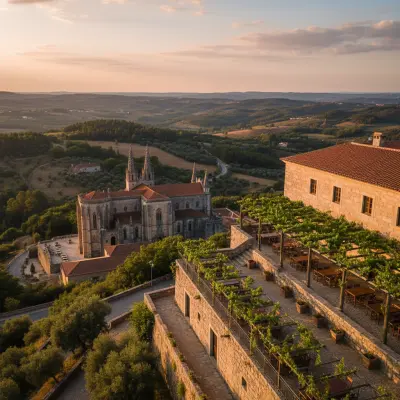
Not everyone wants to get wet, and there is a legitimate art to simply watching the sea break against the rock with a coffee in hand. But save a few hours for Batalha's own viewpoints, which look inland at the green country rather than the water, and make a perfect counterpoint to the blue of the day before.
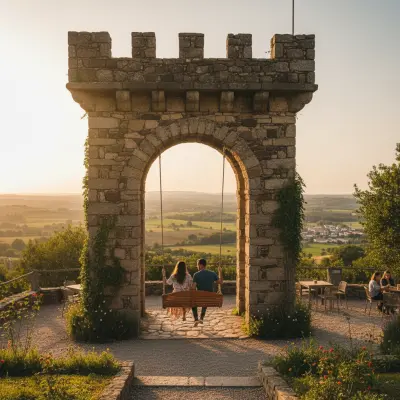
The Miradouro da Portela das Cruzes gives you the hills, the pine forests, and on clear days a real sense of the geography that separates the town from the ocean. For something more playful and photogenic, the swing at Torre, in Barrozinha, is exactly the kind of stop you make in late afternoon, after the beach, when the light turns golden and nobody is in a hurry. It is not the sea, but it is the best inland counterpoint Batalha has to offer.
Where to eat when you come back hungry from surfing
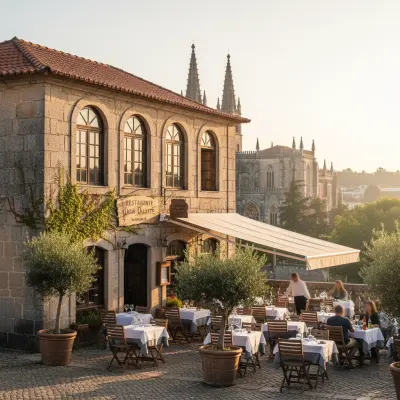
There is a specific hunger that comes from the sea, salty and impatient, and it is not solved by a service-station sandwich. Back in Batalha, the Restaurante Dom Duarte is the safe bet for an honest Portuguese meal, the kind that puts back what the Atlantic took out. Ask for the dish of the day, drink a regional red, and feel no shame about the dessert: an afternoon in the water justifies everything.
On the coast itself, in Nazaré, the temptation is fish and seafood by the sea. A friendly warning: the most touristy terraces on the avenue charge a lot and do not always deliver. Look for the neighbourhood places, one street back, where the fishermen eat. Try the caldeirada fish stew or simple grilled fish, which is where Nazaré genuinely shines. The women in seven skirts drying fish in the sun on the sand are not folklore for tourists: that tradition is real.
The rest day: when the sea says no
There is always that day when the forecast is bad, the wind is wrong, and the sea turns angry and dangerous. Do not force it. That is precisely the point of being based in Batalha, where the land programme is strong enough to rescue any day.
After a week of paddle-sore shoulders, the best antidote is warm water instead of cold. The spa retreat at Hotel Villa Batalha is the place for a serious afternoon of recovery, with an indoor pool and treatments that make your muscles forgive you for the wipeouts. It is the exact opposite of a cold wetsuit, which is exactly why it works so well.
If you would rather occupy your hands and your head, the stonemason marks workshop at the MCCB is worth your time, showing how the stones of the monastery that made this town famous were carved. It is a tactile experience of chisel and limestone that gives new meaning to the hours you will spend staring at the Gothic facade.
And if you want to stretch the trip beyond Leiria, there is fertile ground all around. For walking with the sea at a distance and thermal spas nearby, our honest guide to walks around Caldas da Rainha takes you to the Óbidos Lagoon and Foz do Arelho, where the calm lagoon is the ideal spot to try stand-up paddle when the ocean is too rough. Further inland, the pilgrimage to Fátima on May 13th is another face of this region, a mere fifteen minutes from Batalha. And if your week happens to fall in May, the student energy of Coimbra's Queima das Fitas is less than an hour north, for anyone who wants to swap salt for a party.
Honest logistics: how to build the week
Without a car, forget it. The Leiria coast was not designed for people who depend on public transport, and the bus schedules between Batalha and the beaches are built for residents, not for surfers carrying boards. Rent a car in Leiria or at Lisbon airport, which is just over an hour away by motorway.
- Where to sleep: Batalha has cheaper lodging than the Nazaré or São Pedro de Moel seafront, especially in summer. Pay half and drive twenty minutes.
- When to see big waves: October to March, at Praia do Norte. Follow the swell forecasts before you go.
- When to learn: May to September, at São Pedro de Moel, Vieira or Pedrógão, with gentler water.
- What it costs: a group lesson between 30 and 40 euros, entry to the Nazaré fort a few euros, and the funicular a symbolic fare. Confirm everything locally out of season.
The charm of Batalha is not pretending to be a surf town. It is admitting that it is not, and turning that to your advantage. You sleep on solid ground, eat well and cheaply, recover in a spa when your body asks for it, and in the morning you are twenty minutes from choosing between learning on a gentle beach or watching giants from a cliff. Few places in Portugal give you that luxury of choice. The sea is right there. It is just not at your door, and maybe that is exactly why it is worth it.