Batalha on a Budget: Monastery, Viewpoints, and Soup
The monument with the priciest ticket is ironically the one you least need to pay for to enjoy. From the honey-coloured facade to sunset on the Baloiço swing, here is how to do Batalha for almost nothing without missing a thing.
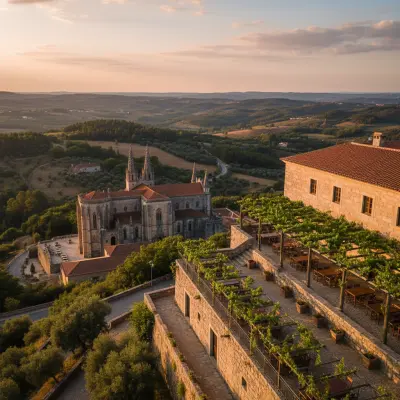
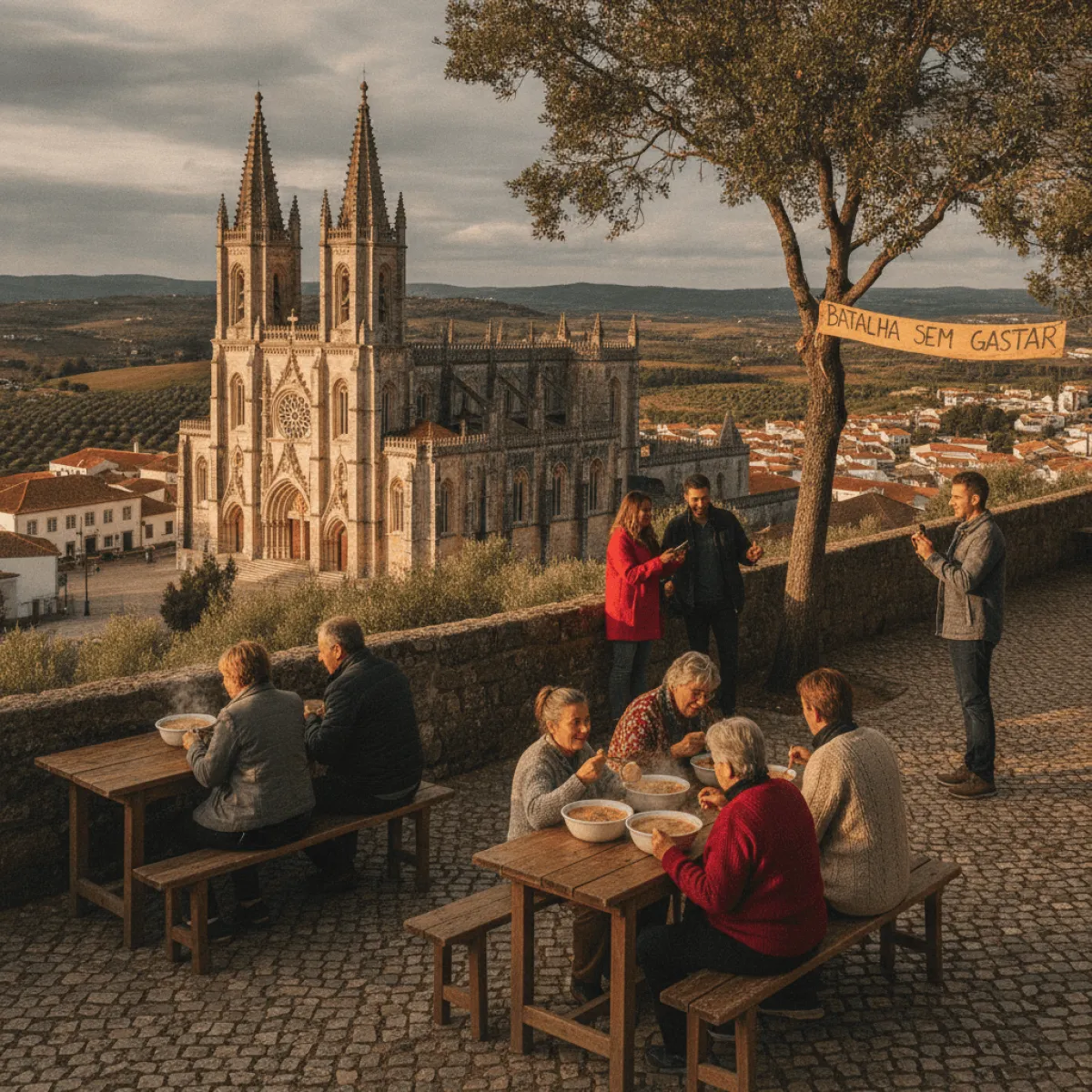
Here is something nobody tells you about Batalha: the monument you came to see, that wall of carved limestone that looks like giant stone lace catching the afternoon light, is free from the outside. And the outside is where Batalha is at its best. The Monastery of Batalha, officially the Monastery of Santa Maria da Vitória, was commissioned by King João I after the 1385 Battle of Aljubarrota and took roughly two centuries to reach the shape we see today. You pay to go inside the Unfinished Chapels and the royal cloister, and it is worth it, but if money is tight, sit on the Largo Infante Dom Henrique at the end of the day and just look. The facade faces west. The stone turns the colour of honey. It costs nothing.
This article is for anyone who wants to do Batalha without sending their wallet into a panic, and still leave feeling they saw the essentials. Spoiler: it works perfectly. The town is small, you cover it on foot, and most of what matters here, the viewpoints, the walks, the spectacle of the monastery itself from outside, has no entrance fee.
First, understand the geography (and save on transport)
Batalha sits in the centre of the country, about 15 minutes from Leiria and 20 from Fátima. If you are coming by train, forget it: there is no direct line. The cheapest route is a Rede Expressos or regional bus to Leiria and then a local bus to Batalha, or simply driving and parking. And here is the first real money tip: do not pay for parking near the centre. There are free spaces a few minutes' walk from the monastery, especially as you move away from the main square. Check the signs locally, but the rule is simple: the further from the facade, the more likely it is free.
The town itself can be done in a morning. The trick is not to treat it as a half-hour stop on the way to Fátima or Nazaré, which is exactly what most coach tours do. Stay. Have lunch. Climb to a viewpoint. That is when Batalha stops being a photograph and becomes a place.
The monastery: what to pay for and what is free
Let us be honest about the ticket. Going inside gives you the Royal Cloister, the Chapter House with the tomb of the Unknown Soldier, and the famous Unfinished Chapels, that open-air octagon left incomplete when the money and the will of later kings drifted off to Lisbon. It is one of the strangest and most beautiful Gothic spaces in Portugal precisely because it is unfinished: you see the arches caught mid-gesture, ambition frozen in place. If you only pay one entrance fee on the whole trip, pay this one.
But there are tricks. On Sundays and public holidays, many Portuguese national monuments offer free entry until midday for residents, check locally because rules change. Students, young people and seniors get discounts. And the monastery church, the main nave, usually has free access separate from the paid museum section. Step in, look up at the vaulting, listen to the silence broken only by footsteps on the flagstones, and walk out without spending a cent.
Where to eat without wrecking the day
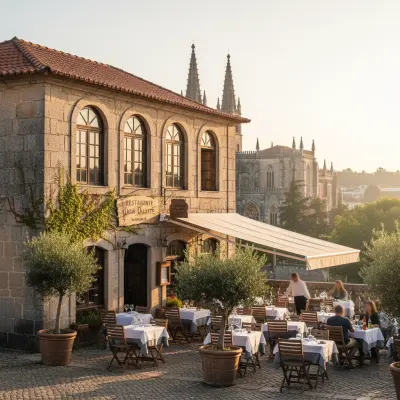
The food around here is working food: honest portions, fair prices, no theatre. The best advice I can give you is to flee the terraces that look straight onto the monastery facade, where you pay rent on the view in the price of the dish, and eat where the people who work here eat. Restaurante Dom Duarte is exactly that kind of place: unpretentious regional cooking, the sort that fills your plate and leaves you with change. Order the dish of the day, ask for a soup to start, and drink the house water rather than a soft drink. A full set lunch in this region usually costs well below what you would pay for a plate of tourist tapas in Lisbon.
General rule for eating cheaply in central Portugal: the lunchtime set menu is almost always the best value, often including soup, a main, a drink and coffee. Dinner prices climb and kitchens in the town close early, around 9pm. Plan your big meal for midday.
And if you really want to save one day: buy fresh bread, mountain cheese, fruit and a tin or two from a grocer or the local mini-market, and have a picnic. Because the place to do it is, without question, up high.
The viewpoints: the best part costs zero euros
Here is the secret that separates the people who only saw the monastery from the people who actually saw Batalha. Climb to the Miradouro da Portela das Cruzes. From here the whole town lies at your feet, the monastery looking small below and the valley opening out in green. It is the place to grasp the scale of what you just visited. Bring the picnic, bring a bottle of water, and stay for sunset. No ticket office. No opening hours. Just you and the landscape.
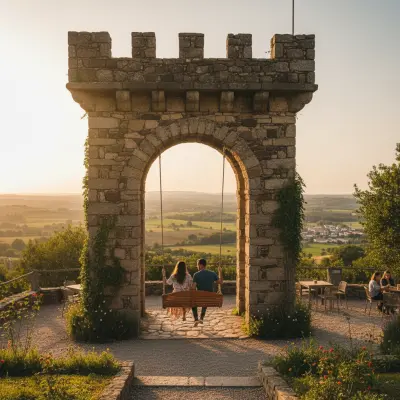
Then, for the photo you will want to show everyone, head to the Baloiço da Torre swing at Barrozinha. Yes, it is a swing with a view, and yes, it is a Portuguese Instagram classic, but there is a reason for that: swinging out over the valley with the horizon opening ahead of you is genuinely fun and entirely free. Go early in the morning or late afternoon to dodge the queue and catch the good light. Wear walking shoes, because the access is by dirt track and footpath.
These two spots alone justify staying the whole afternoon. Combine them with a bottle of table wine you bought for three euros and you have the best romantic or friends' outing in the region for under ten euros for two.
Cheap culture: stone that tells stories
If the monastery left you curious about how all that stone gets carved, there is one experience worth the money precisely because it gives you something no audio guide can: dirty hands. The stonemason marks workshop at the MCCB, the museum of the Batalha community, teaches you to read the symbols medieval masons carved into the stone to mark their work, and to chisel your own. It is educational, tactile, and the kind of thing that turns a monastery visit from "how pretty" into "now I understand". The MCCB itself is a modern, affordable museum, an excellent plan B if the weather turns to rain, which around Leiria happens more than people admit.
Controlled luxury: one single treat
The philosophy of budget travel is not suffering. It is choosing where you spend. If you decide you deserve one moment of comfort, instead of diluting it across twenty expensive coffees, concentrate it. The spa retreat at Hotel Villa Batalha is the way to do that: indoor pool, Turkish bath, a few hours of calm after a day climbing viewpoints. Treat it as a reward, not a routine. A spa circuit for an afternoon costs far less than a night at the hotel, and the effect on tired legs is the same.
Use Batalha as a base for everything else
Here is the smart move for the low-budget traveller: Batalha is central. Sleeping here is usually cheaper than in Fátima or Nazaré, and you have everything within a short drive. A few kilometres away is Fátima, and if your trip happens to coincide with the great pilgrimage it is worth reading our honest guide to Fátima on May 13th before you decide, because on that date the logistics change completely. To the south, towards Caldas da Rainha, there are walks you can do for free that we describe in our guide to April walks around Caldas da Rainha, ideal for stretching the trip without spending on entrance fees. And if your stay lands in May and you have a car, Coimbra is under an hour away, and the Queima das Fitas is the kind of street festival you live for free, you just have to be there.
The one-day plan, in euros
- Morning: arrive early, park free away from the square, visit the monastery church (free entry) and admire the facade. Cost: 0 euros.
- Midday: set menu at Restaurante Dom Duarte with soup and a drink. Approximate cost: an honest set lunch, check locally.
- Afternoon: climb to the Miradouro da Portela das Cruzes and then to the Baloiço da Torre swing. Cost: 0 euros.
- Late afternoon: either the MCCB stone workshop, or the picnic at the viewpoint until sunset. You choose where to spend.
Do the maths and you grasp the truth of Batalha: the monument with the most expensive entrance is, ironically, the one you least need to pay for to enjoy. The town gives you its best views for free, charges you a fair price for its food, and saves the leftover euros for the single luxury you decide on. Come with little money and comfortable shoes. Leave feeling you missed nothing.