Torre de Moncorvo: Where Inland Cooking Refuses to Die
Torre de Moncorvo sits 200 kilometres from the sea, but Transmontana cooking doesn't need the ocean. Artisanal alheiras, wood-fired kid goat, and fresh-pressed olive oil with rye bread: the interior eats better than you think.
Let's get something straight before we go any further: if you came here looking for fresh goose barnacles, you've got the wrong map. Torre de Moncorvo sits more than 200 kilometres from the nearest coastline, planted firmly in the Douro interior with the stubbornness of a place that doesn't need the ocean to eat well. And that misunderstanding is precisely why this article needs to exist. Because real Transmontana cooking doesn't need sea spray for flavour. It needs time, slow fire, and ingredients that grow in soil that bakes in summer and freezes in winter.
The Almond Capital Has Much More on the Table
Torre de Moncorvo is known as Portugal's almond capital. In February and March, the valleys turn white and pink, and if you've never witnessed it, our spring road trip through the almond blossoms gives you the full picture. But what most people don't know is that the almond isn't just scenery here. It goes into the desserts, the liqueurs, the sauces. Local restaurants use it in sweets you won't find in Lisbon: the Moncorvo almond cake isn't the industrial marzipan you're used to. It's dense, moist, made with freshly ground almonds and local eggs.
But the Moncorvo table starts long before dessert.
What You Actually Eat Here
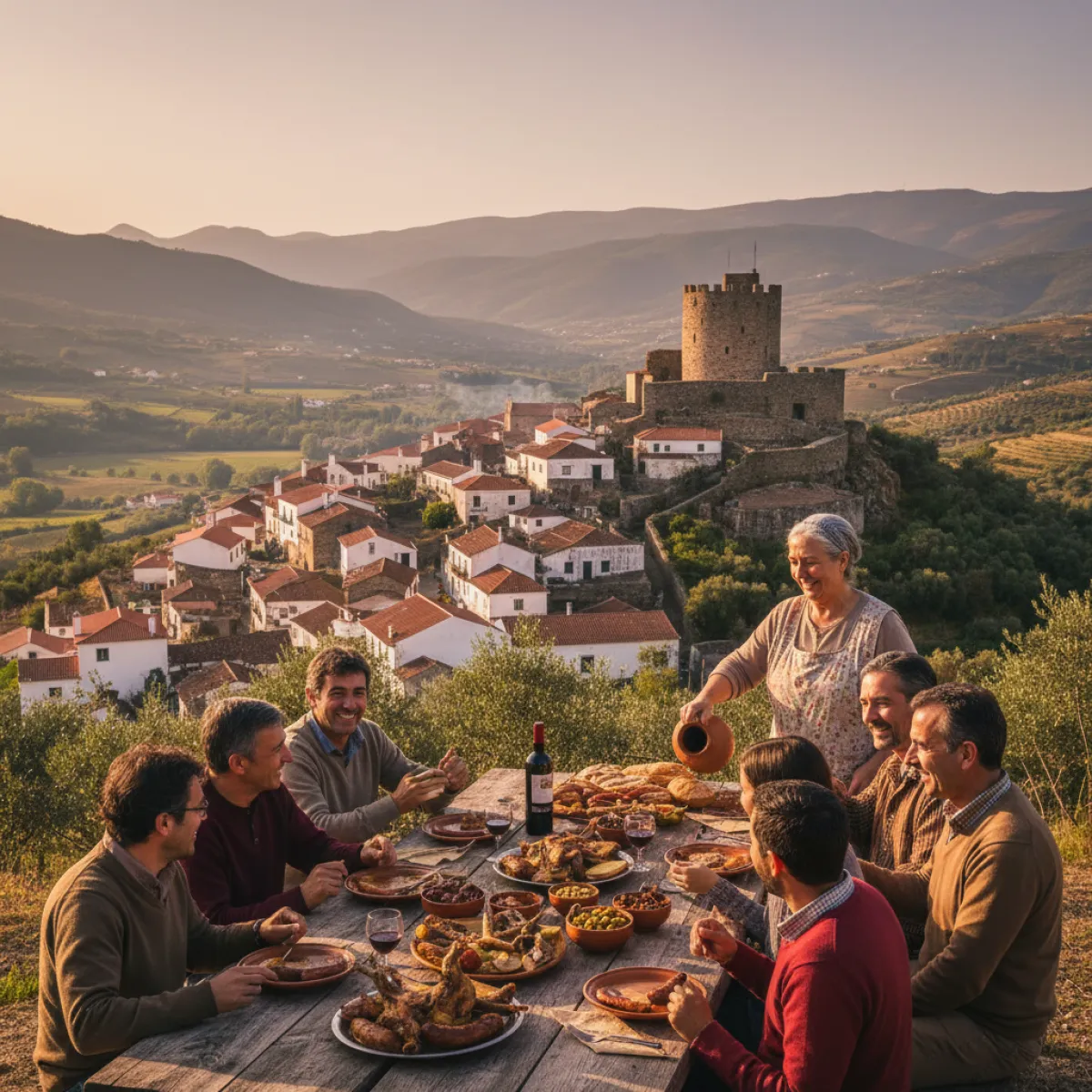
Transmontana cooking is about substance. Don't expect delicate tasting courses with edible flowers. Expect large shared platters with pork cured in the winter cold, sausages made the way they were a hundred years ago, and rye bread that keeps you full until dinner.
The cured meats are the region's pride. Alheira, which across much of Portugal has become a mediocre industrial product, is made here with wheat bread, poultry, and sometimes game. The difference is dramatic. If you've never eaten an artisanal Transmontana alheira, prepare to recalibrate everything you thought about this sausage. Butelo com casulas, a pork sausage served with dried bean husks, is another dish you'll struggle to find outside this area.
Then there's the cabrito, kid goat roasted in a wood-fired oven, which around Easter becomes almost sacred. And the posta de vitela, a thick veal steak grilled over coals with coarse salt and little else. It doesn't need anything more. The quality of the meat does the work.
And the olive oil? Don't overlook it.
Olive oil from the Torre de Moncorvo municipality, pressed from trees that survive scorching summers and cutting winters, is intense, peppery, with notes of green almond. Pour it generously over warm rye bread. That's a meal in itself.
Where to Eat: No Illusions, Just Honesty
Moncorvo isn't a town with dozens of dining options. It's a small inland village, and that's part of the appeal. The restaurants that exist serve honest regional food without fine dining pretensions. That's exactly what you should be looking for here.
I'm not going to invent restaurant names I can't vouch for, because turnover in small-town Portugal is real and I don't want to send you somewhere that may have closed or changed hands. The most honest advice I can give: when you arrive in Moncorvo, ask the locals. Ask at the bakery, ask at the café on the square. A local recommendation is worth more than any online list. Look for the places where workers eat lunch during the week. Paper tablecloths, a jug of local red wine, dish of the day at a fair price. That's where you eat well.
One reliable reference: the municipal market and the local fairs. The Torre de Moncorvo Medieval Fair takes place annually and, beyond the historical re-enactment, it's a chance to taste regional products from smoked meats to convent sweets, in an atmosphere worth the trip.
Before and After the Table: What to See in Moncorvo
A good meal deserves a proper walk afterwards. And Moncorvo has enough to show for it.
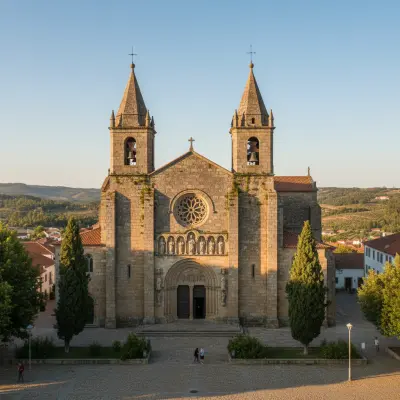
The Basílica Menor de Nossa Senhora da Assunção is the parish church and one of the most impressive religious buildings in Trás-os-Montes. The interior holds a gilded altarpiece that, frankly, you don't expect to find in a town this size. Visit before lunch, when the light comes through the side windows and the church is nearly empty.
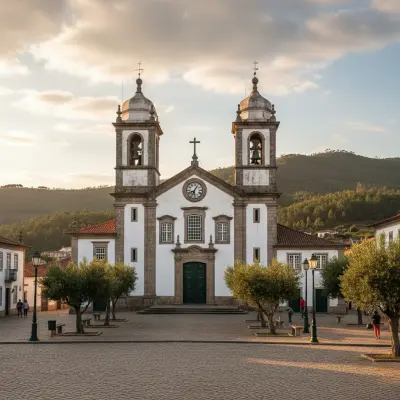
A few steps away, the Igreja da Misericórdia de Moncorvo adds a Renaissance facade that tells a different story. Two churches from different eras and styles, metres apart. Don't rush it.
To understand why this town exists where it does, the Museu do Ferro e da Região de Moncorvo explains the importance of iron mining to the local economy. It's a small, honest museum that gives context to the landscape and its people. Once you understand that this land was built on iron and almonds, the food on the table takes on another dimension.
The Wine: We're in the Douro, After All
Don't forget that Torre de Moncorvo sits within the Douro Demarcated Region. The Douro Superior, to be precise, the hottest and driest zone of the wine region. The wines here are full-bodied, ripe-fruited, with firm tannins. Always order regional wine when you sit down. It's cheaper and better than any industrial alternative.
If you want to explore the world of Douro estates in more depth, our guide to Sabrosa's quintas takes you to the heart of the wine production, about an hour from Moncorvo. And for those looking for the combination of river, rest, and gastronomy in this region, the river escapes in Lamego are a natural extension of this journey.
Getting There and When to Go
Torre de Moncorvo is about 2.5 hours from Porto via the A4 and then the IP2. There's no train. Buses exist but with limited schedules. A car is essentially mandatory.
The best time to eat in Moncorvo depends on what you're after. In winter, November through February, it's the season for fresh cured meats, kid goat, thick soups, and new-press olive oil. It's cold, sometimes frosty, but the food was designed precisely for these days. In spring, February to April, the almond trees are in bloom and restaurants start serving lighter dishes with Easter lamb. In summer, the nights are warm and dinner is late, often outdoors.
Expect very reasonable prices. A full meal with starter, main, dessert, and house wine rarely exceeds 15 to 20 euros per person at local restaurants. That's one of the real advantages of the interior: you eat better and pay less.
The Interior Doesn't Need the Sea
Fresh goose barnacles from the Alentejo coast? Not here. But if you want to understand what it means to eat with the seasons, in a land where ingredients travel kilometres, not miles, from the field to the table, Torre de Moncorvo is an honest answer. It's not glamorous, there are no influencers in line, there are no menus in five languages. There's real food, made by people who still know the name of the farmer who grew what's on the plate. And that, in 2026, is increasingly rare.