Horta After Dark: A Wine and Petiscos Crawl
In Horta, the evening starts with a gin at Peter Cafe Sport and ends with Pico's silhouette across the water. In between: grilled limpets with garlic butter, São Jorge cheese that bites back, and Azorean wines the mainland keeps overlooking.
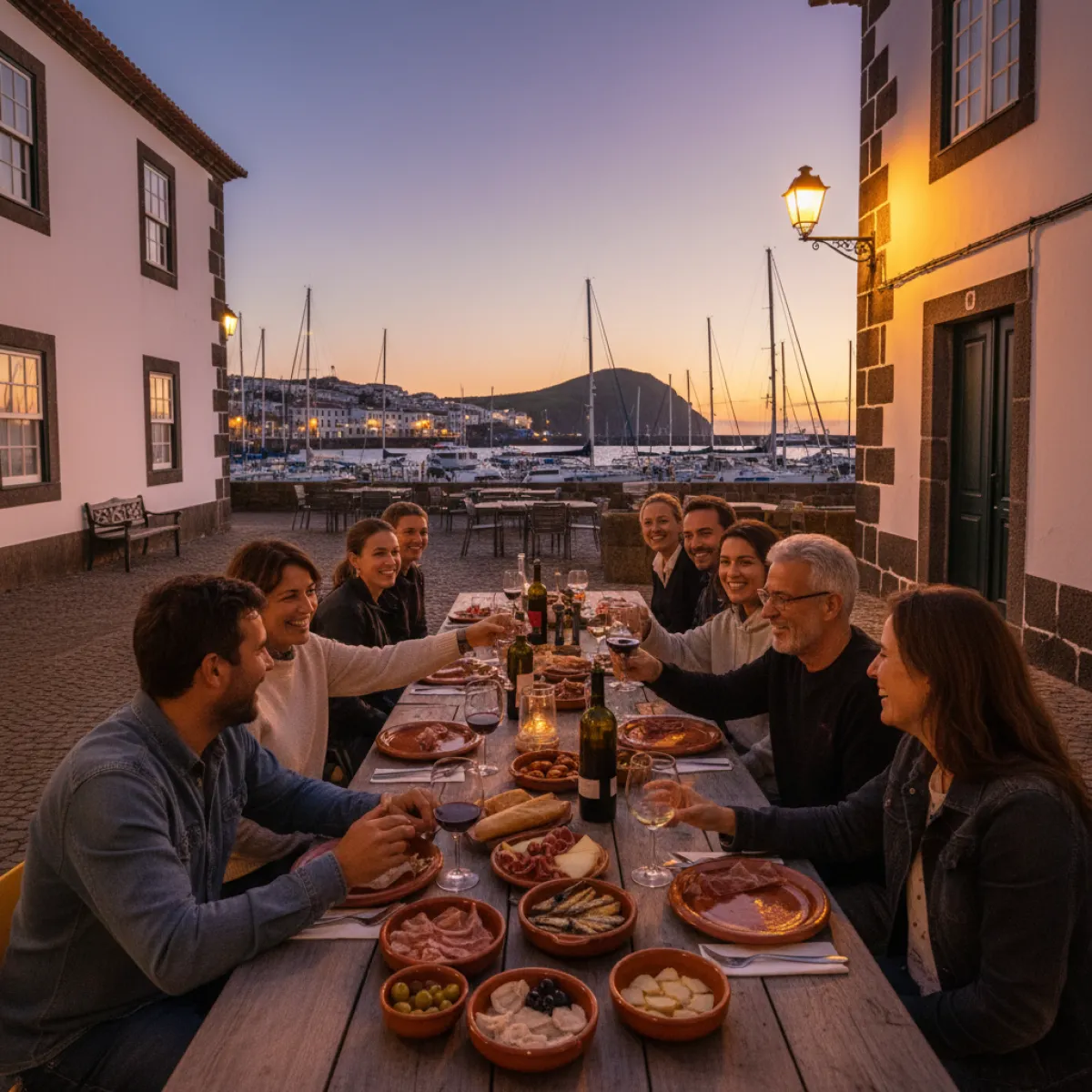
There's a moment each evening in Horta when the town shifts gears. Around six o'clock, as the sailing boats that spent the day crossing the channel between Faial and Pico start returning to port, the marina takes on a different feel. Masts clink, the smell of salt and diesel drifts from the moored yachts, and at the bar tables along the quay, small plates begin appearing, grilled limpets, fresh cheese with chili, slices of fried blood sausage, alongside glasses of wine that nobody's in a hurry to finish. This is the Horta that matters if you travel on your stomach.
This itinerary is for one evening. Not for those who want a sit-down dinner with linen tablecloths and a leather-bound wine list, but for those who'd rather drift from spot to spot, eat standing up or perched on a high stool, try things they've never heard of, and let the person behind the bar decide what comes next. In Horta, this works better than almost anywhere in the Azores, the town is human-scaled, everything is walkable, and centuries of Atlantic seafaring brought a worldliness that shows up in the food.
Before You Eat: Building Context and Appetite
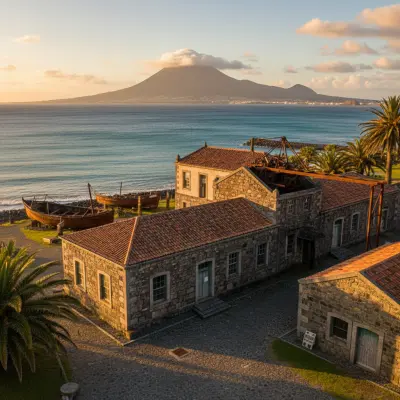
If you're giving a whole evening to Horta's petiscos, save the afternoon for working up an appetite and some context. A walk through the Porto Pim area, past the old whaling factory, gives you the right frame of mind: this was a town that lived from the sea, and the local cooking reflects that in every dish. There's no petisco in Horta that doesn't have the ocean within two ingredients. If you want the full story, the journey through Horta's whaling and fishing heritage puts it all in perspective, and will make you look at the octopus on your plate differently.
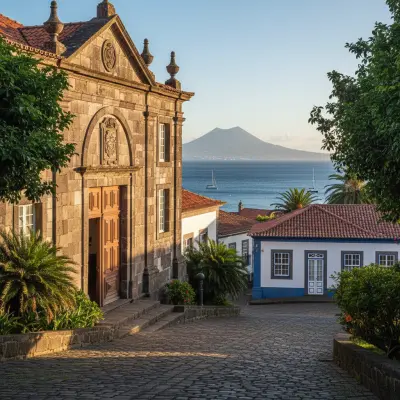
Another way to start the evening: stop by the Museu da Horta, which has a section on the island's agricultural and trade history. This is where you learn that Faial was, for centuries, wine country, Azorean verdelho, planted in stone-walled enclosures of basalt to shelter the vines from Atlantic winds, was exported to Europe and the Americas. That wine nearly disappeared, but it's back, and you'll taste it tonight.
First Stop: The Marina and the Gin Ritual
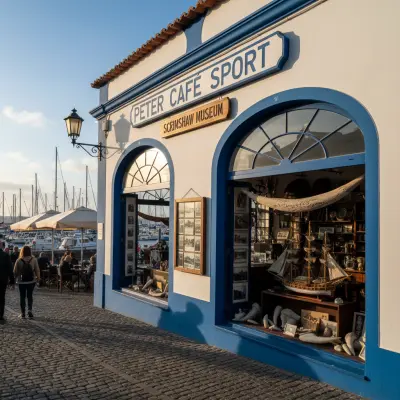
Every food evening in Horta starts in the same place, and there's no reason to fight tradition. Peter Cafe Sport, on Rua José Azevedo, is probably the most famous bar in the Azores, and deservedly so. Not for the décor (which is chaotic and covered in pennants from yacht clubs around the world), or the scrimshaw museum upstairs, which deserves its own visit. It's the fact that since the 1920s this bar has been the gathering point for anyone crossing the Atlantic, and the mix of locals, sailors, and travellers creates something you can't replicate.
Order a gin and tonic, Peter's makes theirs with a house gin, locally distilled with Azorean botanicals. It comes with lupini beans and peanuts on the table, as it does in any Portuguese tasca, no ceremony. Don't eat dinner here. Have one drink, soak up the atmosphere, and move on.
Second Act: Limpets and White Wine
Leaving Peter's, walk along Rua Serpa Pinto toward the old town centre. The area between the marina and Praça da República has several restaurants and small tascos where the petiscos are serious business. What you're looking for is lapas grelhadas, grilled limpets with garlic butter, the most Azorean snack there is, and Horta does them particularly well because of the proximity to the sea. Good limpets are the ones that arrived that day. Always ask.
To go with them, order an Azorean white wine. Verdelho from Pico is the benchmark, produced on the UNESCO-classified vineyard landscape on the island right across the channel. But there are Faial wines too, from small producers who've revived the traditional grape varieties. Ask the waiter for a recommendation. In the Azores, unlike the mainland, the wine list is short and almost entirely local, which is an advantage, because there are no wrong choices.
If you see cracas on the menu, order without hesitation. These small barnacles, which look like rocks clinging to the plate, are a rare delicacy, hard to harvest, increasingly protected, with a concentrated sea flavour unlike anything else. They're among the priciest items on the menu, but worth every euro.
Third Act: Cheese, Charcuterie, and Red Wine
After the seafood, change gears. Look for a place serving boards of Azorean cheese and cured meats. Queijo de São Jorge, aged, sharp, with a bite that almost snaps back, is non-negotiable. It's made on the neighbouring island and arrives fresh on Faial. Pair it with linguiça da terra, the Azorean smoked sausage spiced with traditions brought home by emigrants, and with some boiled inhame (taro root), which is the traditional staple of Faial cooking.
Here, switch to red. Azorean reds don't compete with the Douro or Alentejo, they're lighter, rougher around the edges, and that's the charm. Or do what many locals do: order a glass of vinho de cheiro, the Azorean table red made from the isabella grape that people here have been drinking for generations. It's not a sophisticated wine, and mainland oenologists would wrinkle their noses, but it has personality, an intense fruity aroma and a taste that's pure Azores. If you want the real thing, this is it.
The Octopus Question
On any Azorean petiscos evening, you'll cross paths with octopus. In Horta, polvo à lagareiro, oven-roasted with smashed potatoes and plenty of olive oil, is a classic that works as a shared snack or a main course. But my suggestion: order octopus stewed in vinho de cheiro, when it's available. It's a humbler dish, less photogenic, but the flavour is superior, the wine tenderises the meat and creates a dense sauce that demands bread to mop the plate.
Speaking of bread: Azorean corn bread, and Faial's bolo lêvedo, slightly sweet, dense, perfect for sauces, is one of the great discoveries for anyone unfamiliar with island cooking. It's not restaurant bread; it's bakery bread, and the best bakeries close early. If you spot it somewhere, grab it.
The Marina at Night: Digestif and Horizon
Horta at night is a quiet town. After ten, many restaurants start closing, and the marina becomes the centre of gravity. Return to the waterfront, not necessarily to Peter's, there are other bars in the area, and order a digestif. Aguardente de medronho from the Azores, if you can find it; passion fruit liqueur, which is Azorean to its core; or an aged local brandy. Sit at a terrace facing the channel. If the night is clear, Pico's mountain appears as a dark silhouette, 2,351 metres high, across the water. With a glass in hand and a stomach full of limpets and cheese, it's the finest view in the Azores.
Practical Notes
Horta is a small town. This entire itinerary is walkable, within a 500-metre radius of the marina. Budget €40-60 per person for a generous petiscos evening with wine, the Azores aren't cheap, but they're not Lisbon either.
The best time for this crawl is June through September, when the days are long and the marina fills with international yachts. But it works year-round, Horta punches above its weight in cosmopolitan energy, as our 24-hour Horta guide explains.
On wine: if this itinerary opens your appetite for Azorean gastronomy, our Ponta Delgada food guide is the logical next step. São Miguel's cuisine operates on a different scale with different ingredients, but the same logic applies: local produce, respectfully handled, served without pretension.
Save the late afternoon for exploring the town on foot before you eat, the historic walking tour of Horta is the best way to understand the city before you taste it. And for the best spots to catch the sunset with a glass in hand, our guide to Horta's rooftops and panoramic views has you covered.
One final note: in the Azores, always ask what's fresh. The menu might list twenty dishes, but what matters is what the fisherman brought in that morning and what the cook decided to prepare. Tell the waiter you want whatever's good today, and trust them. In Horta, that never disappoints.