The Heart of Porto Pim: A Journey Through Horta’s Whaling and Fishing Heritage
Discover the soul of Porto Pim on a guided heritage walk with Naturalist Science & Tourism. Explore the historic Whale Factory and the narrow alleys of this authentic fishing district in Horta.
The Echoes of Porto Pim
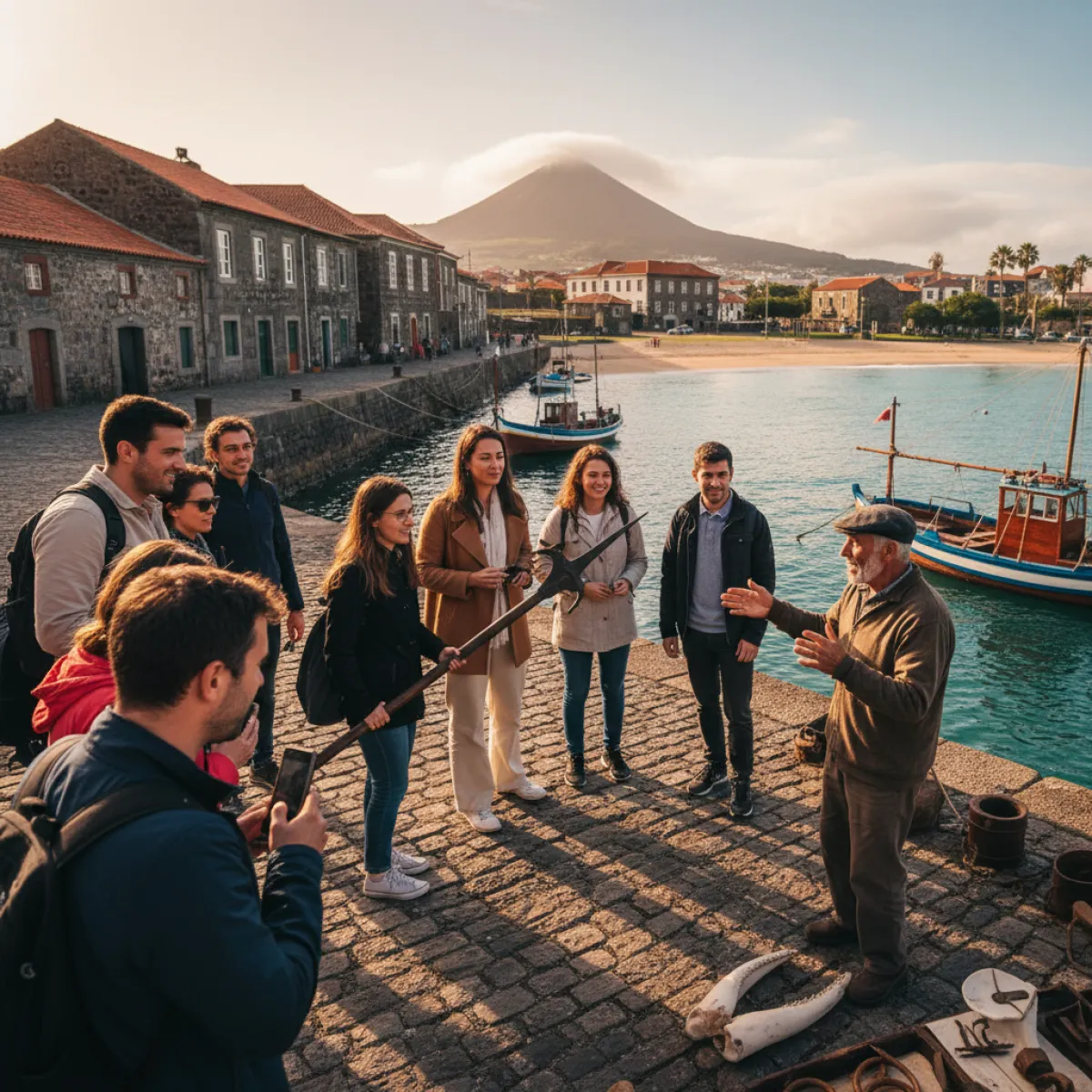
In Horta, Faial, the landscape is divided by a sharp contrast. While the city’s marina is a kaleidoscope of international flags and sailor chatter, just around the bend lies Porto Pim. Sheltered by the volcanic mass of Monte da Guia, this bay is the historical soul of the island’s fishing community. It is a place where the air still feels heavy with salt and history, and where the basalt-paved streets tell stories of an era defined by the whaling industry. To truly understand this Atlantic outpost, the guided heritage walk provided by Naturalist Science & Tourism offers an unparalleled look into the local way of life.
When organizing your visit, this experience serves as a grounded counterpoint to the more urban side of the island. It fits perfectly into a broader itinerary such as 24 Hours in Horta: Cosmopolitan Soul in the Heart of the Atlantic, providing the cultural depth needed to appreciate Faial’s evolution from a whaling hub to a conservation leader.
Naturalist Science & Tourism: An Expert Approach
What sets Naturalist apart is its foundation. Founded by marine biologists and researchers, the company approaches tourism through the lens of science and historical rigor. Their "History & Heritage" walk is not a rehearsed script; it is a deep dive into the socio-economic fabric of the Azores. The guides provide context on how the isolation of the islands forced a unique relationship with the ocean, one that was both exploitative in the past and deeply protective today.
The journey begins at their headquarters at Cais de Santa Cruz. From there, you walk along the coastline, leaving the modern harbor behind and entering the quiet, narrow alleys of the Porto Pim district. Here, the architecture is distinct, modest, single-story houses painted in traditional colors, standing shoulder-to-shoulder against the Atlantic winds.
The Porto Pim Whaling Station: Industrial Archeology
The centerpiece of the visit is the Porto Pim Whaling Station (Fábrica da Baleia). This is one of the most significant industrial heritage sites in the Azores. Walking through the factory, you see the steam-powered machinery used to process whale oil, a product that once powered the lamps of Europe and North America. The guide explains the technical complexity of the process, but more importantly, the human cost of the industry.
The narrative is balanced. It respects the bravery of the local men who took to the sea in small wooden boats, while celebrating the transition to modern whale watching and environmental research. It is a rare opportunity to see the machinery of the past preserved in its original context, providing a tangible link to a world that disappeared only a few decades ago.
Exploring the Fishing Quarter
Beyond the factory, the tour explores the residential heart of the quarter. You will walk past the Dabney House, once home to the American consuls who transformed Horta’s economy in the 1800s. The guide points out the subtle differences in the masonry and layout of the streets that reflect the social hierarchy of the fishing village. The beach at Porto Pim, with its fine volcanic sand, offers a tranquil backdrop to these historical lessons.
In this quarter, you can still observe the traditional wooden whaling boats, known as "botes baleeiros", resting in their sheds. These vessels are no longer used for hunting but are meticulously maintained for traditional rowing and sailing regattas, ensuring that the craftsmanship of the island’s shipwrights is not lost to time.
Perspectives and Practicalities
The tour often concludes with an overview of Monte da Guia, a protected area that offers a natural shield to the bay. The geological and biological significance of this site is explained in detail, connecting the land to the deep waters of the Atlantic. For those looking for more scenic highlights, the recommendations in Atlantic Vantage: The Finest Rooftops and Panoramic Views in Horta provide the perfect follow-up for a day of exploration.
Practical Tips for the Experience
- What to bring: The Azorean sun is deceptively strong even on cloudy days. Bring sunscreen, a light rain jacket, and sturdy walking shoes for the uneven basalt cobblestones.
- Best time to book: Morning sessions are highly recommended as they often align with the opening hours of the Whale Factory and offer the best light for the bay.
- Booking details: It is best to contact the provider at least two days in advance. The tour is accessible to most fitness levels, though it involves a fair amount of walking on historic streets.
By the end of the walk, Porto Pim is no longer just a picturesque bay; it is a complex tapestry of survival, industry, and environmental awakening. This experience offers the context necessary to see the Horta beyond the postcards, revealing a community that has navigated the challenges of the Atlantic for centuries.