Whale and Sperm Whale Tours from Horta: Choosing Right
Sperm whales twenty minutes out of Horta marina, three very different operators to choose from. What it costs, how to book, and why the morning session always beats the afternoon one.
The first time I heard a sperm whale blow off the west coast of Faial I lost track of what I was doing. It wasn't the fluke coming out of the water, which is the photo everyone wants. It was the sound. That low, wet exhale you hear before you actually see the animal. No aquarium, no documentary, nothing prepares you for it. Which is exactly why it matters who you pick to take you out of Horta's marina.
The Faial-Pico channel has a rare quirk: the seabed drops past a thousand metres just a few miles from shore. Sperm whales, which dive deep to hunt squid, are practically at the door. You don't need to motor out for three hours to reach the hunting ground. Twenty minutes and you're in water where land-based spotters are already calling in blows from old whaling lookout towers on the cliffs.
The operators I recommend, and why
Azores Experiences (formerly Horta Cetáceos)
This is the one I send first-timers to. Pedro Filipe and Filipe Ávila's team works with marine biologists on board, and the briefing you get before and during the trip is the real thing, not a memorised script. They depart from the Edifício das Actividades Marítimo-Turísticas at Cais de Santa Cruz, right next to Peter Café Sport.
- Price: €90 adults, €80 children
- Duration: around 3 hours
- Departures: 09h00 and 14h00 (weather permitting)
- Bookings: azoresexperiences.com or [email protected]
- Phone: +351 965 650 452
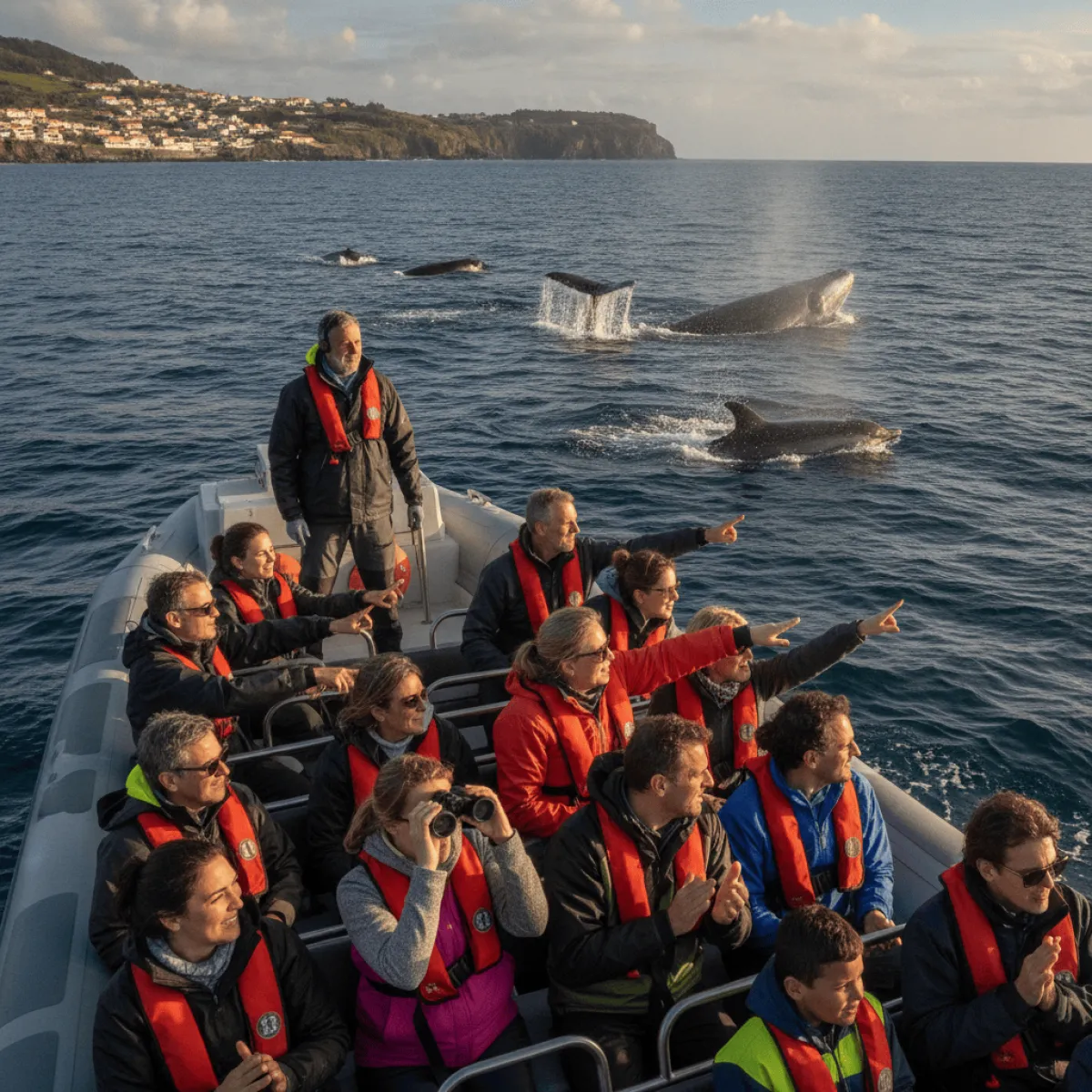
Boats are RIBs with 12 to 14 passengers. It's wet, it's fast, it's the classic Azorean format.
Whale Watch Azores (Lisa Steiner)
This is a different proposition entirely. Lisa Steiner arrived in the Azores in 1988 with IFAW and knows individual sperm whales by their flukes, the way most of us recognise neighbours. This isn't a sightseeing trip, it's a research expedition you pay to join. The boat is a catamaran, the day is a full day, and you can book a single full-day trip or a five to nine night package with accommodation included.
- Full day trip: €150 per person
- 5 night package: €215 to €285 (depending on season)
- 9 night package: €350 to €510
- Bookings: whalewatchazores.com
If you've seen sperm whales before and you want to actually understand what's happening underwater, this is where you go.
Naturalist (MARE)
Linked to university research. Trips run roughly 3 hours with researchers on board. A good middle ground between tourist format and scientific approach. Confirm dates and prices directly with the provider, as they run in monitoring seasons.
What a trip actually looks like
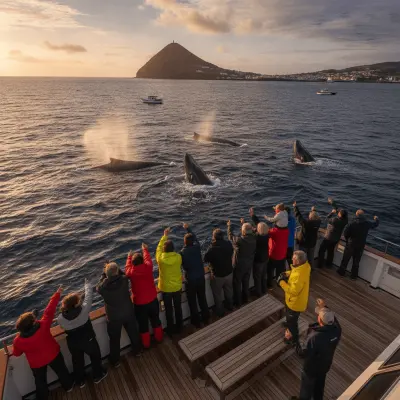
You arrive at the marina half an hour early. There's a safety briefing, an explanation of the spotter system, life jackets handed out, and with some operators, waterproof overalls. The spotter system is the part most visitors don't know about, and it's what makes the whole thing work. There are observers on land, in old whaling lookout towers, with long-range binoculars. When they see a blow, they call it in by radio. That's why the Azores has such high success rates.
Leaving the harbour takes about ten minutes. As soon as you clear the breakwater, Cory's shearwaters start cutting across the bow. Twenty to thirty minutes later you're at the spot. Engines off. You wait. Sperm whales stay on the surface for five to ten minutes between dives, breathing, then they go down for forty minutes or more. When the fluke lifts clear of the water, you know they're diving deep, and the boat moves on to the next sighting.
When to go, what to wear
Sperm whales are there year round. Blue whales and fin whales pass through in April and May on their migration north, and that's when the photos get genuinely ridiculous. June to September is the most stable window for trips, with calmer seas and a better chance of double departures the same day.
- Dry base layer, waterproof jacket on top. Even on a sunny day, wind and spray cool you fast.
- Closed shoes with rubber soles. Flip-flops on a wet RIB deck are a bad idea.
- Cap with a chin strap, polarised sunglasses, water-resistant sunscreen.
- Seasickness tablet taken an hour before. Even people who don't get seasick can get seasick on a RIB.
- Phone or camera in a dry bag. Spray will come over the bow.
- Skip contact lenses if salt bothers your eyes.
Things nobody tells you
Take the morning session. The sea is usually flatter, the light is cleaner for photography, and the spotters have had time to orient the trip. By afternoon the wind almost always picks up.
Book at least two or three days ahead in high season. And book it for the first working day of your stay, not the last. If the sea won't allow it and they cancel, you have room to try again. The people who leave it for the last day go home having seen nothing.
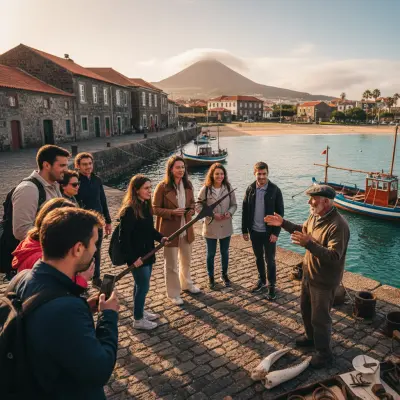
Before you go out, stop by the Scrimshaw Museum at Peter Café Sport and the Porto Pim Whale Factory. Understanding the whaling history of Faial completely changes what you feel when the first sperm whale surfaces in front of you. The Museu da Horta also holds important scrimshaw pieces and whaling material.
For the rest of your stay, plan properly. Look at the Horta wine and petiscos guide for when you come back to land. After three hours at sea, a cold glass of verdelho is the right answer.