Fábrica da Baleia do Porto Pim
Explore the Porto Pim Whale Factory in Horta, where industrial heritage meets marine biology in one of the Azores' most evocative historical settings.
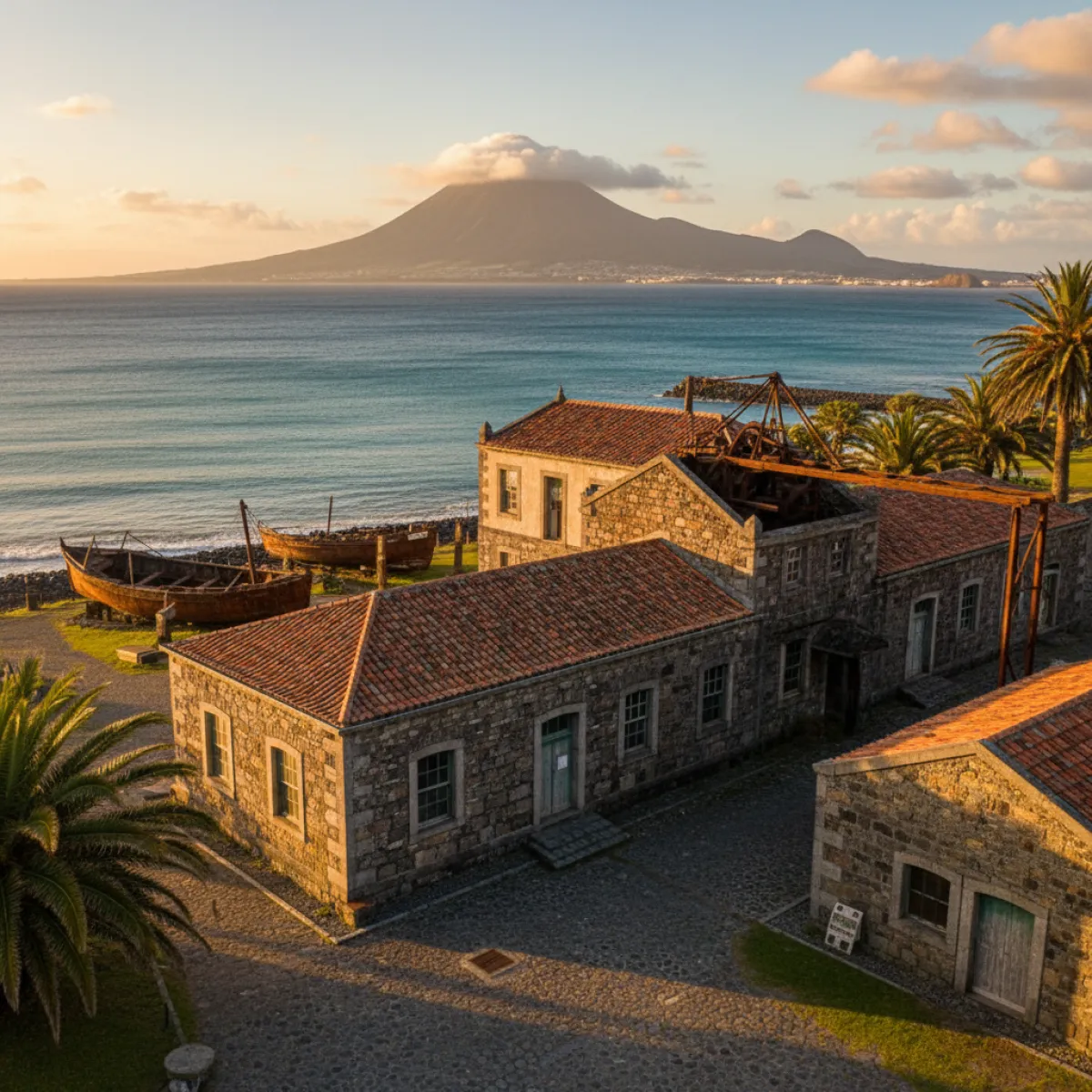
Industrial Echoes in the Bay: The Porto Pim Whale Factory
On the southern edge of Horta, nestled beneath the protective shadow of Monte da Guia, stands a structure that embodies the profound transformation of the Azores' relationship with the sea. The Porto Pim Whale Factory (Fábrica da Baleia do Porto Pim) is far more than a museum; it is a sentinel of industrial archaeology. It marks an era when the survival of Faial’s families rested on the courage of men who faced the giants of the deep in fragile wooden boats. Today, the rhythmic clatter of machinery and the pungent scent of processing have faded, replaced by a center for scientific observation and historical reflection, managed by the Observatório do Mar dos Açores (OMA).
Approaching the factory involves a scenic walk through the Angústias neighborhood, where the maritime pulse of the city is most palpable. Walking along the volcanic sands of Porto Pim beach, one passes former boat houses that now blend into the residential charm of the area. This visit is a natural highlight for those exploring the island through a guide like 24 Hours in Horta: Cosmopolitan Soul in the Heart of the Atlantic, providing a somber, historical anchor to the city's lighter, cosmopolitan atmosphere.
Step Inside the Machinery of the Past
Built in the 1940s and operating until 1974, the factory remains an incredibly well-preserved technological capsule. Upon entering, the sheer scale of the steam boilers and digesters is striking. The process here was one of total utilization: the sperm whale was converted into oil, meal, and fertilizers. Unlike the American whaling ships that processed their catch at sea, Azorean whaling was a shore-based endeavor. The proximity of the deep waters off the coast allowed lookouts (vigias) to spot whales from the hills, triggering a race to the sea that defined local life for over a century.
The layout of the building is a masterclass in functionalist architecture. From the slipway where the carcasses were winched ashore to the separation rooms where the precious oil was refined, every corner served a purpose. The sophistication of the current exhibit lies in its restraint; it documents the brutality of the industry without sentimentality, focusing instead on the technical ingenuity of the time. Visitors can observe a full sperm whale skeleton and various tools of the trade, offering a tactile connection to the island's heritage.
A Shift Toward Science and Conservation
The takeover of the space by the Observatório do Mar dos Açores represents a pivotal shift in the region's identity. Where oil was once extracted, knowledge is now cultivated. The OMA uses the factory to promote ocean literacy, featuring exhibits on marine biology, deep-sea corals, and the complex social structures of the cetaceans that inhabit the Faial-Pico channel. For the intellectually curious traveler, the temporary exhibitions provide rigorous insights into the health of the Atlantic, making the site as much about the future as it is about the past.
The factory’s setting is equally significant. Positioned between the bay and the extinct volcano of Monte da Guia, it invites further exploration of the surrounding landscape. After the industrial tour, a hike up the hill is essential to grasp the strategic geography of the Horta harbor. The views from the top, looking back at the city and the neighboring island of Pico, are among those detailed in Atlantic Vantage: The Finest Rooftops and Panoramic Views in Horta, providing a panoramic context to the factory’s location.
Planning Your Visit: Practical Insights
- Access: The factory is a comfortable 15 to 20-minute walk from the Horta Marina. The path is flat and offers beautiful coastal views.
- Timing: The late afternoon sun over Porto Pim Bay is exceptional for photography. Be sure to check seasonal hours, as the center may operate on a more limited schedule during the winter months.
- Atmosphere: Expect a cool, industrial interior. Even on warm days, the thick volcanic stone walls keep the temperature down, which can be quite refreshing.
- Logistics: There is a modest entrance fee (€ category), which directly supports the OMA’s conservation and educational work. Card payments are accepted, but carrying a small amount of cash is advisable for the gift shop.
- Dress Code: While there is no formal dress code, sturdy walking shoes are recommended, particularly if you intend to climb Monte da Guia before or after your visit.
A visit to the Porto Pim Whale Factory is a profound lesson in evolution. It is a place to honor the hardships of previous generations while celebrating the scientific curiosity that now defines the Azores. As you leave the quiet halls of the factory and return to the soft waves of the bay, you carry with you the echo of an industry that once stood at the center of the world, now resting in the service of the sea it once harvested.
