24 Hours in Horta: Cosmopolitan Soul in the Heart of the Atlantic
Discover how to make the most of 24 hours in Horta, Faial’s vibrant capital. From rare scrimshaw museums and volcanic viewpoints to the world’s most famous sailing bar, immerse yourself in a city where the ocean is everything.
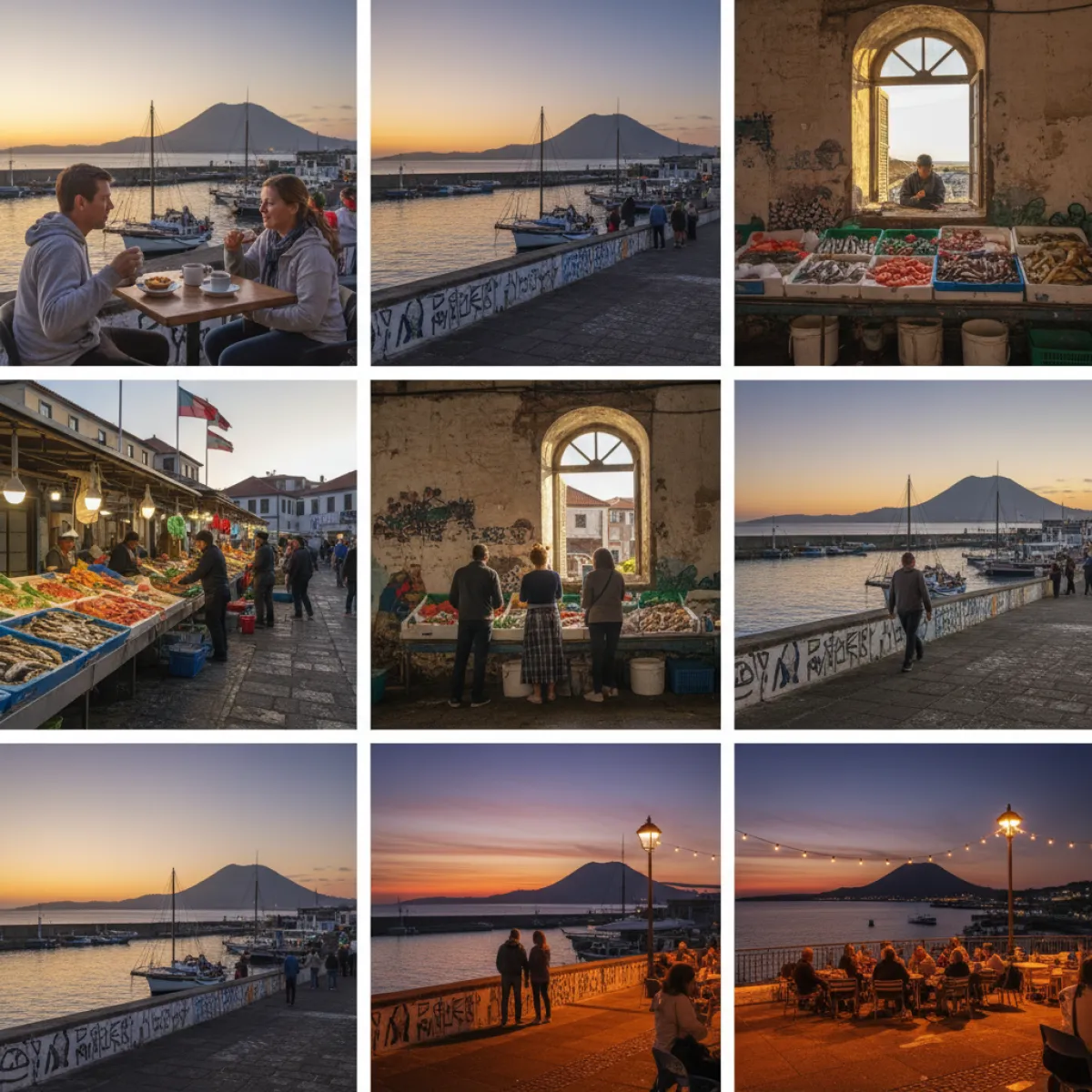
The Cusp of the Atlantic: Morning in Horta
Horta, on the island of Faial, is a topographical anomaly, a place where the rugged, basaltic isolation of the Azores meets a sophisticated, international maritime culture. It is the Atlantic’s great crossroads, a necessary waypoint for sailors crossing the ocean and a sanctuary for those who appreciate the understated charm of an outpost that has seen it all. Spending 24 hours in Horta requires more than just a checklist; it demands an appreciation for the scent of salt air, the sound of halyards slapping against masts, and the slow, deliberate pace of island life.
09:00 - Pith Art and Jesuit Legacy
Begin your morning in the town center at the Horta Museum. Housed in the imposing former Jesuit College, the museum provides a vital grounding in the island’s history. The standout exhibition features the extraordinary fig pith carvings by Euclides Rosa. These intricate, snow-white miniatures of ships and cathedrals are fashioned from the soft, inner core of fig branches, a craft so delicate it seems to defy the very laws of physics. It is an essential first stop to understand the patience and meticulous spirit of the Azorean people.
11:00 - The Sentinel: Monte da Guia
Make your way south toward Monte da Guia. This volcanic promontory is a classified protected area and offers the most definitive view of the archipelago’s geography. While the hike up is rewarding, navigating the winding road on a rented Vespa is the more 'Monocle' approach. From the summit, you look down upon the perfect crescent of Porto Pim Bay and the twin submerged craters known as the Caldeirinhas. To the east, the towering silhouette of Pico Island dominates the horizon, often shrouded in a crown of clouds. There is no entry fee for the view, making it the highest ROI experience on the island.
13:00 - Lunch with a Circumnavigator
For lunch, there is only one choice: Genuíno Restaurant. Overlooking the sand dunes of Porto Pim, the restaurant belongs to Genuíno Madruga, a local legend who has sailed solo around the world twice. The walls are a museum of his voyages, but the kitchen remains focused on the present. Order the fresh catch of the day, ideally the red porgy or the local triggerfish, grilled simply with olive oil and garlic. Pair it with a crisp white wine from the nearby vineyards of Pico. Budget approximately €35 to €50 per person for an experience that is as much about the narrative as it is about the gastronomy.
15:00 - The World’s Most International Mural
Walk back toward the Marina da Horta. This isn't just a parking lot for yachts; it is a sprawling, collaborative art project. A long-standing tradition dictates that any crew visiting the harbor must leave a painting on the stone walls to ensure a safe voyage. The result is a vibrant tapestry of thousands of paintings, each telling a story of a crossing. Spend an hour walking the pontoons; it is the best place to witness the cosmopolitan nature of Horta, where sailors from Scandinavia to the South Pacific congregate to swap stories and technical advice.
16:30 - The Art of the Deep
Directly across from the marina sits an institution: Peter Café Sport. Before diving into the social scene, head to the upper floor to the Scrimshaw Museum. Scrimshaw, the art of engraving on whale teeth and bone, is a relic of the islands' whaling past. The Azevedo family’s collection is world-renowned for its quality and historical depth. The fine, needle-point etchings of maritime scenes on ivory-like surfaces are a hauntingly beautiful reminder of the island's difficult and often brutal history with the sea.
18:00 - Golden Hour at Porto Pim
As the light softens, return to Porto Pim Beach. Unlike the typical black sand found elsewhere in the Azores, Porto Pim offers a softer, golden hue. It is a sheltered bay, making it ideal for a late afternoon swim in clear, temperate waters. It is the island’s most social beach, where locals and visitors mingle as the sun dips behind the volcanic cliffs. If you are looking for a more immersive experience, several local operators offer whale-watching tours that depart nearby, a must if you have an extra few hours.
20:30 - Grilling on Lava
Dinner at Canto da Doca is an interactive affair. The restaurant is famous for its 'stone-grilled' concept, where diners cook their own meat or fish on a piping hot slab of volcanic rock. It’s a method that perfectly suits the island’s geology. We recommend the local tuna steak or the beef tenderloin. The atmosphere is bustling and unpretentious, capturing the spirit of a port town that never quite sleeps. Expect to pay around €40 per person including wine.
22:30 - The Legendary Last Stop
The day must end where it arguably truly begins for most visitors: Peter Café Sport. Established in 1918, it is more than a bar; it is a post office, a weather station, and a global clubhouse. Order the house Gin & Tonic, a drink so famous it has its own mythology. The interior, with its low ceilings and dark wood, feels like the hull of a ship. It is here that the true spirit of Horta reveals itself, a place where the world feels small, and the next adventure is always just over the horizon.
Practical Information
- When to Visit: June to September offers the most reliable weather. August’s 'Semana do Mar' (Sea Week) is the island's cultural peak.
- Getting Around: Horta is pedestrian-friendly, but a scooter is highly recommended for exploring the island’s perimeter (approx. €35/day).
- Budget: A daily budget of €120-€160 will cover premium dining, museum entries, and local transport.
- Expert Tip: The weather is famously fickle. Always carry a lightweight, high-quality waterproof shell, even on the sunniest mornings.
Horta is a place that lingers in the mind long after the ship has sailed. It is a reminder that even in the middle of the ocean, one is never truly alone.
